
That deep, throbbing toothache can feel all-consuming, filling your mind with anxiety about the pain, the procedure, and what comes next. When you’re facing this uncertainty, seeing a clear root canal before and after transformation is more than just interesting-it’s incredibly reassuring. It provides proof that relief is possible. We understand the questions that are likely keeping you awake: Will the treatment hurt? Will my tooth look and feel normal again? And most importantly, will this finally be the end of the severe pain?
This guide was created to calmly and clearly answer those questions. We are here to walk you through the entire journey, from your initial consultation to the final, beautiful restoration. We’ll visually explore the path from a damaged, infected tooth to one that is healthy, comfortable, and strong. You will see how our gentle, precise root canal treatment not only eliminates the source of your pain but also saves your natural tooth, giving you lasting relief and complete confidence in your smile.
Before the Root Canal: Recognising the Signs of an Infected Tooth
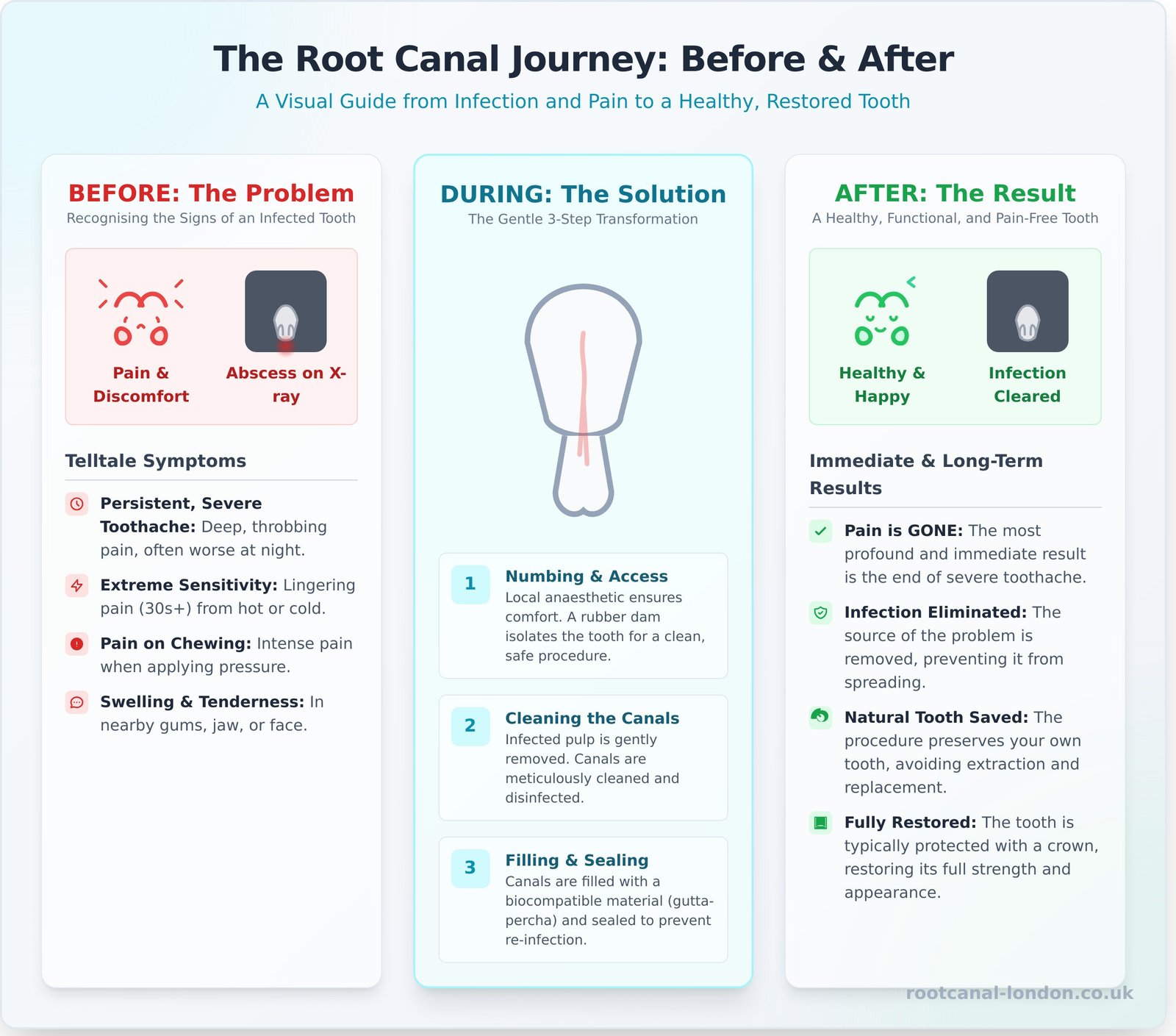
If you’re reading this, it’s likely because you are experiencing significant tooth pain and, understandably, feeling worried about what comes next. That persistent ache or sharp sensitivity is more than just an inconvenience; it’s your body’s clear signal that something is wrong and professional help is needed. The pain is caused by an infection deep inside your tooth, within the soft tissue known as the dental pulp. When this becomes inflamed (pulpitis), it creates intense pressure and discomfort. Seeing these clear signs of infection is a key part of understanding the complete root canal before and after picture. It’s crucial to remember that a root canal is not the source of your pain-it is the skilled, caring procedure that provides the solution and brings lasting relief.
The Telltale Symptoms You Might Be Feeling
An infected tooth makes itself known in ways that are hard to ignore. While symptoms can vary, patients often report one or more of the following signs:
- A persistent, severe toothache: This isn’t a minor twinge. It’s often a deep, throbbing pain that can be severe enough to wake you up at night.
- Extreme and lingering sensitivity: A sharp pain when you sip a hot coffee or a cold drink is common, but with an infected pulp, the sensitivity often lingers for 30 seconds or more.
- Pain when chewing or applying pressure: The ligaments around the infected tooth can become inflamed, making biting down intensely painful.
- Swelling and tenderness: You may notice swelling in the gums near the affected tooth, or it could extend to your face, jaw, or neck.
What an Infected Tooth Looks Like (On X-ray and In Your Mouth)
While pain is the most common symptom, there are often visible signs of infection. On a dental X-ray, the problem is clear: a dark spot, known as an abscess, appears at the tip of the tooth’s root. This shows where the infection has spread from the pulp into the surrounding jawbone. In your mouth, you might notice the tooth itself has darkened or become discoloured. Sometimes, a persistent pimple-like bump (called a fistula) appears on the gum, which is the body’s way of trying to drain the pus from the infection.

An X-ray clearly showing the dark area (abscess) at the root tip, a definitive sign of an infection that requires treatment.
Why Ignoring These Signs Is Not an Option
Hoping the pain will simply go away is not a safe strategy. A dental abscess will not heal on its own. If left untreated, the infection can spread further into your jawbone or to other parts of your body, leading to more serious health complications. For a comprehensive overview of root canal treatment, you can see how this essential procedure works to stop the infection in its tracks. Ultimately, ignoring the warning signs puts you at risk of losing the tooth entirely, which would require a more complex and costly replacement like a bridge or dental implant.
The Transformation: A Visual Look at the Root Canal Procedure
Many people feel anxious when they hear the words “root canal,” but modern endodontics has transformed this treatment into a precise, comfortable, and highly effective solution for severe tooth pain. Forget outdated stories; today’s procedure is the gentle journey that takes you from the painful ‘before’ to the healthy and relieved ‘after’. We are here to demystify the process, showing you how we save your natural tooth and end the ache for good. The remarkable root canal before and after transformation is all about skilled, compassionate care.
Feeling anxious? Learn about our calm and caring approach.
Step 1: Ensuring Your Comfort and Accessing the Tooth
Your peace of mind is our first priority. We begin by administering a local anaesthetic to completely numb the tooth and the surrounding area, ensuring you won’t feel any pain during the treatment. Once you are comfortable, we place a small protective sheet called a rubber dam. This isolates the tooth, keeping it clean and dry while protecting the rest of your mouth. This calm, controlled start sets the stage for a smooth and stress-free procedure.
Step 2: Gently Cleaning the Infected Canals
With the tooth comfortably numb and isolated, we can address the source of your pain. We create a tiny opening in the tooth to access the inner chamber and gently remove the damaged or infected pulp tissue. Using highly specialised, delicate instruments, we carefully clean and shape the root canals. This meticulous cleaning, a key part of the official step-by-step root canal procedure, is followed by an irrigating solution that disinfects the inside of your tooth, washing away any remaining bacteria.
Step 3: Filling and Sealing for Future Protection
Once the canals are spotlessly clean and dry, they must be sealed to prevent bacteria from re-entering. We fill the canals with a biocompatible, rubber-like material called gutta-percha, which creates a tight, stable seal. Finally, we place a secure temporary filling to protect the tooth. This final step completes the internal healing, setting the foundation for a permanent restoration like a crown and finalising the incredible root canal before and after result-a pain-free, functional tooth.
After the Root Canal: The Immediate and Long-Term Results
The journey from debilitating pain to lasting comfort is the most rewarding part of the root canal before and after experience. Once the procedure is complete, the focus shifts from resolving an infection to healing and restoring your tooth to its full strength and function. You can finally look forward to a future free from toothache.
Immediate Relief and Recovery
The most immediate and profound result is the end of the severe pain that brought you to us. The deep, throbbing ache you felt-often one of the key reasons for a root canal-is caused by infected nerve tissue, which has now been completely removed. While the source of the pain is gone, it’s normal to feel some mild tenderness or sensitivity in the area for a few days as your body heals. This is easily managed, and we provide simple aftercare guidance to ensure your comfort:
- Avoid chewing directly on the treated tooth until it is permanently restored.
- Stick to softer foods for the first day or two.
- Maintain your usual oral hygiene routine, brushing and flossing gently around the area.
The ‘After’ X-Ray: Visual Proof of a Healthy Tooth
One of the most satisfying aspects of a successful root canal is the clear, visual proof of healing. A comparison of the X-rays taken before and after the treatment tells a powerful story. The ‘before’ image often shows a dark shadow at the tip of the tooth’s root, indicating infection and bone loss. The ‘after’ image reveals a completely different picture.

Left: An abscess (dark area) at the root tip. Right: The canals are filled and sealed, and the infection is gone.
You can clearly see the infected pulp has been replaced with a sterile, rubber-like filling material called gutta-percha, which seals the canals completely. The dark area of infection is gone, and over the following months, the bone will naturally heal and regrow around the healthy root.
The Final Restoration: Your Tooth is Strong and Beautiful Again
A root canal saves the foundation of your tooth, but the tooth itself is often weakened by the initial decay or trauma. To provide long-term protection and restore its full chewing power, a permanent restoration like a dental crown is almost always recommended. This custom-made cap fits perfectly over the treated tooth, strengthening it against fracture and sealing it from any future bacteria.

The final crown restores the tooth’s shape, strength, and natural appearance.
The final result is a tooth that looks, feels, and functions just like any other. You can eat, speak, and smile with complete confidence, knowing that your natural tooth has been saved for years to come. If you have any questions about your recovery, our caring team at Root Canal London is always here to provide support and reassurance.
Real Patient Journeys: Before and After Root Canal Examples
Nothing demonstrates the power of modern endodontics better than seeing the results for yourself. These anonymised patient stories showcase the incredible transformation and relief that an expertly performed root canal can provide. Each root canal before and after journey highlights a unique challenge, met with compassionate, precise care from Dr. Millie and our team.
Case Study 1: From Sleepless Nights to Total Comfort
David arrived at our clinic suffering from severe, throbbing pain in a lower molar that had kept him awake for nights. A diagnostic X-ray immediately revealed the problem: a large, dark area of infection at the tooth’s root, indicating an abscess.
“The pain was a constant, deep throb,” David shared. “I couldn’t eat or think straight. I was desperate for relief.”
Before: An X-ray clearly shows the significant infection (abscess) at the tip of the molar’s root.
After: A post-treatment X-ray shows the root has been meticulously cleaned, filled, and sealed, and the surrounding bone has begun to heal.
Following his treatment, David’s relief was immediate. He left this review: “Dr. Millie was outstanding. Her wonderfully calming and reassuring manner made a scary situation feel manageable. The procedure was comfortable, and I am finally pain-free.”
Case Study 2: Saving a Darkened Front Tooth
Chloe was self-conscious about a front tooth that had turned grey years after a childhood fall. The discolouration was caused by a dead nerve inside the tooth. Instead of an invasive crown or veneer, we recommended a root canal to remove the source of the problem, followed by internal bleaching to restore the tooth’s natural brightness from the inside out.
Before: A clinical photo shows a single front tooth with a noticeable greyish hue compared to the adjacent teeth.
After: The same tooth, now bright, healthy, and perfectly matching the rest of her smile.
The result was a complete aesthetic and functional restoration, saving Chloe’s natural tooth and giving her the confidence to smile freely again.
Case Study 3: A Silent Infection Treated Just in Time
During a routine check-up for another issue, a detailed X-ray of Michael’s mouth revealed a large, symptom-free abscess on an upper tooth. This “silent” infection was quietly damaging the bone without causing any pain. This is a perfect example of why proactive diagnostics are so crucial. By identifying and treating the problem preventatively, we saved Michael from future emergency pain and potential tooth loss. The root canal before and after images show a hidden threat completely eliminated.
Before: The X-ray highlights a hidden abscess at the tooth root that the patient was unaware of.
After: The completed root canal has successfully removed the infection, protecting the tooth and surrounding jawbone for the long term.
If any of these situations feel familiar, we are here to provide the same level of caring, expert treatment to bring you lasting relief and comfort.
Your Transformation from Pain to Comfort Starts Here
As we’ve seen, the journey of a root canal before and after is a powerful story of transformation. It begins with the debilitating pain of an infected tooth and ends with the profound relief of a healthy, restored smile. The procedure itself is a precise, tooth-saving treatment designed to eliminate infection at its source, allowing you to eat, speak, and live without discomfort. The most important takeaway is that you don’t have to endure the pain; a solution is available that brings lasting comfort and preserves your natural tooth.
If your “before” sounds all too familiar, it’s time to create your own positive “after.” At Root Canal London, our Specialist Endodontist, Dr. Millie, is dedicated to providing a calm, reassuring, and completely pain-free experience. We understand the urgency of your situation, which is why we offer same-day emergency appointments to address your pain immediately. In pain? Don’t wait. Let our specialist, Dr. Millie, bring you relief today.
Take the first step towards ending your toothache for good. A calm, comfortable future for your smile is just a call away.
Frequently Asked Questions About Root Canal Treatment
Will my tooth be weaker after a root canal?
A tooth requiring a root canal has often been weakened by decay or injury. While the procedure itself involves removing internal tissue, our primary goal is to save your tooth. To restore its strength, we almost always recommend a dental crown afterwards. This protective cap reinforces the tooth, restoring its full function and appearance, allowing you to chew with complete confidence and ensuring its long-term health and stability.
How long does a tooth last after a root canal treatment?
With proper care, a tooth that has received a root canal can last a lifetime. The long-term success depends on the quality of the treatment and the final restoration, which is typically a crown. Maintaining excellent oral hygiene, including consistent brushing, flossing, and attending regular dental check-ups, is crucial. Our skilled, precise approach is designed to give your tooth the very best foundation for lasting success and relief.
Will the tooth change colour after the procedure?
In the past, some discolouration was common, but with modern techniques, a significant colour change is much less likely. Should your tooth darken slightly, we have caring and effective solutions, such as internal whitening. More importantly, when a custom-made crown is placed over the tooth, it completely restores its natural, healthy colour and lustre, ensuring your smile remains seamless and beautiful. Your comfort and confidence are our priority.
Is it normal to have some discomfort after a root canal?
It is completely normal to feel some mild tenderness or sensitivity for a few days following your procedure. This is a natural part of the body’s healing process as the inflammation in the surrounding tissues subsides. This temporary discomfort can almost always be managed effectively with over-the-counter pain relief like paracetamol or ibuprofen. If you experience severe pain or swelling, please contact us immediately for compassionate guidance.
Why do I need a crown after a root canal?
A tooth no longer has a living pulp after treatment, which can make it more brittle and prone to fracture over time. A crown acts like a protective helmet, covering the entire tooth to shield it from the forces of biting and chewing. It restores the tooth’s original strength and shape, providing crucial support for its long-term survival. This final step is vital for a successful and durable root canal before and after transformation.
What are the success rates for root canal treatment?
Root canal treatment is a highly predictable and successful procedure, especially when performed by a skilled specialist endodontist. Clinical studies consistently show success rates of over 95%. This outstanding level of success means the treatment can reliably save your natural tooth, eliminate pain, and prevent the need for an extraction. Our precise, caring approach is dedicated to achieving the best possible outcome for your long-term dental health.