

After a tooth extraction, you should be on the path to recovery. So, when a severe, throbbing pain develops a few days later, it’s understandable to feel worried and anxious. Perhaps you’ve noticed a bad taste in your mouth, or a glance in the mirror reveals a disturbingly empty-looking socket where the tooth used to be. If this sounds familiar, you may be experiencing a common but treatable complication, and you’re likely asking, what is dry socket?
We understand your concern, and this guide is here to provide calm, clear answers. We will walk you through the key signs of dry socket, explain what causes this painful condition, and most importantly, detail how our specialist dentists provide fast, gentle relief. By the end, you will have a clear understanding of your symptoms and feel reassured knowing that effective, caring treatment is available to get you back on the road to comfortable healing.
Understanding Dry Socket: What It Is and Why It Happens
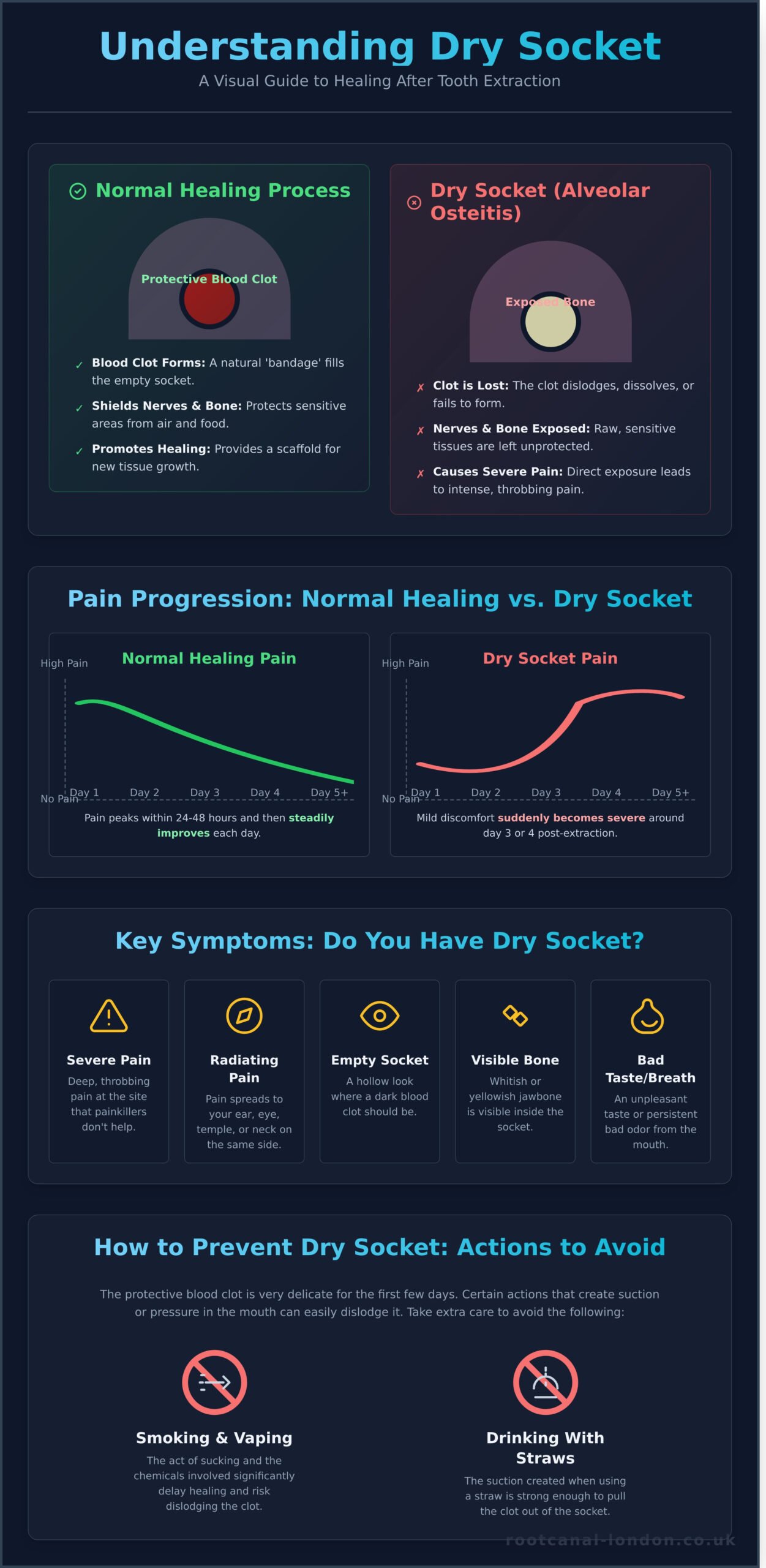
After a tooth extraction, your body begins a remarkable healing process. One of the first and most important steps is the formation of a blood clot in the empty tooth socket. This clot is absolutely vital, acting as a natural protective barrier over the underlying bone and sensitive nerve endings. It provides the foundation upon which new bone and soft tissue will grow, ensuring a smooth and comfortable recovery.
But what is dry socket? Simply put, it’s a painful complication that occurs when this protective blood clot is dislodged, dissolves too early, or fails to form in the first place. Think of it like a scab being knocked off a wound before the skin underneath has healed. This condition, known clinically as Alveolar osteitis, is the most common complication following a tooth extraction. It’s important to know that it is not a sign of infection or poor hygiene, but rather an unfortunate disruption of the normal healing process.
The Protective Blood Clot: Your Body’s Natural Bandage
The blood clot that forms in the socket is much more than just a plug. It serves two crucial functions. Firstly, it acts as a shield, protecting the delicate nerve endings and exposed bone from irritants like air, food particles, and fluids. This protection is key to preventing severe pain. Secondly, it creates a scaffold for healing, allowing your body to build new tissue and bone, gradually closing the socket.
What Goes Wrong: How the Clot Becomes Dislodged
A dry socket develops when this natural bandage is lost, leaving the raw, sensitive socket exposed. This typically happens in one of two ways:
- Failure to Form: In some cases, a proper blood clot never forms in the socket after the extraction.
- Premature Dislodging: More commonly, the clot forms successfully but is then dislodged or dissolves a few days after the procedure.
This exposure of bone and nerves to the oral environment is the direct cause of the intense, throbbing pain associated with a dry socket. Without its protective covering, the area becomes inflamed and highly sensitive, making for a very uncomfortable recovery.
Key Symptoms of Dry Socket: How to Know If You Have It
After a tooth extraction, some discomfort is a normal part of the healing process. However, the pain from a dry socket is distinctly different and more severe. Understanding the key symptoms is crucial to knowing what is dry socket and when you need to seek professional care. The most telling sign is that the pain doesn’t gradually improve; instead, it often begins or intensifies 2 to 4 days after your procedure.
If you are concerned, look for these common indicators:
- Severe, throbbing pain at the extraction site that isn’t managed by over-the-counter painkillers.
- Pain that radiates from the socket to your ear, eye, temple, or neck on the same side of your face.
- A visibly empty-looking socket where you might expect to see a dark blood clot.
- Visible bone in the socket (it will appear whitish or yellowish).
- An unpleasant taste in your mouth or persistent bad breath (halitosis) that you can’t get rid of.
The Telltale Pain: More Than Just Normal Discomfort
The defining feature of a dry socket is intense pain. Unlike the ache of normal healing, this is often a deep, throbbing sensation that worsens over time. This severe pain is the most definitive sign, and you can find a detailed overview of dry socket symptoms and causes from trusted medical sources like the Mayo Clinic. Many patients find that standard painkillers like paracetamol and ibuprofen offer little to no relief, which is a strong indicator that you should contact your dentist for an assessment.
Visual Signs in the Mirror
You can gently check the site at home. Carefully pull back your cheek in front of a well-lit mirror. A healthy, healing socket will be filled with a dark, jelly-like blood clot that protects the underlying bone and nerves. In contrast, a dry socket will look empty or hollow. Instead of the dark clot, you may see the whitish colour of the exposed jawbone, which is the source of the intense pain.
Normal Healing vs. Dry Socket Pain
Distinguishing between normal recovery and a complication can be difficult when you’re in discomfort. Here is a simple comparison to help you understand the difference:
- Normal Healing Pain: Typically peaks within the first 24-48 hours and then gradually and consistently improves each day. It can be managed effectively with the painkillers recommended by your dentist.
- Dry Socket Pain: Often starts as mild discomfort but then suddenly becomes severe around day 3 or 4. It does not improve on its own and is often resistant to over-the-counter medication.
If your pain pattern matches the description of a dry socket, please do not wait for it to get better. Seeking timely, compassionate care is the fastest way to find relief.
What Causes Dry Socket and Am I at Risk?
While the precise reason a dry socket develops isn’t always clear, we have a very good understanding of the factors that can increase your risk. Understanding these factors is a key part of knowing how to prevent this painful condition. Our goal is to give you the knowledge you need to partner with us in ensuring your recovery is as smooth and comfortable as possible.
Please remember, having one or more of these risk factors does not mean you will definitely get a dry socket. It simply means that taking extra care during your recovery is especially important. The risks can be broadly grouped into physical actions you can control and biological factors you should be aware of.
Actions to Avoid for a Smooth Recovery
Immediately following your tooth extraction, the healing site is incredibly delicate. Certain everyday actions can create pressure or suction in the mouth, which can easily dislodge the protective blood clot. For the first few days after your procedure, being mindful of the following can make all the difference:
- Smoking and Vaping: The physical act of sucking, combined with the harmful chemicals in tobacco and vape products, can significantly delay healing and dislodge the blood clot.
- Drinking Through a Straw: The suction created when you use a straw is often strong enough to pull the clot right out of the socket, leaving the bone and nerves exposed.
- Aggressive Rinsing or Spitting: Forceful rinsing or spitting creates a surge of pressure in your mouth that can easily disturb the fragile healing site. Gentle, careful rinsing is key.
- Eating Certain Foods: Stick to soft foods for the first few days. Hard, crunchy, or sticky foods can get lodged in the socket or physically break the clot apart.
Biological and Personal Risk Factors
Beyond your immediate actions, certain biological factors and personal history can also play a role. As a leading medical resource, the Mayo Clinic provides an excellent overview of dry socket symptoms and causes, highlighting factors that your dentist will consider when planning your aftercare. It is always important to discuss your full medical history with your dentist.
- Difficult Extractions: A traumatic or complex extraction, such as removing an impacted wisdom tooth, can cause more inflammation and increase the likelihood of the clot failing to form or stay in place.
- Poor Oral Hygiene: A pre-existing infection, such as gum disease near the extraction site, can introduce bacteria that interfere with the natural healing process.
- History of Dry Socket: If you have experienced dry socket before, you are unfortunately at a higher risk of developing it again in the future.
- Oral Contraceptives: Studies suggest that the high oestrogen levels in some birth control pills may affect the blood clot’s stability, making it more likely to dissolve prematurely.
By understanding what is dry socket and the factors that contribute to it, you can take proactive steps towards a safe and speedy recovery. If you have any concerns about your personal risk, please don’t hesitate to discuss them with us. We are here to support you every step of the way.
How a Specialist Treats Dry Socket for Fast, Gentle Relief
If you are experiencing the intense, throbbing pain of a dry socket, the thought of another dental procedure can be frightening. We want to reassure you that the treatment is designed with one purpose in mind: to provide fast, gentle relief. Our primary goals are to calm your pain and create the perfect environment for your body to heal properly. The entire process is straightforward, and most patients feel a significant improvement almost immediately.
Understanding what happens at our clinic can help ease any anxiety. Here is a simple, step-by-step guide to how we bring you comfort and get you on the road to recovery.
Step 1: Cleaning and Soothing the Socket
The first thing we do is carefully and gently clean the affected area. Using a sterile solution, we will flush the empty socket to remove any food particles or debris that have become trapped inside. This is a crucial step that cleanses the site and reduces irritation. We perform this with the utmost care to ensure it causes no further discomfort, preparing the socket for the soothing medicated dressing.
Step 2: Placing a Medicated Dressing
Once the socket is clean, we place a special medicated dressing directly into it. This is often a small piece of gauze or a paste containing calming ingredients like eugenol, which is a natural anaesthetic found in clove oil. This dressing acts as a protective barrier, covering the exposed bone and sensitive nerve endings. It’s this protective layer that provides that welcome, near-instant feeling of relief from the constant, aching pain.
Step 3: Pain Management and Follow-Up
To manage any lingering discomfort while you heal, we may recommend or prescribe stronger pain medication than what is available over the counter. You will also receive clear, simple instructions for caring for the socket at home. In some cases, we may ask you to return in a few days to have the dressing changed and to check on your healing progress. Our goal is to support you until you are completely pain-free.
If you suspect you have a dry socket, there is no reason to endure the pain. Professional treatment is simple, effective, and provides the comfort you need right away. In pain? Book an emergency appointment for immediate relief.
Preventing Dry Socket: Your Aftercare Checklist
Your recovery after a tooth extraction is just as important as the procedure itself. A smooth healing process depends entirely on protecting the blood clot that forms in the empty socket, as this clot is the foundation for new bone and tissue growth. Following a careful aftercare routine is your best defence against complications, ensuring you avoid the intense pain that comes with this condition.
We’ve created this simple checklist to guide you through the first week. Our goal is to help you feel confident and comfortable, promoting a speedy, stress-free recovery and helping you understand how to prevent the issue before you have to ask, “what is dry socket?”.
The First 24-48 Hours are Critical
The initial period is when the healing site is most vulnerable. Your primary goal is to do everything you can to keep the vital blood clot undisturbed. Focus on rest and gentle care.
- DO rest and avoid any strenuous activity, exercise, or heavy lifting. This helps keep your blood pressure stable and reduces the risk of bleeding or dislodging the clot.
- DO NOT rinse, spit forcefully, or use a straw. The suction created by these actions is a primary cause of dry socket, as it can easily pull the protective clot out of place.
- DO eat soft foods like soup, yoghurt, or mashed potatoes. Stick to lukewarm or cool items and chew on the opposite side of your mouth. Drink plenty of water to stay hydrated.
- DO take any prescribed pain relief or antibiotics exactly as directed by your dentist to manage discomfort and prevent infection.
Care for the Following Week
As the initial healing phase passes, you can gradually adjust your routine while continuing to protect the extraction site. Gentle hygiene is key to preventing infection and promoting healing.
- DO begin gentle rinses after 24 hours. Mix half a teaspoon of salt in a glass of warm water and let the solution gently flow over the area after meals. Do not swish vigorously.
- DO continue brushing and flossing your other teeth carefully, but avoid the extraction site completely for the first few days to prevent irritation.
- DO NOT smoke or use any tobacco products. Smoking severely impairs the body’s ability to heal and is one of the leading risk factors for developing dry socket. We strongly advise avoiding it for at least one week.
- DO attend your follow-up appointment. This allows us to check that you are healing correctly and offer peace of mind.
By following this simple guidance, you give your body the best possible chance to heal without complications. If you experience severe pain or have any worries about your recovery, please do not hesitate to contact our caring team for advice and reassurance.
Find Calm and Compassionate Relief from Dry Socket Pain
Ultimately, understanding what is dry socket empowers you to take control of your healing process. While it is a painful and distressing complication following a tooth extraction, the key is to recognise its distinct symptoms-like severe, radiating pain and an unpleasant taste-and to remember that effective, gentle treatment is always available. Most importantly, diligent adherence to your aftercare instructions is your most powerful tool for prevention.
If you are experiencing the kind of severe pain that disrupts your life and suspect you have dry socket, please do not endure it alone. At Bespoke Dental Fulham, we specialise in managing complex and emergency dental issues with the utmost care. Led by Dr. Millie, a registered Specialist in Endodontics, our entire team is dedicated to providing a calm, reassuring, and compassionate experience, ensuring your comfort is our absolute top priority.
If you’re in severe pain, don’t wait. Call us now for an emergency dental appointment.
With the right specialist care, you can find rapid relief and get back on the path to a comfortable and complete recovery.
Frequently Asked Questions About Dry Socket
How long does the pain from a dry socket last?
The intense pain from a dry socket typically lasts for 7 to 10 days, often peaking a few days after your extraction. With proper dental care, you can find significant relief much sooner. A dentist can clean and dress the socket, which provides almost immediate comfort and promotes a faster, smoother healing process. Our goal is to get you out of pain quickly, so please don’t endure it alone-professional help makes all the difference.
Can a dry socket heal on its own without treatment?
While a dry socket will eventually heal on its own, we strongly advise against leaving it untreated. Doing so means enduring days of unnecessary, severe pain and significantly increases your risk of developing a serious infection. Seeking prompt dental care is the safest and most comfortable option. We can properly clean the socket and apply a medicated dressing to soothe the pain and protect the area, ensuring a much faster and complication-free recovery for you.
Is dry socket the same as an infection?
This is a common and important question. A dry socket is not an infection itself; it is a complication where the protective blood clot is lost, exposing the underlying bone and nerves. An infection involves bacteria causing swelling, pus, and fever. Understanding what is dry socket helps clarify this distinction, but it’s crucial to know that an untreated dry socket can easily become infected. Prompt treatment is the best way to prevent this from happening.
What should I do if I think I have a dry socket late at night?
We understand that dental pain doesn’t keep office hours. If you suspect a dry socket at night, you can gently rinse your mouth with warm salt water to keep it clean. Over-the-counter pain relief, such as paracetamol or ibuprofen (if suitable for you), can help manage the discomfort until morning. Avoid poking the area with your tongue or finger. Please call us or an emergency dental service first thing for an urgent appointment to get proper, lasting relief.
Will I need antibiotics for a dry socket?
Antibiotics are not a standard treatment for a dry socket because it is fundamentally a healing problem, not a bacterial one. The main focus of our care is to gently clean the socket and place a medicated dressing to relieve your pain and protect the exposed bone. However, if we see any signs that a secondary infection is developing, we may then prescribe a course of antibiotics to ensure your complete and safe recovery.
How can I tell the difference between food stuck in the socket and exposed bone?
It can be worrying to look into the socket. Food debris often appears as dark specks and may be dislodged with a gentle salt water rinse. Exposed bone, the hallmark of dry socket, looks whitish or yellowish and will not move. The main difference is the pain: exposed bone causes a deep, throbbing pain that can radiate to your ear, while trapped food causes more of a localised pressure or mild ache. If you are unsure, please contact us for a proper assessment.