

The persistent, throbbing pain of a damaged tooth can be overwhelming, and the thought of a dental procedure can create a wave of anxiety. When you’re faced with this stressful situation, the crucial question often becomes: should you choose a root canal or tooth extraction? It’s a significant decision, and it’s completely understandable to feel worried about the pain, the potential costs, and making the right long-term choice for your health.
We are here to ease your concerns with clear, compassionate guidance. This reassuring guide is designed to help you navigate this decision with confidence. We will gently walk you through the pros and cons of each option, provide a transparent look at the expected costs in the UK, and explore the long-term impact on your smile. Our goal is to replace uncertainty with understanding, empowering you to choose the best path toward lasting pain relief.
Key Takeaways
- The primary goal of either treatment is to safely remove infection and provide lasting relief from your tooth pain.
- Saving your natural tooth with a root canal is the best way to maintain your bite, prevent bone loss, and protect your long-term oral health.
- Understanding the key differences in recovery time, overall cost, and the impact on your smile is essential when choosing between a root canal or tooth extraction.
- Consulting a Specialised endodontist can provide a more accurate diagnosis and increase the success rate for comfortably saving a severely damaged tooth.
In Pain? Understanding Your Two Main Options for a Damaged Tooth
Severe tooth pain can be overwhelming, and we understand the anxiety that comes with it. Your immediate priority is finding relief, and our first goal is to provide a calm, caring environment where we can stop the pain and address the underlying infection. When you have a badly damaged or infected tooth, you are often faced with a significant decision: choosing between a root canal or tooth extraction.
While both treatments will resolve the infection and alleviate your pain, they lead to very different long-term outcomes. At our practice, our guiding philosophy is always to preserve your natural teeth whenever possible. A root canal saves your tooth from the inside, while an extraction removes it completely. Let’s look at what each option involves to help you understand the choice ahead.
What is a Root Canal Treatment?
A modern root canal treatment is a highly skilled procedure designed to save your natural tooth. It involves carefully cleaning the infected or inflamed pulp (the nerve and tissue) from inside your tooth’s canals. The space is then thoroughly disinfected, filled with a biocompatible material, and sealed to prevent any future infection. This outstanding treatment preserves not only your tooth but also your natural bite and the appearance of your smile, allowing you to get back to life without pain.
What is a Tooth Extraction?
A tooth extraction is the complete removal of a tooth from its socket in your jawbone. This option is generally recommended only when a tooth is too severely damaged from decay or trauma to be saved by any other means. While it is a definitive solution for removing the source of infection, making the choice between a root canal or tooth extraction requires careful thought. Removing a tooth has significant long-term consequences, as it can cause neighbouring teeth to shift and may require a future replacement like a bridge or implant.
Root Canal Treatment: The Gold Standard for Saving Your Tooth
When faced with the difficult decision of a root canal or tooth extraction, the primary goal of modern dentistry is always to save your natural tooth. A root canal isn’t just a dental procedure; it’s a skilled and compassionate treatment designed to preserve your health, your smile, and your confidence. Keeping your own tooth is considered the gold standard because nothing else can truly replicate its function and feel.
The benefits extend far beyond just filling a space. Saving your tooth helps to:
- Maintain Your Natural Smile: Preserving your tooth ensures your smile remains seamless and authentic, without the need for an artificial replacement.
- Protect Your Facial Structure: Your teeth provide underlying support for your cheeks and lips. Losing a tooth can lead to bone loss in the jaw over time, potentially altering your facial appearance.
- Prevent Teeth from Shifting: When a tooth is removed, the adjacent teeth can begin to drift into the gap. This can disrupt your bite, cause chewing difficulties, and lead to further complications. Leading dental bodies, including the American Association of Endodontists, emphasise that saving a tooth prevents this damaging chain reaction.
Finally, choosing a root canal is often the most cost-effective solution long-term. While an extraction might seem cheaper initially, the cost of replacing that tooth with a high-quality dental implant or bridge can run into thousands of pounds (£), far exceeding the expense of saving it in the first place.
When is a Root Canal the Right Choice?
A root canal is the ideal treatment when a tooth’s inner pulp is infected or inflamed, but the tooth’s external structure is still strong enough to be saved. We typically recommend it in cases of:
- A dental abscess caused by deep decay reaching the tooth’s nerve.
- A cracked or chipped tooth where the damage has exposed the pulp.
- Severe sensitivity or pain indicating irreversible pulp damage.
The endodontist Approach to a Pain-Free Root Canal
The outdated fear of root canals is one we are dedicated to overcoming. Modern endodontics is a comfortable and pain-relieving experience. As Endodontists, we use advanced local anaesthetics to ensure you are completely numb and at ease. High-powered microscopes allow for meticulous, precise work, making the procedure efficient and gentle. Remember, the intense pain comes from the infection inside your tooth; the root canal is the treatment that carefully removes it and brings you lasting relief.
Worried about pain? Learn about our gentle approach.
Tooth Extraction: When Removal is the Only Viable Option
At our London practice, our primary goal is always to save your natural tooth. However, we understand that in some cases, a tooth is simply too damaged to be repaired. Extraction is a last resort, recommended only when all other restorative options, including root canal treatment, are no longer viable.
While removing a severely infected or damaged tooth provides immediate relief from pain, it’s a decision with significant future implications. When you’re considering a root canal or tooth extraction, it’s vital to understand the full picture. Leading dental organisations agree that nothing functions as well as your natural tooth. The American Association of Endodontists on root canals vs. extractions offers comprehensive guidance, reinforcing that extraction is only advised when a tooth is truly unsalvageable. The procedure itself may seem straightforward, but it creates a gap that must be addressed to avoid future complications and ‘hidden costs’.
Situations That May Require an Extraction
We will only recommend an extraction when it is the most sensible path to protecting your overall oral health. These situations typically involve extensive damage, such as:
- Extreme Tooth Decay: When decay has destroyed so much of the tooth’s structure that it cannot support a crown or filling.
- Severe Cracks or Fractures: If a crack extends deep below the gum line, making it impossible to repair effectively.
- Advanced Periodontal Disease: When severe gum disease has destroyed the bone and connective tissue that support the tooth, causing it to become loose.
- Failed Root Canal Treatment: In rare cases where a root canal has failed and a retreatment procedure is not a suitable option for the patient.
The Long-Term Consequences of a Missing Tooth
The immediate result of an extraction is a gap, but the long-term consequences reach far beyond aesthetics. Your mouth is a complex system, and removing a tooth can set off a chain reaction of oral health issues if the space isn’t filled:
- Shifting Teeth: Adjacent teeth may begin to drift or tilt into the empty space, leading to a misaligned bite and crooked teeth.
- Jawbone Loss: The jawbone requires stimulation from your teeth to maintain its density. Without a tooth root, the bone in that area begins to shrink and deteriorate.
- Changes in Appearance: Bone loss can eventually cause facial muscles to sag, leading to a more aged appearance. It can also affect your ability to chew food properly.
- Costly Future Treatments: Replacing a missing tooth with a high-quality solution like a dental implant or bridge is a far more complex and costly procedure than saving the original tooth, often costing thousands of pounds (£).
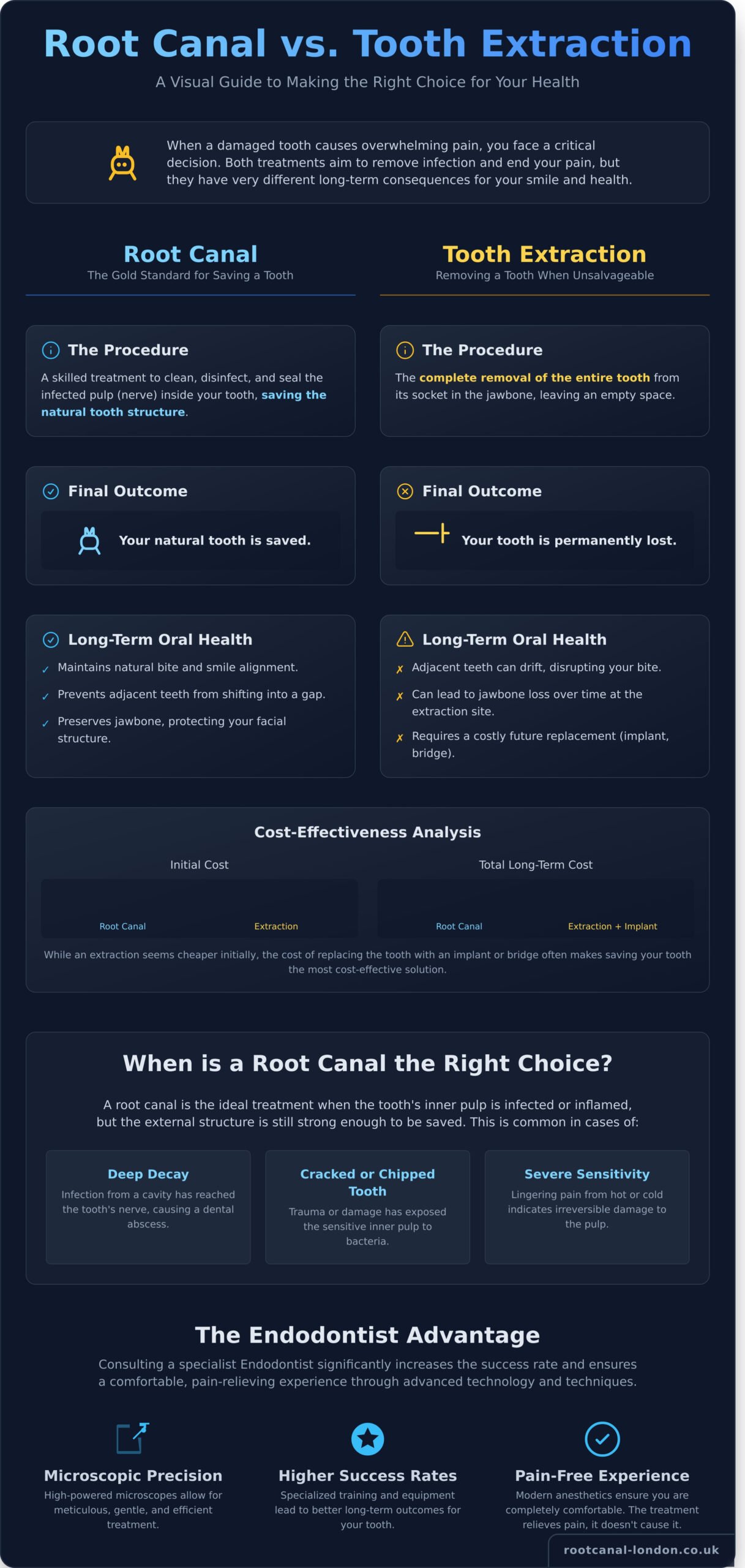
Head-to-Head Comparison: Root Canal vs. Extraction
When you are in pain, making a clear decision about a root canal or tooth extraction can feel overwhelming. To help you understand the options, we’ve broken down the key differences based on the factors our patients care about most: comfort, cost, time, and the long-term health of your smile.
This comparison offers a general guide, but a professional consultation is the only way to receive advice tailored to your unique situation. Below is a quick summary to help you see the differences at a glance.
| Factor | Root Canal Treatment | Tooth Extraction |
|---|---|---|
| Primary Goal | Save your natural tooth and relieve pain. | Remove the entire tooth to address pain or damage. |
| Pain & Recovery | Procedure provides pain relief. Mild sensitivity for a few days. | More post-operative discomfort. Risk of complications like dry socket. |
| Long-Term Cost | Often more cost-effective. One-time treatment and crown cost. | Cheaper initially, but replacement (implant, bridge) can cost £2,500+. |
| Time Commitment | Typically 2-3 visits over a few weeks. | Can take 3-9 months if replacing the tooth with an implant. |
Comparison: Pain and Recovery
The idea of a painful root canal is a persistent myth. Modern endodontic treatment is designed to relieve the severe pain caused by an infected tooth. The procedure itself is performed under local anaesthetic for your comfort. Afterwards, most patients experience only mild sensitivity for a few days. In contrast, an extraction is a surgical procedure that often involves more significant post-operative discomfort and a longer healing period, with the potential risk of a painful complication known as a dry socket.
Comparison: True Cost Over Time
While an extraction may seem like the cheaper option upfront (costing around £150 – £300), it’s crucial to consider the long-term financial impact. Leaving a gap can cause other teeth to shift, affecting your bite and oral health. Replacing the missing tooth with a dental implant is the gold standard, but the entire process-including the implant, abutment, and crown-can cost upwards of £2,500 in the UK. A root canal and crown is a single, comprehensive treatment that is often the more affordable solution for keeping your complete, natural smile.
Comparison: Treatment Time and Appointments
Saving your tooth is often a faster process. A root canal typically requires one or two appointments with an endodontist, followed by a final visit to your dentist to place a permanent crown. The entire process is usually complete within a few weeks. The path of extraction and replacement is much longer. After the tooth is removed, you must wait for the site to heal before beginning the implant process, which involves multiple appointments over several months. The full journey from extraction to a final implant crown can take anywhere from 3 to 9 months.
Ultimately, the choice between a root canal or tooth extraction depends on the condition of your tooth. At Bespoke Dental Fulham, we are dedicated to providing calm, compassionate care and saving natural teeth whenever possible. A Specialised assessment is the best first step toward pain-free peace of mind.
Why a Expert Endodontist is Your Best Guide
When you’re in pain and facing a difficult decision, you deserve advice from a true expert. An endodontist is a specialised dentist who has completed several years of advanced, dedicated training focused exclusively on one thing: saving natural teeth. While general dentists can perform root canals, an endodontist is the authority on complex cases and diagnosing tooth pain.
Our specialisation means we are equipped with the skills and technology to achieve the best possible outcomes, especially for challenging cases. This expertise leads to higher success rates and greater long-term tooth survival. At our practice, we use:
- Surgical Operating Microscopes: To see the intricate details inside your tooth, ensuring a precise and thorough treatment.
- 3D Cone Beam CT (CBCT) Imaging: This advanced scan provides a detailed, three-dimensional view of your tooth and surrounding bone, allowing for an incredibly accurate diagnosis.
The Advantage of Expert Diagnosis
The crucial question of whether to choose a root canal or tooth extraction often comes down to one thing: is the tooth salvageable? We use our advanced imaging and deep experience to accurately assess the extent of the infection and the structural integrity of your tooth. This allows us to provide you with a clear, honest prognosis, giving you the confidence to make a fully informed decision about your dental health.
Your First Step to Pain Relief
We understand that you are likely in pain and feeling anxious. The most important first step towards relief is getting a definitive diagnosis from a skilled expert. A consultation in our calm, reassuring environment will determine the root cause of your pain and the best course of action. We will listen to your concerns, clearly explain your options, and support you every step of the way.
In pain? Book an emergency consultation with our specialised today.
Your Path to Pain-Free Confidence
Facing a decision about a damaged tooth can be stressful, but you are now equipped with the knowledge to move forward with clarity. The choice between a root canal or tooth extraction is significant, but it doesn’t have to be overwhelming. Remember, the primary goal is always to save your natural tooth whenever possible, making root canal treatment the gold standard for preserving your smile’s health and function for years to come.
You don’t have to make this choice alone. The most reassuring step you can take is to seek a expert’s opinion. At Root Canal London, our passion is dedicated to saving your natural teeth. Under the care of our Expert Endodontist, with a Masters from the world-renowned Eastman Dental Institute, you receive an expert diagnosis. We use advanced technology to ensure every procedure is as comfortable and pain-free as possible.
In pain? Get an expert opinion from our expert endodontist. Book your consultation.
Take the first step towards lasting relief and peace of mind. A healthy, comfortable smile is within reach.
Frequently Asked Questions About Root Canal Treatment and Tooth Extraction
Is it better to pull a tooth or get a root canal?
At our practice, we believe saving your natural tooth is nearly always the best choice for your long-term oral health. A root canal treatment allows us to remove the infection and pain while preserving your tooth’s function and your natural smile. While extraction may seem simpler, it can lead to other issues like shifting teeth or bone loss. Our goal is to provide a comfortable, lasting solution that keeps your smile whole.
What happens if I do nothing about my infected tooth?
Ignoring an infected tooth will not make the problem go away. The infection can spread from the root to your jawbone, leading to a painful abscess, significant swelling, and bone deterioration. In serious cases, the infection can even enter your bloodstream. Seeking prompt, caring treatment is the safest way to prevent these complications, find lasting relief from your discomfort, and protect your overall health.
Can I just take antibiotics to fix a tooth infection instead of treatment?
While antibiotics can help manage the spread of bacteria and reduce immediate symptoms like swelling, they cannot cure a tooth infection. The source of the problem is the infected tissue deep inside your tooth, which antibiotics cannot reach or remove. A root canal treatment is essential to thoroughly clean the internal canals and resolve the infection permanently, providing a true and lasting solution.
How long does a tooth that has had a root canal last?
With proper care, a tooth that has undergone a successful root canal treatment can last a lifetime. The key is to protect the treated tooth with a permanent restoration, such as a dental crown, and maintain excellent oral hygiene. Regular brushing, flossing, and dental check-ups are vital. Our skilled endodontic care is designed to provide a durable foundation, allowing you to keep your natural tooth for many years to come.
What are the main risks associated with tooth extraction?
While sometimes unavoidable, tooth extraction comes with potential complications. These can include a painful condition called dry socket, damage to adjacent teeth, and long-term issues like shifting teeth or jawbone loss. Deciding between a root canal or tooth extraction also means considering the future; an extraction creates a gap that often requires a costly bridge or implant to restore function and prevent these problems.
How can I be sure if my tooth can be saved?
The only way to be certain is through a thorough examination with a skilled dental professional, preferably an endodontist. We use advanced diagnostic tools, like digital X-rays and 3D CBCT scans, to assess the extent of the damage and the health of the surrounding bone. We will provide you with a clear, honest assessment and discuss all your options, ensuring you can make a calm, confident decision about your care.