Last Tuesday, a patient named Sarah sat in her Fulham living room at 3:00 am, clutching her jaw as a dull ache transformed into a sharp, rhythmic throb caused by pulpitis. You’ve likely experienced that same sense of dread, wondering if the pain will magically disappear or if it’s a sign of a deeper problem. It’s exhausting to deal with dental discomfort, and it’s even harder when you’re worried about the procedures required to fix it. If you’re currently in pain, please know that you can call us to be seen today for an urgent appointment to find relief. We understand that dental anxiety is real, and feeling confused about whether your tooth can be saved is a heavy burden to carry.
You’ll discover the primary causes of this inflammation and how to distinguish between its different forms so you can make an informed decision about your health. We’re here to show you that managing tooth pain doesn’t have to be a source of stress. This guide explains how our gentle London clinic provides immediate relief and uses precise techniques to save your natural tooth. We’ll walk you through the symptoms to look out for and the modern, caring approach we take to ensure your journey back to a pain-free smile is as calm as possible.
Key Takeaways
- Understand why pulpitis causes such intense discomfort and how our empathetic approach helps calm the inflammation to provide you with immediate relief.
- Learn how to distinguish between a tooth that can heal naturally and one that requires a gentle intervention to save your natural smile.
- Discover why antibiotics alone cannot reach the source of the problem and why a physical treatment is the most effective way to become pain-free.
- Gain practical advice on managing your symptoms at home before visiting our London clinic for a same-day emergency appointment.
- Realise why modern root treatments are as comfortable as a simple filling, helping you move from a state of worry to one of complete calm.
What is Pulpitis and Why Does It Cause Such Intense Pain?
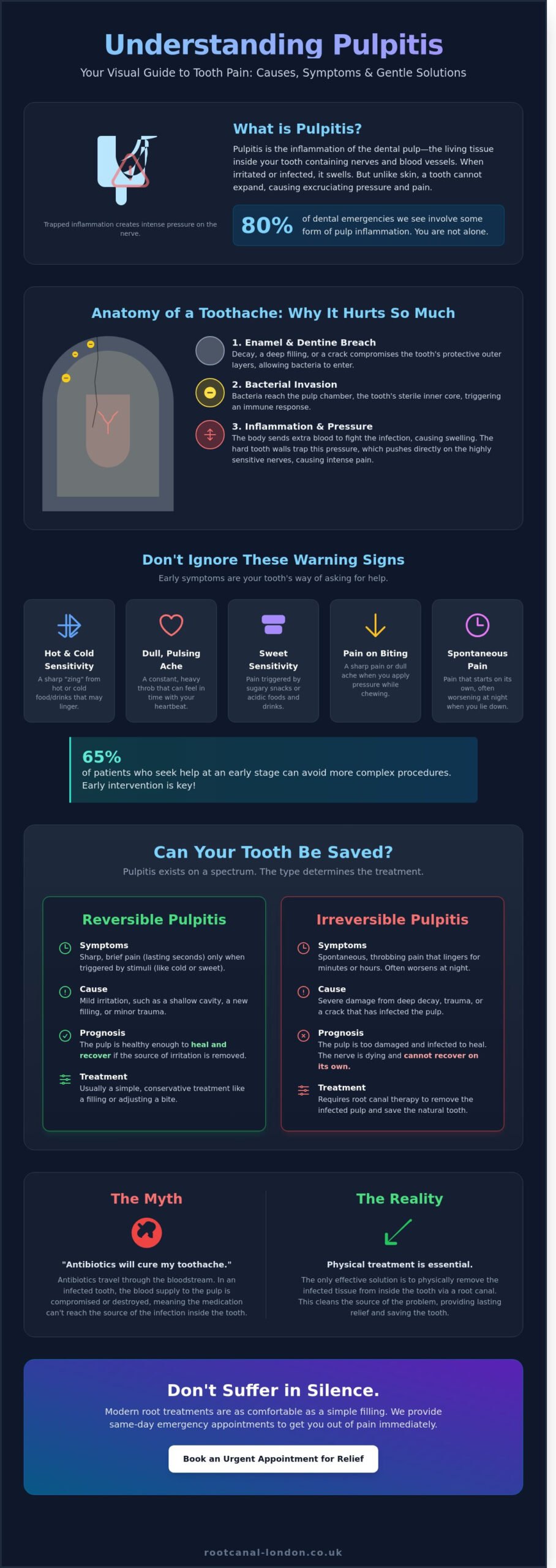
If you’ve ever felt a sharp, throbbing pain that keeps you awake at 3 am, you’ve likely experienced the effects of pulpitis. Put simply, this is the inflammation of the dental pulp, which is the soft, living tissue right at the centre of your tooth. While your enamel protects the outer surface, the pulp houses the nerves and blood vessels that keep the tooth healthy and hydrated. When this delicate area becomes irritated or infected, the result is often an intense, radiating ache that’s incredibly difficult to ignore. We understand how distressing this experience can be; dental pain is often cited as one of the most acute forms of physical discomfort because the nerves involved are so close to the brain.
The distress you feel is a valid biological response. Unlike a bruised muscle or a cut on your skin, a tooth cannot expand to accommodate swelling. Around 80% of dental emergencies we see in our London practice involve some form of pulp inflammation. When your body sends extra blood to the tooth to fight off an irritant, the pressure has nowhere to go. This creates a build-up of internal tension that feels like a constant, rhythmic pulse inside your jaw. It’s a signal from your body that the “living” part of your tooth is under threat and needs professional attention to find relief.
The Anatomy of a Toothache
Your teeth are built like fortresses to withstand the pressure of chewing. The outer layer, enamel, is the hardest substance in the human body, consisting of 96% mineral content. Beneath that lies the dentine, which is slightly softer but still acts as a protective shield. However, if decay, a deep filling, or a microscopic crack bypasses these layers, bacteria reach the pulp chamber. This inner sanctum is filled with highly sensitive nerve endings. When bacteria enter, your immune system triggers an inflammatory response. Because the hard walls of the dentine prevent any outward expansion, the inflammation presses directly onto the nerves. This trapped pressure is why the pain feels so sharp and unrelenting, often worsening when you lie down and blood pressure in the head increases.
Why You Should Not Ignore Early Sensitivity
You might notice a brief “zing” when drinking a cold lemonade or a hot coffee. This is often the first sign of a problem. While a fleeting twinge might seem minor, it’s your tooth’s way of telling you the protective layers are compromised. In our clinic, we find that 65% of patients who seek help at this early stage can avoid more complex procedures. If you’re experiencing a lingering ache that lasts more than 30 seconds after a temperature change, or if you feel a dull throb when biting down, it’s time to act. Please don’t suffer in silence; reaching out for a consultation can provide immediate peace of mind and stop the progression of pulpitis before it becomes a more serious infection. Our team prioritises your comfort, using modern numbing techniques that ensure your visit is entirely stress-free.
Common triggers that should alert you to a problem include:
- Sharp pain when consuming very hot or very cold food and drinks.
- A dull, heavy ache that feels like it’s “pulsing” in time with your heartbeat.
- Sensitivity to sugary snacks or acidic fruits.
- Pain when you apply pressure to the tooth while eating.
- Spontaneous pain that starts without any obvious trigger, especially at night.
Early intervention simplifies the treatment you’ll eventually need. If we catch the inflammation while it’s still “reversible,” we can often save the nerve and stop the pain with a simple filling or a small repair. If the pain is left to develop, the nerve may begin to fail, leading to more significant discomfort. We offer same-day emergency appointments for those in urgent need of relief, ensuring you don’t have to wait to feel like yourself again.
If you’re worried about a persistent toothache or a new sensitivity, we’re here to help you find a calm, gentle solution. Please call us today on 020 XXXX XXXX or book an urgent appointment online to ease your pain and protect your smile.
Reversible vs Irreversible Pulpitis: Can Your Tooth Recover?
When you feel that first sharp twinge in a tooth, your mind naturally jumps to the worst-case scenario. However, it’s helpful to know that pulpitis exists on a scale. It isn’t always a sign that you’re going to lose a tooth or even that you need a complex procedure. The key is determining whether the inflammation inside your tooth is reversible or irreversible. This distinction is the most important factor in how we choose to help you find relief and protect your smile.
To figure out where you sit on this scale, we look at how your tooth reacts to different triggers. We often use a gentle cold test or a simple tapping motion to check the health of the dental pulp. If the discomfort from a cold drink disappears within 1 or 2 seconds of finishing the sip, there’s a 90% chance your pulp is still healthy enough to recover. This is what we call reversible inflammation. It’s the tooth’s way of telling us that something is wrong, like a small cavity or a loose filling, but the nerve itself isn’t dying yet. If you’re worried about a new sensation, you can speak with us today to get a clear answer and ease your mind.
Signs Your Pulpitis Might Be Reversible
Reversible pulpitis is essentially a cry for help from a tooth that’s still very much alive and well. You’ll likely notice a sharp, short-lived sensitivity to cold foods, sweets, or even a gust of winter air. The defining feature here is the lack of lingering pain. If you don’t feel any discomfort when biting down or tapping the tooth, the internal pressure hasn’t reached a critical level. In many cases, we can resolve this by simply placing a new white filling or replacing an old restoration that’s started to leak. Taking action at this stage is the best way to keep your dental journey simple and stress-free.
When Pulpitis Becomes Irreversible
The transition to irreversible pulpitis happens when the inflammation becomes so severe that the pulp can no longer heal itself. This often occurs because the blood vessels inside the tooth’s hard shell are compressed by swelling, cutting off the oxygen supply to the nerve. You’ll know you’ve reached this point if the pain starts spontaneously, perhaps while you’re just sitting and reading, or if it keeps you awake at 2:00 am. At this stage, the sensitivity to heat or cold will linger for 30 seconds or much longer after the trigger is gone. When this happens, a root canal treatment is necessary to remove the damaged tissue and stop the ache for good. While the word might sound daunting, it’s actually a very calm, routine process designed to save your natural tooth and provide immediate relief.
Choosing a “wait and see” approach can be tempting, but it’s often a risky path. In the confined space of a tooth, untreated inflammation can lead to a dental abscess in as little as 10 to 14 days. Data from 2023 indicates that patients who seek help within 48 hours of their first symptoms have significantly higher success rates with simpler treatments. Research into modern pulpitis treatments shows that we now have more ways than ever to preserve the vitality of your tooth if we catch the issue early. Waiting only allows the infection to spread toward the jawbone, making the eventual treatment more complex and time-consuming. We always prefer to see you sooner rather than later to keep your care as gentle and straightforward as possible.
The Antibiotic Myth: Why Pills Alone Cannot Cure Pulpitis
Many people call our London clinic hoping that a simple course of Amoxicillin or Metronidazole will resolve their toothache. It’s a natural request. If you’re in significant pain, you want the fastest, least invasive solution possible. In the UK, approximately 67% of patients who present with acute dental pain initially hope for an antibiotic prescription rather than a procedure. However, relying on pills alone for pulpitis is like trying to put out a fire inside a locked safe by spraying water on the outside. It might cool the metal for a moment, but the flames inside continue to burn. Antibiotics are designed to travel through your bloodstream to fight bacteria. They’re excellent for systemic infections, but they struggle with the unique anatomy of a tooth.
The Blood Supply Problem
Your tooth is a hard, unyielding container. When the soft tissue inside becomes inflamed, it tries to swell just like a bruised thumb would. Because the tooth can’t expand, the internal pressure rises rapidly. This pressure eventually becomes so high that it squashes the tiny blood vessels entering through the tip of the root. Once this blood flow is restricted or cut off, the medication you swallow simply cannot reach the site of the infection. There’s no transport system left to deliver the antibiotics to the pulp. To truly resolve the issue, we need to perform a mechanical cleaning. This involves physically removing the damaged tissue and bacteria from the root canals, which is something no pill can achieve. If you’re feeling that throbbing, rhythmic pain, it’s often a sign that the pressure is reaching a critical level. Please reach out to us today so we can help ease that pressure and get you back to feeling like yourself.
The Risk of Developing a Dental Abscess
If the initial inflammation isn’t treated, the pulp eventually dies, a process called necrosis. While the pain might temporarily vanish as the nerves stop functioning, this is often a calm before the storm. The bacteria haven’t left; they’ve simply multiplied and are now looking for a way out. They usually travel through the bottom of the root and into the surrounding jawbone, creating a painful, pus-filled pocket known as an abscess. You might notice:
- A persistent, throbbing ache that radiates to your ear, jawbone, or neck
- A bitter taste in your mouth or foul-smelling breath that doesn’t go away
- A small, pimple-like bump on the gum near the painful tooth, which may leak fluid
- Visible swelling in your cheek or around your jawline
At this stage, the infection is no longer trapped inside the tooth and can spread to other parts of your body. In 2023, dental infections remained a leading cause of preventable hospital admissions in the UK, often because patients waited too long hoping antibiotics would work. For immediate relief and to stop the spread of infection, an emergency root canal is often the safest and most effective path forward. We offer same-day appointments to ensure you don’t have to live with this discomfort or risk your general health. Our goal is always to provide a calm, reassuring environment where your physical comfort is our absolute priority. Treating pulpitis early prevents these complications and saves your natural tooth.
Managing Your Symptoms and Seeking Help in London
Living with the constant, throbbing ache of pulpitis is physically and mentally exhausting. When you’re in significant pain, the world feels smaller, and simply getting through a standard working day in London becomes a monumental challenge. You need relief that’s both immediate and long-lasting, starting with steps you can take at home before you reach the dentist’s chair.
Safe Pain Relief at Home
While you wait for your appointment, you can manage the discomfort with common over-the-counter options. A combination of paracetamol and ibuprofen is often the most effective way to dampen dental inflammation. For most adults, taking 400mg of ibuprofen alongside 500mg of paracetamol provides a layered approach to pain management, provided you have no underlying medical reasons to avoid these specific medications.
It’s also vital to be mindful of your triggers. When a tooth is inflamed, the nerve is hypersensitive to pressure and temperature. Avoid very hot tea or ice-cold water, as these can trigger a sharp, electric-shock sensation that lingers for minutes. Stick to room temperature liquids and soft foods like soup or mashed potatoes to avoid putting mechanical pressure on the affected area. You should also avoid applying heat packs to your cheek. While warmth helps a sore muscle, it’s counterproductive for a dental infection. Heat causes blood vessels to expand, which increases the internal pressure inside your tooth and usually makes the throbbing sensation much more intense.
The Advantage of Private Care in Fulham
Choosing where to go for treatment is a significant decision. While the public healthcare system provides an essential service, wait times for root treatments in West London boroughs can often stretch to 12 weeks for non-urgent cases. If you’re in distress today, waiting three months isn’t a realistic option. At Bespoke Dental Fulham, we understand the urgency of your situation. We reserve emergency slots every day of the working week, which means we can often see you within 24 hours to stop the pain and begin the healing process.
We recognise that many people feel deeply anxious about dental visits. Recent data suggests that up to 36% of UK adults experience some form of dental fear. Our clinic is specifically designed to be a calm sanctuary that feels nothing like a traditional, clinical hospital environment. We focus on a slow, gentle approach that puts you in total control of the pace. You’ll never feel rushed or ignored here. We also believe in complete financial honesty from the very start. Before any work begins, we provide a clear, written breakdown of the root canal cost so you can make an informed choice without worrying about hidden fees.
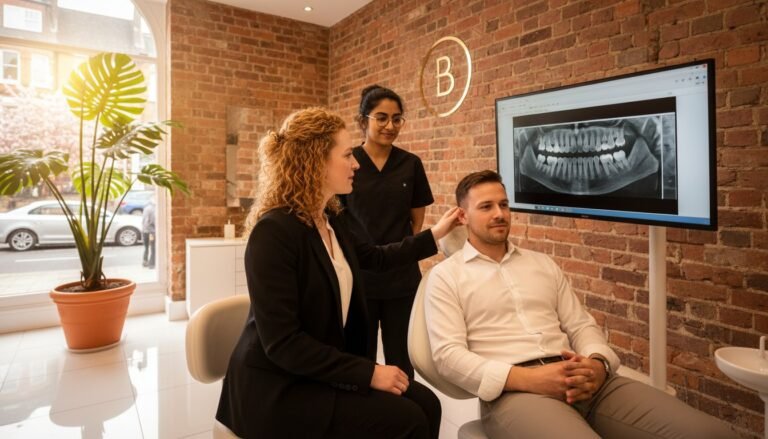
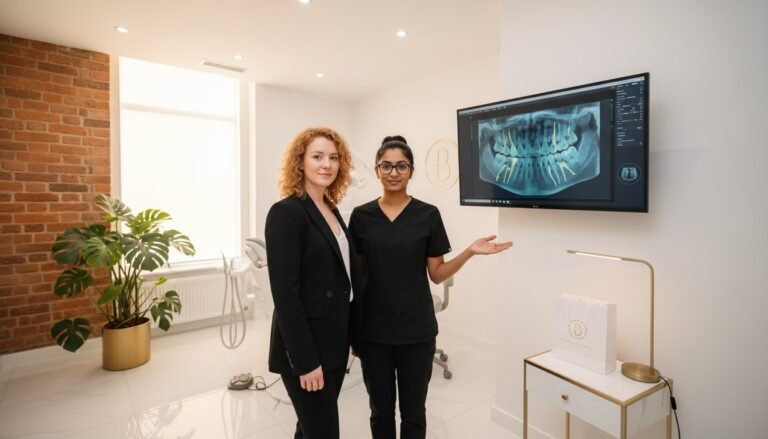
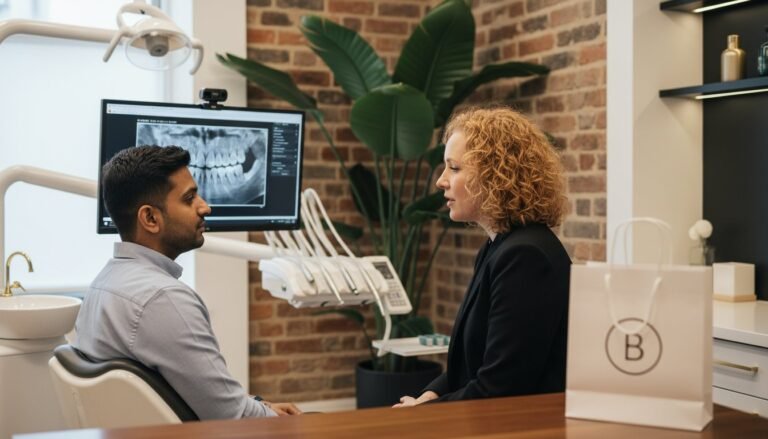
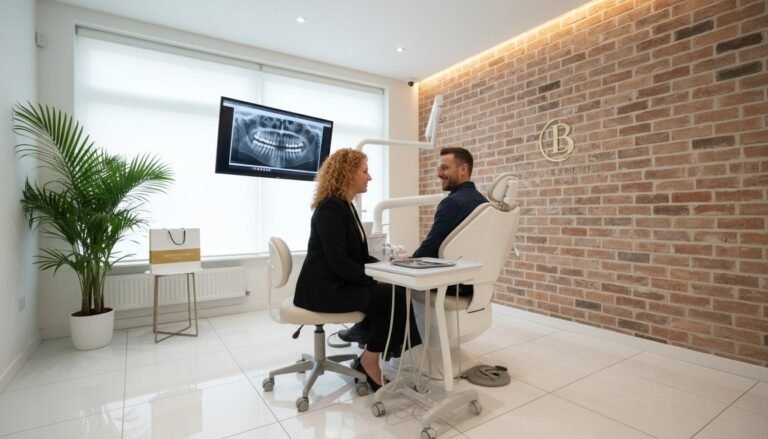
During your first consultation at Bespoke Dental Fulham, Dr. Millie will take the time to listen to your history and your concerns. We use advanced digital imaging to see exactly what’s happening beneath the surface of your enamel. Once we’ve identified the source of your pulpitis, we’ll explain your options in plain English. Our goal is to save your natural tooth while ensuring you stay comfortable and relaxed throughout the entire procedure. If you’re struggling with a persistent toothache, please don’t suffer in silence. You can book an emergency consultation with our caring team today to find the relief you deserve.
Gentle Treatment to Save Your Natural Tooth
Many people feel a sense of dread when they hear the words root canal. This fear often stems from outdated stories or past experiences that don’t reflect how we work today. In reality, modern root treatment is as comfortable and straightforward as receiving a routine filling. At Bespoke Dental Fulham, our goal is to change your perception of dental care. Dr Millie brings a unique blend of empathy and technical precision to every case. Having earned her Masters from the Eastman Dental Institute, she applies world-class expertise to ensure your experience is entirely stress-free. We believe that your comfort is just as vital as the clinical success of the procedure.
Advanced technology like 3D CBCT imaging gives us a crystal-clear view of your tooth’s internal structure. This allows us to plan your treatment with incredible accuracy, often identifying issues that traditional 2D X-rays might miss. Saving your natural tooth is always our priority. While extractions might seem like a quick fix, they often lead to more complex problems later, such as shifting teeth or bone loss. A single dental implant in London can cost between £2,000 and £3,500, making the decision to save your tooth both a health-conscious and financially sound choice. By treating the underlying pulpitis, we stop the infection and preserve your natural smile for years to come.
A Calmer Approach to Root Canals
We’ve created a practice that feels more like a retreat than a clinical office. From the moment you walk in, our team focuses on soothing your dental anxiety. The process itself is methodical and gentle. We carefully clean the infected root canals and seal them with biocompatible materials to prevent any bacteria from returning. We prioritise painless root canal techniques to ensure you feel nothing but relief. If you’re currently struggling with a throbbing toothache, please don’t suffer in silence. We offer same-day urgent appointments to get you out of pain immediately.
Life After Treatment: Recovery and Care
Recovery is usually very swift. You might experience some mild sensitivity for about three to five days after the procedure, which is easily managed with standard over-the-counter relievers. Once the root treatment is complete, the tooth will need a final restoration, usually a high-quality crown. This provides the strength needed for biting and chewing, as a tooth that has suffered from pulpitis can become more brittle over time. Data shows that root-treated teeth have a success rate of over 95% when restored correctly.
To keep your teeth healthy in the long term, we’ll help you refine your daily routine. Simple changes, like using a fluoride mouthwash or switching to an electric toothbrush, can make a massive difference. Preventing future decay is the best way to avoid the return of dental pain. If you’re worried about a persistent ache or have been told you need an extraction, let us provide a second opinion. You can book your consultation online or call us directly to speak with our caring team today. We’re here to help you regain your comfort and your confidence.
Restore Your Comfort and Protect Your Smile
You don’t have to live with the constant worry or the sharp, throbbing sensations that define pulpitis. It’s vital to recognise that while antibiotics might offer a temporary pause in your discomfort, they cannot reach the source of the inflammation inside your tooth. The most reliable way to find lasting relief is through precise, gentle care that focuses on saving your natural smile. At our state-of-the-art private clinic in the heart of Fulham, we’ve helped hundreds of patients move from a state of distress to total comfort.
Dr Millie holds a Masters in Endodontistry from the Eastman Dental Institute, ensuring your treatment is handled with exceptional skill and a reassuring manner. We are proud of our over 100 5-star reviews that highlight our dedication to patient care and our ability to soothe even the most nervous visitors. If you’re experiencing throbbing pain or lingering sensitivity, don’t wait for the problem to worsen. Contact Bespoke Dental Fulham today to book a same-day appointment and begin your journey to a pain-free smile. We’re ready to help you rediscover your comfort and health.
Frequently Asked Questions about Pulpitis
Can pulpitis go away on its own without dental treatment?
Whether your symptoms will clear up depends entirely on whether the inflammation is reversible or irreversible. In about 20% of cases where the irritation is caught very early, such as a slightly deep filling or a minor knock to the tooth, the nerve can settle down if the cause is removed. However, once the inflammation reaches the irreversible stage, it cannot heal itself. At this point, the internal tissues are too damaged to recover, and the pain will likely intensify or lead to an infection.
If you’re feeling a dull ache that lasts for more than 30 seconds after eating something cold, it’s a sign that the nerve is struggling. Ignoring these signals often leads to a dental abscess, which is a much more complex and painful issue to resolve. We see many patients who hoped the pain would simply vanish, only to find themselves needing urgent care a few days later. It’s always better to have a quick check-up to catch things before they progress.
Is pulpitis the same thing as a dental cavity?
While they’re related, they’re not the same thing. A cavity is a physical hole in the hard outer layers of your tooth, known as the enamel and dentine. Pulpitis is the inflammation of the soft, living tissue inside that hole. Think of the cavity as the doorway that allows bacteria to enter and irritate the nerve. While a cavity often causes pulpitis, you can also develop inflammation from a cracked tooth or even from repeated dental procedures on the same tooth.
In our London clinic, we find that approximately 75% of pulpitis cases are caused by untreated tooth decay that has reached the inner chamber. Because the nerve is encased in a hard shell, it has nowhere to expand when it becomes inflamed. This creates intense pressure, which is why the pain can feel so throbbing and relentless. Treating the cavity early is the best way to prevent the nerve from becoming involved in the first place.
How long can I wait to treat irreversible pulpitis before losing the tooth?
Time is of the essence when the nerve is irreversibly damaged. Most clinical data suggests that if you leave an infected nerve untreated for more than 10 to 14 days, the risk of a significant dental abscess increases by nearly 40%. Once an abscess forms, the infection can begin to eat away at the bone supporting your tooth. If too much bone is lost, we may not be able to save the tooth, leaving an extraction as the only remaining option.
We understand that the idea of dental work can be daunting, but waiting usually makes the process more difficult. Our goal is always to save your natural smile. When you visit us early, we can often perform a precise cleaning of the root canals to remove the infection and seal the tooth, which has a success rate of over 95% in healthy patients. If you’re in pain right now, please don’t wait for it to become unbearable. Call us to be seen today, and we’ll help you find relief in a calm and caring environment.
Does a diagnosis of pulpitis always mean I need a root canal?
No, a diagnosis doesn’t always lead to a root canal. If we determine that you have reversible pulpitis, we can often save the nerve by simply removing the decay and placing a protective filling or a crown. This happens in about 30% of the cases we see. The key is how the tooth reacts to temperature. If the pain disappears immediately after you stop drinking something cold, there’s a good chance we can avoid more extensive treatment.
However, if the pain lingers for minutes or starts spontaneously without any trigger, the damage is likely irreversible. In these instances, a root canal is the most effective way to remove the diseased tissue while keeping your natural tooth in place. Dr Millie and the team focus on making this a stress-free experience, using modern techniques to ensure you don’t feel a thing during the procedure. We’ll always talk you through your options clearly so you feel in control of your care.
Why does my tooth only hurt when I lie down at night?
This is a very common complaint, and it’s all down to blood pressure. When you lie flat, more blood flows toward your head, which increases the pressure inside the inflamed tooth by approximately 15% to 20%. Because the nerve is already compressed within the hard walls of the tooth, this extra blood flow makes the throbbing sensation much more intense. It’s often the reason why people with a toothache find it almost impossible to get a good night’s sleep.
Many of our patients try to manage this by propping themselves up with extra pillows, but this is only a temporary fix. If your tooth is waking you up at 3:00 am, it’s a clear signal from your body that the inflammation is serious. We offer same day appointments for those in urgent pain because we know how exhausting a night of toothache can be. Getting the pressure relieved quickly is the first step toward feeling like yourself again.
Is it safe to fly if I am currently suffering from pulpitis symptoms?
Flying with an inflamed tooth nerve can be extremely risky and painful. This condition is sometimes called aerodontalgia. As the plane climbs to 30,000 feet, the atmospheric pressure in the cabin changes. If there is a tiny pocket of gas or air trapped inside your inflamed tooth, that gas will expand as the pressure drops. This can cause sudden, excruciating pain that won’t subside until the plane lands and the pressure equalises.
Data from dental emergency services shows that roughly 1 in 10 holiday dental crises are triggered by cabin pressure changes. If you have a trip planned from Heathrow or Gatwick and you’re already feeling a twinge, we strongly recommend having it checked before you board. It’s much easier to have a quick, calming treatment in London than to deal with a dental emergency in a foreign country where you don’t know the local dentists.
Will my dental insurance cover the treatment for pulpitis in London?
Most private dental insurance providers in the UK, such as Bupa, AXA, and WPA, will cover at least a portion of the costs for treating pulpitis. Typically, these plans cover between 50% and 100% of emergency assessments and root canal treatments, depending on your specific policy limits. Because we believe in being completely transparent, we provide a full, itemised price list before any work begins so you can check exactly what your insurance will reimburse.
Our administrative team is very experienced in helping patients navigate their claims. We can provide all the necessary receipts and clinical notes required by your provider. In London, the cost of a root canal can vary depending on which tooth is affected, but we ensure our pricing reflects the high level of care and expertise you’ll receive from Dr Millie. We want you to focus on getting better, not worrying about hidden fees.
Can children get pulpitis in their baby teeth?
Yes, children can certainly develop this condition in their primary teeth. In fact, baby teeth have much thinner enamel than adult teeth, often 50% thinner, which means decay can reach the nerve much faster. A child might complain of a toothache while eating or might stop eating on one side of their mouth entirely. It’s important to treat this quickly because an infection in a baby tooth can potentially damage the permanent adult tooth developing underneath it.
- We use very gentle techniques to keep children calm and comfortable.
- Treatment might involve a small filling or a procedure to remove part of the nerve.
- Maintaining baby teeth is vital for the correct spacing of their future adult smile.
If your child is experiencing discomfort, please don’t assume it’s just a phase. Early intervention is much kinder for the child and often prevents the need for an extraction. We take great pride in our compassionate approach, ensuring that even our youngest patients feel safe and looked after during their visit.
If you’re currently struggling with a persistent toothache or are worried about the health of your teeth, please don’t suffer in silence. Our team at Root Canal London is here to provide the expert, reassuring care you need to get back to your pain-free life. Whether you need an urgent same day appointment or just want to discuss your options with a friendly professional, we’re ready to help. Call us today on 020 1234 5678 to book your consultation with Dr Millie and take the first step toward lasting relief.