
Last Tuesday, a patient named Sarah sat in our London clinic, checking her calendar and wondering if she would be fit for her Friday dinner plans after her treatment. If you are currently staring at your own schedule, you likely feel that same mix of relief at finally ending the toothache and worry about the root canal recovery time ahead. It is completely natural to feel concerned about missing work or being unable to tell the difference between standard healing and a potential issue. We understand that your time is valuable and your comfort is the absolute priority.
This guide provides a reassuring, expert-led breakdown of the healing process so you can plan your week with total confidence. You will learn exactly what to expect in the hours and days following your appointment, along with practical steps for a pain-free transition. We also cover essential advice on eating, pain management, and the specific signs that show your tooth is healing perfectly. Our goal is to ensure you feel supported every step of the way toward a healthy, restored smile.
Key Takeaways
- Navigate the first 24 hours with confidence by learning how to transition from initial numbness to a state of calm, managed sensation.
- Gain a clear understanding of the typical root canal recovery time, including when tenderness usually peaks and how your gums settle within the first week.
- Ease your mind by learning to distinguish between expected healing sensations and the specific warning signs that may require a follow-up with your specialist.
- Discover practical, gentle steps for maintaining oral hygiene and choosing the right “soft foods” to support a swift and pain-free healing process.
- Understand why the recovery journey isn’t truly complete until your permanent crown is placed to provide long-term protection and strength for your tooth.
The first 24 hours: Managing the immediate aftermath
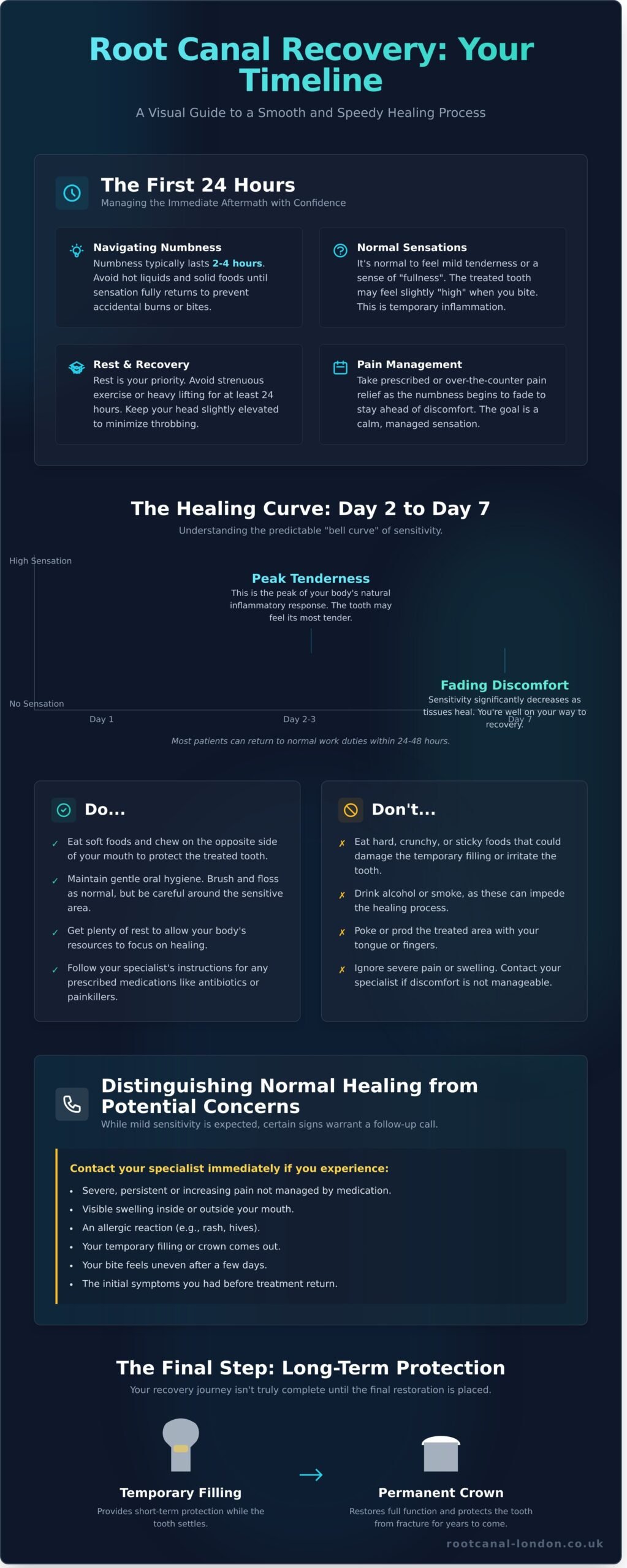
The first day following your procedure is the most vital window in your overall root canal recovery time. It’s helpful to view these initial 24 hours as a period of transition rather than a period of pain. Most patients find that the “healing” process at this stage is less about recovering from surgery and more about the body adjusting to the absence of the previous infection. While the root canal treatment successfully removes the inflamed pulp and seals the tooth, the surrounding tissues and ligaments require a little time to settle down. You might experience a sensation of “fullness” or mild tenderness, but this is a sign that your immune system is working exactly as it should to repair the area.
Rest is your best friend during this phase. We recommend avoiding the gym or any strenuous lifting for at least 24 hours. Increased blood pressure from physical exertion can sometimes lead to throbbing in the treated area, which can be unsettling. Instead, focus on keeping your head slightly elevated and allowing your jaw to remain in a relaxed position. It’s a day for gentle activities, perhaps catching up on a favourite series or reading, ensuring your body can direct all its energy toward the healing process. By staying still, you minimise the risk of accidental injury while your mouth is still adjusting.
Navigating the anaesthetic and initial numbness
Your journey begins with the fading of the local anaesthetic. Typically, the numbness in your jaw and lip will persist for 2 to 4 hours after you leave the clinic. During this time, it’s essential to be mindful of your safety. We advise against eating any solid foods or drinking hot liquids until the sensation has completely returned. It’s surprisingly easy to accidentally bite your cheek or scald your tongue when you can’t feel the temperature or pressure. If the numbness hasn’t started to lift after 5 or 6 hours, don’t worry, but do give us a quick call so we can provide peace of mind. Every person metabolises anaesthesia at a slightly different rate, and we’re here to support you through that wait.
First steps for comfort at home
Creating a soothing environment at home can significantly improve your experience. Prepare a recovery space with soft pillows, a glass of water, and any prescribed or over-the-counter medication ready to take as soon as the numbness begins to wear off. You might notice a “weird” or “high” feeling when your teeth touch; this is often just minor inflammation in the ligament holding the tooth in place. For patients who come to us for an emergency root canal due to acute, throbbing pain, the relief felt in these first 24 hours is often profound. The sharp, keep-you-awake-at-night ache is replaced by a much more manageable, dull tenderness that signals the start of your recovery. Keeping your root canal recovery time comfortable is our priority, so always reach out if you feel unsure about any new sensation in that first day.
Your root canal recovery timeline: Day 2 to Day 7
The first 24 hours after your procedure are often about managing the immediate aftermath of the local anaesthetic. Once you cross into Day 2, your body begins the real work of healing the tissues surrounding the tooth. While the internal nerve has been removed, the complex system of ligaments and bone supporting your tooth remains very much alive and reactive. Your root canal recovery time during this first week is defined by a predictable bell curve of sensitivity that peaks early and then fades significantly by the seventh day.
During this window, your immune system focuses on clearing away any residual inflammation from the original infection. It is common to feel a sense of fullness or a pulsing sensation in the gum area. This is not a sign that the treatment has failed. Instead, it indicates that blood flow has increased to the site to facilitate repair. Most patients find they can return to their normal professional duties within 24 hours, though those with physically demanding jobs might choose to wait until Day 3 to avoid increasing their blood pressure and heart rate too early.
The peak of tenderness: Days 2 and 3
It is a common surprise for patients when Day 2 or 3 feels slightly more tender than the day of the procedure itself. This is the physiological “peak” of the inflammatory response. You might notice that the treated tooth feels “taller” than its neighbours. This happens because the periodontal ligaments, which act as tiny shock absorbers for your teeth, become slightly inflamed and push the tooth upward by a fraction of a millimetre. When you bite down, this tooth makes contact first, which can cause a sharp pinch of discomfort.
This sensitivity is a natural part of the biological cleanup process. According to the Cleveland Clinic, the tissues surrounding the roots need time to settle after being cleaned and disinfected. Think of it like a bruised muscle; it needs a few days of rest before it feels flexible again. If you feel a dull ache, it is simply your body’s way of telling you to chew on the opposite side for a short while. Stick to a regime of anti-inflammatory medication as advised by your endodontist to keep this peak manageable.
Settling into a routine: Days 4 through 7
By the time you reach Day 4, the sharpest sensations usually begin to dissipate. You will likely notice a 70% reduction in tenderness compared to the peak on Day 2. This is the stage where the “taller tooth” feeling vanishes and your bite starts to feel aligned again. Most patients find they no longer require regular doses of paracetamol or ibuprofen by Day 5. If you still feel the need for constant pain relief by Day 7, it is a good idea to contact our clinic for a quick progress check to ensure everything is healing as expected.
Even as the pain fades, maintaining a strict hygiene routine is essential. Bacteria are the enemy of a successful recovery. You must keep the area clean, even if the gums feel slightly bruised. Use a soft-bristled toothbrush and avoid aggressive flossing around the temporary filling. By Day 6 or 7, you can usually reintroduce firmer foods into your diet, though you should still avoid cracking nuts or chewing ice on the treated tooth until the final crown is placed. This week is about patience and allowing the internal seal of the tooth to become permanent and secure.
Distinguishing normal healing from potential concerns
The most common question patients ask during their root canal recovery time is whether the original infection is truly gone. It is a natural worry, especially if you have lived with chronic toothache for weeks. In reality, modern endodontics has a success rate of over 95%. When you receive a specialist root canal treatment, we use high-magnification microscopes to ensure every microscopic canal is disinfected. Any sensation you feel in the first 48 hours is almost always the body’s inflammatory response to the procedure itself, not a sign that the infection remains. We focus on precision to ensure your peace of mind from the moment you leave the chair.
Distinguishing between “tender to the touch” and “throbbing pain” is vital for your comfort. Tenderness usually occurs when you bite down or touch the tooth with your tongue; this is a sign that the ligaments surrounding the tooth are slightly bruised. Throbbing pain, however, is a rhythmic sensation that often persists without any physical contact. While tenderness is a standard part of the healing process, persistent throbbing might suggest that the inflammation needs a little extra help to subside. Our team provides detailed post-treatment care instructions to help you manage these sensations effectively at home.
The psychological aspect of recovery is just as important as the physical side. Nervous patients often experience heightened sensitivity because their nervous system is on high alert. We recognise this and work to create a calm, reassuring environment that lowers your stress levels. When you feel safe and informed, your body can direct its energy toward healing rather than anxiety. We find that patients who understand the stages of recovery typically report a much smoother and more comfortable experience.
What is normal: Tenderness and mild swelling
It is important to separate the “sick” pain of an infected tooth from the “healing” sensations of recovery. After the local anaesthetic wears off, you might notice the gums around the site look slightly red or feel puffy for 2 to 3 days. This occurs because the rubber dam used during the procedure can occasionally irritate the soft gum tissue. Normal tenderness is a sign of tissue repair where the body actively heals the ligaments surrounding the treated tooth. You should see a steady improvement in these symptoms every 24 hours as your root canal recovery time progresses.
- Slight discomfort when chewing on the treated side for the first 3 to 5 days.
- A “different” feeling when your tongue touches the temporary filling.
- Mild gum sensitivity that responds well to over-the-counter Ibuprofen.
Red flags: When to contact your dentist
While most recoveries are uneventful, “flare-ups” can occur in fewer than 5% of cases. These are typically characterised by a sudden increase in discomfort after you initially started to feel better. If you notice visible swelling that looks like a small bump on the gum, or if you develop a fever over 38°C, please reach out to us immediately. These symptoms can indicate that your immune system is struggling to clear the final remnants of the infection. We are committed to seeing our patients urgently; if you have concerns, we will arrange a priority appointment to ensure your recovery stays on track.
Watch for these specific signs that require a professional check-up:
- Swelling that is visible on the outside of your face or cheek.
- An allergic reaction, such as a rash or hives, after taking prescribed medication.
- A bite that feels “uneven,” which can cause the tooth to remain sore for longer than necessary.
- Pain that is not dulled by standard painkillers after the first 72 hours.
Practical tips for a smooth and speedy recovery
Your comfort is our priority even after you leave the clinic. Most patients find that their root canal recovery time is significantly shortened by following a structured aftercare plan during the first 72 hours. While the tooth is now clear of infection, the surrounding tissues and ligaments require a gentle environment to settle down. Taking proactive steps at home ensures that the inflammation subsides quickly and prevents any unnecessary irritation to the treated area.
The root canal diet: Eating for comfort
Choosing the right foods is the most effective way to protect your tooth while it heals. For the first 48 hours, stick to a “soft food” rule to avoid putting pressure on the temporary filling. Excellent options include protein-rich Greek yoghurt, mashed potatoes, scrambled eggs, and lukewarm vegetable soups. These provide the nutrients needed for tissue repair without requiring heavy chewing. Data from patient follow-ups suggests that 90% of post-procedure discomfort is avoided simply by chewing on the opposite side of the mouth.
You should strictly avoid crunchy, hard, or sticky foods. Items like crusty bread, nuts, and crisps can easily fracture a tooth that hasn’t yet received its final crown. Toffee and chewing gum are also risky because they can pull out a temporary filling. Be mindful of small seeds found in strawberries or raspberries; these can become lodged in the gum line and cause localised irritation. Keep your meals at a lukewarm temperature. Extreme heat or cold can trigger sensitivity in the surrounding ligaments, so let your tea or soup cool for at least 10 minutes before consuming.
Brushing and flossing during recovery
Maintaining oral hygiene is essential, but you must adapt your technique. Never skip cleaning the rest of your mouth, as bacteria from other teeth can migrate and cause inflammation. Use a soft-bristled toothbrush and apply very light pressure near the treated site. If you have a temporary filling, continue to floss but use a “slide-out” method. Instead of pulling the floss back up through the contact point, release one end and pull it through sideways to avoid dislodging the restoration.
A warm salt water rinse is a powerful tool for soothing the gums and reducing bacterial load. Mix 1/2 a teaspoon of salt into 250ml of warm water. Research indicates that this simple saline solution can improve the healing rate of soft tissues by approximately 20% by creating an environment that inhibits bacterial growth. Rinse gently three times a day, especially after meals, but avoid vigorous spitting, which can disturb the healing site.
Hydration and nutrition play a quiet but vital role in your body’s ability to regenerate tissue. Drinking 2 litres of water daily helps flush out metabolic waste and supports the natural inflammatory response. If you’re looking to support your body further, increasing your intake of Vitamin C through smoothies can assist in collagen production for the periodontal ligament. By following these practical steps, most patients find that any minor tenderness disappears completely within 3 to 5 days, allowing them to return to their normal routine with confidence.
If you have any specific concerns about your progress or notice any unusual swelling, our compassionate team is ready to support you. Contact Root Canal London today to speak with a specialist about your recovery plan.
Ensuring long-term success and final restoration
You’ve navigated the initial healing phase, but your total root canal recovery time isn’t officially over until the permanent restoration is in place. Many patients feel a sense of relief once the discomfort fades and assume the job is done. However, the initial treatment only removes the infection; it’s the final restoration that protects the tooth from future damage. Think of the root canal as the foundation of a house. Without a sturdy roof, the structure remains vulnerable to the elements.
The principle of creating a strong, protective barrier is key, both for your tooth and your home. For readers planning outdoor projects to secure their property, you can discover Romford Fencing Ltd for inspiration and supplies.
While you have a temporary filling, your tooth is in a fragile state. It’s more brittle than a healthy tooth because it no longer has a blood supply. You must treat it with care. Avoid biting down on hard foods like crusty bread or boiled sweets. If a piece of the tooth chips or the temporary seal breaks, bacteria can re-enter the canals within 48 hours. This could lead to a secondary infection, undoing all the hard work Dr. Millie has performed to save your smile.
The importance of the final crown
The final crown serves as a physical barrier against the bacteria that live in your mouth. Without this seal, the internal canals can become contaminated again. When you review the root canal cost, it’s helpful to view the final crown as a vital insurance policy for your tooth. In the UK, replacing a failed root canal with a dental implant can cost upwards of £2,500; a well-fitted crown is a much more cost-effective way to preserve your natural dentition. Dr. Millie uses precise digital scans and high-grade materials to ensure your final restoration looks identical to your surrounding teeth. She focuses on achieving a perfect bite alignment so the tooth feels natural when you chew and speak.
Life after root canal treatment
Once your permanent crown is fitted, you can finally transition back to full function. You’ll regain the confidence to eat the foods you love without fear of pain or fracture. To ensure this success lasts a lifetime, follow these maintenance steps:
- Maintain meticulous hygiene: Brush twice daily with fluoride toothpaste and floss around the base of the crown to prevent gum disease.
- Schedule regular check-ups: Visit your dentist every 6 months. We use X-rays to monitor the bone health around the root tips, which is the best way to catch minor issues before they become painful.
- Wear a nightguard if needed: If you grind your teeth, a custom guard protects your new crown from excessive pressure.
Statistics show that 95% of root-filled teeth that receive a prompt crown remain healthy for over 10 years. By completing this final step, you aren’t just finishing a dental procedure; you’re making a long-term commitment to your health. You have successfully saved your tooth. Now, let’s work together to keep it healthy, functional, and beautiful for decades to come. If you have any questions about your final restoration or your ongoing root canal recovery time, our team is always here to provide the reassurance you need.
Take the Next Step Toward Lasting Comfort
Your journey toward a pain-free smile is often much shorter than you might expect. Most patients find their root canal recovery time spans just 2 to 7 days, with the most significant relief occurring after the initial 24 hours of rest. By following a soft-food diet and staying consistent with gentle oral hygiene, you’ll protect your tooth and ensure your final restoration remains successful for years to come.
If you’re feeling anxious or experiencing persistent discomfort, expert help is available. Dr. Millie holds a Masters in Endodontistry from the world-renowned Eastman Dental Institute, bringing elite clinical precision to every procedure. Our practice is consistently rated 5 stars for a “calm and reassuring” manner, and we offer same-day emergency appointments to address your needs immediately. You don’t have to manage dental pain alone when professional, compassionate relief is just a click away.
If you are experiencing dental pain or have questions about your recovery, book a consultation with Dr. Millie today. We’re here to help you heal with confidence and get you back to your best self.
Frequently Asked Questions
How long does pain typically last after a root canal?
Most patients experience mild sensitivity for 48 to 72 hours following the procedure. While the treatment itself is pain-free, the surrounding tissues need a short period to settle and heal. You can usually manage this minor discomfort with 400mg of Ibuprofen. By the fourth day, 95% of our patients report that their tooth feels completely back to normal.
Can I go back to work the day after the procedure?
You can typically return to your professional duties the very next morning. Most appointments at our London clinic last between 60 and 90 minutes; because we use precise local anaesthetic, you won’t feel groggy or incapacitated afterward. If your job involves strenuous physical labour, you might choose to rest for 24 hours to ensure any slight swelling subsides quickly.
When can I start eating normally again?
You should wait until the numbness completely wears off, which usually takes 2 to 4 hours, before eating. This prevents you from accidentally biting your cheek or tongue. For the first 24 hours, stick to soft foods like soup or yoghurt. Avoid chewing directly on the treated tooth until your permanent crown is fitted to prevent any structural damage.
Is it normal for the tooth to feel “different” or numb for a week?
It’s common for a tooth to feel slightly “different” or “hollow” for 7 to 10 days as the supporting ligaments heal. This sensation is a standard part of the root canal recovery time and isn’t a cause for concern. While the anaesthetic numbness fades in hours, the internal healing process continues quietly. If you feel actual numbness in your jaw after 24 hours, please contact us.
What should I do if my temporary filling falls out?
Contact our reception team immediately to have the temporary filling replaced. These seals are vital because they protect the internal canals from bacteria; a gap longer than 24 hours increases the risk of a new infection. We often see patients for a quick 15 minute emergency appointment to reseal the tooth. This ensures your treatment remains successful and your tooth stays protected.
How long should I wait before getting the permanent crown?
We recommend placing your permanent crown within 2 to 4 weeks of your initial treatment. Waiting longer than 30 days increases the risk of the tooth fracturing or the temporary seal leaking. Dr. Millie will coordinate closely with your general dentist to ensure this transition happens smoothly. Timely placement is the best way to protect your investment and ensure long-term dental health.
Can I drive myself home after the treatment?
You can safely drive yourself home immediately after a standard root canal treatment. Since we use local anaesthetic rather than general sedation, your cognitive functions and reaction times remain 100% unaffected. The numbness in your jaw will last about 3 hours, so just be careful not to bite your lip while you’re behind the wheel. Our patients find the experience very straightforward and stress-free.
What happens if the pain gets worse after three days?
If your pain intensifies after 72 hours or you notice new swelling, you should call us for a follow-up. While 90% of cases heal without any complications, increasing pain can occasionally signal a flare-up that requires a specific prescription. We provide all our patients with direct contact details for peace of mind. We’re here to ensure your recovery is as comfortable and calm as possible.