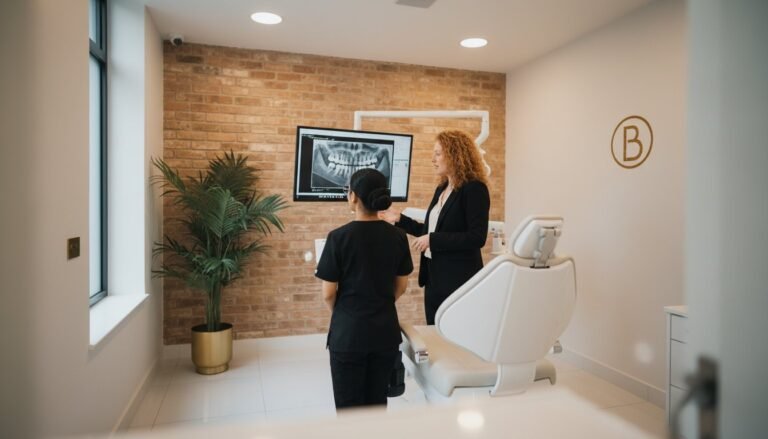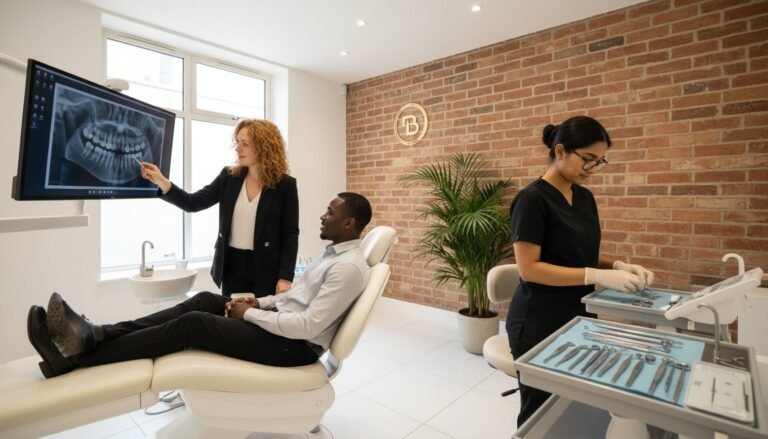
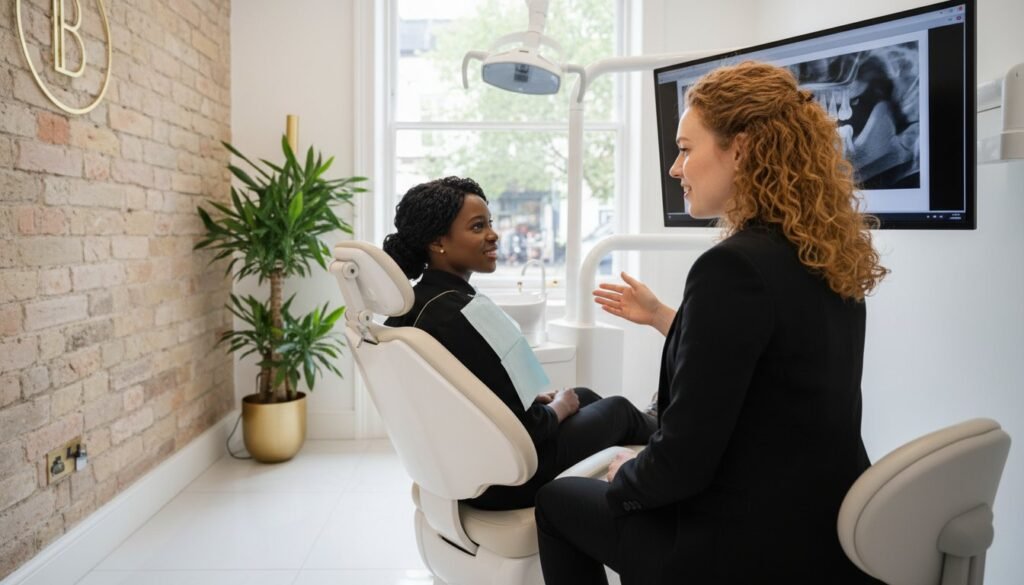
On a Tuesday afternoon, Sarah was enjoying a simple lunch in Marylebone when a sudden, sharp crunch changed everything. Discovering a broken tooth is often a moment of instant panic, leaving you wondering if your smile will ever feel the same again. It’s completely natural to feel a rush of anxiety when you feel that jagged edge or a sudden flash of sensitivity. You might be worried about the cost of private care in London or simply dreading the thought of a long, painful procedure. According to recent dental health surveys, nearly 25% of adults in the United Kingdom will experience a dental injury like this, so you’re certainly not alone in your concern.
The good news is that a broken tooth doesn’t have to mean losing your natural smile or enduring a stressful experience. This guide will help you manage the initial discomfort and discover the gentle, same-day treatments available to restore your peace of mind. We’ll walk through the immediate steps you can take at home, the clear costs of repair, and how modern dental techniques focus entirely on your comfort. If you’re feeling worried right now, remember that help is available today. You can call Bespoke Dental Fulham to speak with a caring team member who can help ease your pain and book a same-day appointment.
Key Takeaways
- Learn the essential first-aid steps to take immediately to protect your smile and remain calm while you seek professional help.
- Understand how to identify different levels of dental damage and how the location of the break influences your path to recovery.
- Discover the modern, gentle techniques used to repair and save a broken tooth, prioritising the preservation of your natural smile.
- Find out how a reassuring environment and empathetic care can help ease dental anxiety, even during an unexpected emergency.
- Explore the benefits of accessing private urgent care in Fulham for prompt, unhurried appointments that focus entirely on your comfort.
What to Do Immediately After Breaking a Tooth
Discovering a broken tooth is often a shocking experience that can leave you feeling vulnerable and uncertain. Your first priority is to stay calm. While the situation feels urgent, most teeth can be successfully restored if you take the right steps within the first 60 minutes of the injury. At our London clinic, we see patients in this exact position every day, and we pride ourselves on providing a gentle, reassuring environment to help you move from pain to relief as quickly as possible.
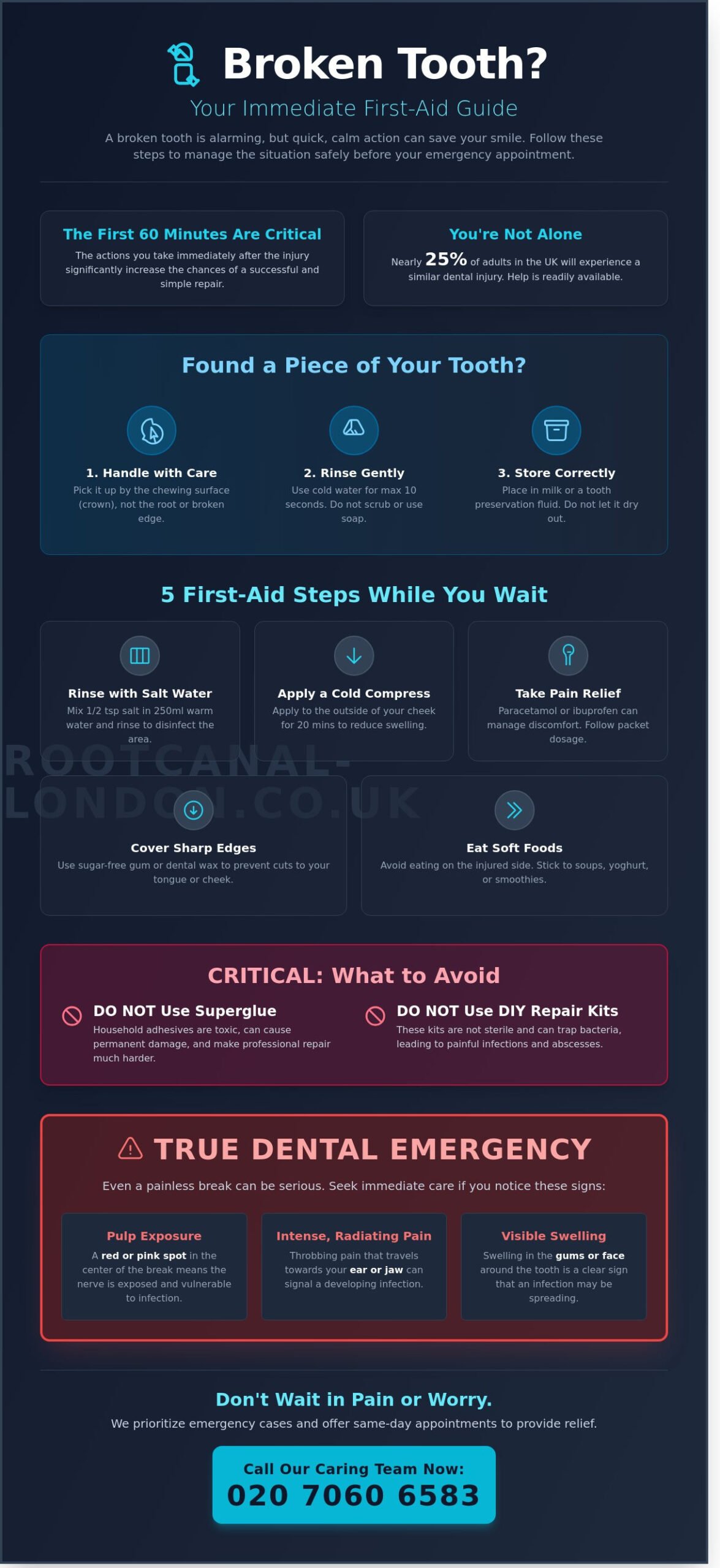
If you have managed to find a fragment of your tooth, please handle it with care. Pick it up by the chewing surface rather than the broken edge. You should rinse it very gently under cold water for no more than 10 seconds to remove any debris, but do not scrub it or use soap. To keep the fragment viable for potential reattachment, place it in a small container of milk or a dedicated tooth preservation fluid. If these aren’t available, keeping it inside your cheek is an alternative, though this isn’t recommended for children who might swallow it. Prompt action is vital because the sooner you reach us, the higher the chance we can use the original piece to rebuild your smile.
You might be tempted to reach for a “home repair kit” or even household adhesives like superglue. I strongly advise against this. These DIY methods are not sterile and can trap harmful bacteria deep inside the tooth structure, leading to painful abscesses or complex infections. Furthermore, these materials are difficult for a dentist to remove and can cause permanent damage to your remaining enamel. If you are worried about the appearance of your tooth or a sharp edge, please call us on 020 7060 6583 for a same-day appointment. We offer compassionate, professional care to ensure your tooth is repaired safely and correctly the first time.
Five Steps for Dental First Aid
While you are waiting for your appointment, there are five practical steps you can take to manage the area and stay comfortable. First, rinse your mouth with a warm salt water solution. Mixing half a teaspoon of salt into 250ml of warm water helps to naturally disinfect the area and reduce the bacterial load. Second, if you are experiencing any facial swelling, apply a cold compress to the outside of your cheek for 20 minutes at a time. This helps to constrict blood vessels and limit inflammation.
- Rinse with warm salt water to keep the site clean.
- Apply a cold compress to manage swelling and numb the area.
- Take over-the-counter pain relief, such as paracetamol or ibuprofen, strictly following the dosage on the packet.
- Cover any sharp, jagged edges with a small piece of sugar-free chewing gum or dental wax from a chemist.
- Avoid eating on that side of your mouth and stick to soft foods like yoghurt or soup.
When a Broken Tooth is a True Emergency
It is a common misconception that a broken tooth only requires urgent care if it hurts. In reality, even a painless break can be an entry point for bacteria. When the outer enamel is lost, the porous dentine underneath is exposed. Research into types of tooth injuries shows that bacteria can travel through these pores toward the nerve at a surprisingly fast rate. If you notice a small red or pink spot in the centre of the break, this indicates that the dental pulp is exposed, which is a significant emergency requiring immediate attention to save the tooth’s vitality.
Intense, throbbing pain that radiates toward your ear or jaw, or visible swelling of the gums and face, are signs that an infection may be spreading. These symptoms should never be ignored. We prioritise emergency cases to ensure you aren’t left in distress. Our goal is to provide a stress-free experience that addresses both the physical damage and the anxiety that often accompanies dental trauma. If you’re in pain or simply worried about a recent break, please get in touch with our caring team today to secure a priority consultation.
Understanding the Different Types of Tooth Damage
When you first notice a broken tooth, it’s natural to feel a surge of anxiety. You might wonder if the tooth can be saved or if the repair will be painful. It helps to understand that dental damage exists on a spectrum, and not every break is an emergency. Enamel is the hardest substance in the human body, capable of withstanding pressures of up to 30,000 pounds per square inch, yet it can still succumb to sudden trauma or long term wear. Our primary clinical goal is always to protect the pulp. This is the delicate living centre of your tooth that houses the nerves and blood vessels. If the damage reaches this area, the tooth becomes vulnerable to infection and intense sensitivity.
The location of the break is the most significant factor in determining how we help you. A chip on the biting edge of a front tooth is often a straightforward fix, whereas a crack that travels toward the root requires a more detailed approach. You might also notice tiny, vertical lines on your teeth when you look in a bright mirror. These are craze lines. Statistics show that roughly 80% of adults over the age of 40 have these surface marks. They are shallow, painless, and only affect the outer enamel. Unlike a structural crack, craze lines don’t threaten the integrity of your tooth and usually don’t require any treatment at all unless you want to improve the appearance of your smile.
Minor Chips and Surface Cracks
Minor chips are usually confined to the enamel layer, which is approximately 2.5mm thick at the biting edges. Because these chips don’t reach the dentine or the pulp, they are often painless. We typically restore these using composite bonding. This involves applying a tooth coloured resin that we carefully sculpt to match your natural tooth shape. It’s a quick, non invasive process that we can often complete in a single 45 minute appointment. If the damage is very slight, we might simply smooth and polish the rough edge. This removes any sharp spots that could irritate your tongue or cheek, leaving the tooth feeling natural and comfortable again.
Deep Fractures and Split Teeth
Deep fractures are more serious because they compromise the tooth’s internal structure. The process of treating cracked teeth varies significantly depending on whether the crack has reached the gum line or remained in the crown. If a crack extends below the gum line, the tooth may become “unrestorable,” though we always explore every option to avoid an extraction. The direction of the break matters too. A horizontal break near the tip is easier to manage than a vertical fracture that splits the tooth toward the root. If you’re worried about a crack you’ve found, you can speak with our team for reassurance and a professional assessment.
When a fracture exposes the inner pulp, we often recommend root canal treatment to remove the damaged tissue and seal the tooth against future infection. This is a highly effective way to stop pain and preserve your natural tooth. Vertical root fractures are rarer, accounting for about 3% of dental cracks, but they often start at the root and move upward. These require a different strategy because they are often only discovered when the surrounding gum or bone becomes inflamed. The treatment for a broken tooth depends entirely on the depth of the damage, and early intervention is the best way to ensure a simple, successful repair.
How We Repair and Save Your Broken Tooth
When you first notice a broken tooth, it’s natural to feel a sense of worry about the future of your smile. You might wonder if the tooth can be fixed or if you’ll lose it entirely. Our philosophy is rooted in the belief that your natural teeth are always worth saving. No matter how advanced modern dental implants have become, they can’t quite replicate the unique way a natural tooth feels and functions. We focus on preserving your original tooth structure whenever possible, using precise techniques to restore both its strength and its appearance.
Our approach involves moving quickly from initial emergency relief to a strategy for long-term protection. While following official Broken tooth care instructions can help you manage swelling and discomfort in the first hour, a clinical assessment is the only way to ensure the tooth remains viable. We look beyond the immediate crack to see how the foundation of the tooth is holding up. This transition is about more than just a quick fix; it’s about making sure your tooth can withstand the daily pressure of biting and chewing for decades to come.
Restorative Options: From Fillings to Crowns
Small chips or minor cracks often require a straightforward solution. We use high-quality composite resins, often called white fillings, to seal the break and prevent bacteria from entering the inner layers. These materials bond directly to your enamel, meaning we only need to remove the damaged portion, keeping the rest of your tooth intact. It’s a quick, effective way to restore a broken tooth and get you back to your routine with minimal fuss.
Moderate damage often requires a more robust approach than a standard filling can provide. In these cases, we might recommend a dental inlay or onlay. These are bespoke pieces crafted in a dental laboratory to fit perfectly into the space left by the break. Think of them as high-strength puzzle pieces that reinforce the biting surface. Because they are made of durable porcelain or composite, they offer much greater longevity for teeth that have lost a significant amount of their original structure.
A porcelain crown provides 360-degree support for teeth that have suffered severe fractures. We often describe a crown as a helmet for your tooth. It fits over the entire visible part of the tooth, acting as a protective shield that absorbs the force of your bite. This prevents the weakened structure underneath from splitting further. If you’re worried about the stability of a tooth after an accident, a crown is often the most reliable way to ensure it stays strong and functional.
Protecting the Root and Nerve
Beneath the hard enamel of your tooth lies the dental pulp, a sensitive area containing the nerves and blood vessels. When a break is deep, this internal system can become exposed or bruised. We use advanced imaging to assess whether the pulp has been affected. If the nerve is damaged or if bacteria have reached the centre, it’s vital to act quickly. Treating an infection in its early stages is much more comfortable than waiting for a painful abscess to develop, which can put the entire tooth at risk.
We use a private root canal as a gentle, effective way to save a tooth that might otherwise need extraction. This process involves carefully cleaning the internal canals and sealing them to prevent future issues. It’s a routine procedure for our team, focused entirely on your comfort and the preservation of your natural smile. By removing the damaged tissue and sealing the tooth, we can stop the pain and provide a healthy foundation for a final restoration like a crown.
If you’re currently experiencing a sharp twinge or a dull ache from a broken tooth, please don’t feel you have to wait. We offer urgent, same-day appointments to provide immediate relief and give you a clear plan for repair. You can call us today to speak with our caring team and book a time to be seen, ensuring your tooth gets the expert attention it needs to stay healthy and whole.
A Calm Approach for Nervous Patients
Dental anxiety is a very real barrier that prevents many people from seeking the help they need. We see this frequently in our London practice. According to the Adult Dental Health Survey, approximately 12% of adults in the UK experience extreme dental phobia. This fear often leads to people delaying treatment even when they have a broken tooth, which can unfortunately lead to more complex issues later on. We want you to know that your feelings are valid and you’re not alone. Our practice is designed to be a sanctuary where your comfort is the absolute priority. We don’t just treat teeth; we care for the person attached to them.
There’s a persistent myth that fixing a broken tooth is inherently painful. This simply isn’t the case with modern dentistry. The techniques we use are designed to be incredibly gentle. Most patients find that the anticipation of the appointment was the only difficult part. Once they’re in the chair, the experience is often far more relaxing than they ever imagined. We work at your pace, ensuring you feel safe and in control at every moment.
Creating a Stress-Free Experience
Your journey to relief starts the moment you contact us. We believe a warm, empathetic welcome is essential when you’re in distress. Our team is trained to listen to your concerns without judgment. We use clear, simple communication to remove the fear of the unknown. By explaining exactly what’s happening and why, we put the control back in your hands. We never rush our patients. Even during emergency appointments, we take the time needed to ensure you feel settled and ready before we begin any work. If you need a moment to breathe or ask a question, we’re here to listen.
Advanced Comfort and Sedation
We use high-strength local anaesthetics to ensure total numbness before any treatment begins. We wait as long as necessary for the area to be completely desensitised so you won’t feel a thing. For those who need extra help to relax, we offer root canal sedation. This option allows you to drift into a state of deep relaxation while remaining conscious and able to respond to our team. It’s an excellent choice if you’ve had bad experiences in the past or feel particularly overwhelmed by the prospect of a dental visit. We monitor your comfort levels constantly throughout the procedure. If you’re feeling anxious about your dental health, please don’t suffer in silence. You can book a same-day emergency appointment for a reassuring consultation and take the first step toward a pain-free smile.
We understand that the sounds and sensations of a dental clinic can be triggers for many people. To help with this, we’ve created an environment that feels more like a private lounge than a clinical space. We offer noise-cancelling headphones and a choice of music to help you tune out the world. Our goal is to make your visit so comfortable that you forget you’re even at the dentist. We’ve helped thousands of nervous patients regain their oral health, and we’re confident we can help you too. We provide a range of comfort measures, including:
- Warm, weighted blankets to help you feel grounded and secure during treatment.
- A “stop” signal where you can raise your hand at any time to pause the procedure.
- Detailed post-treatment care plans so you know exactly what to expect during your recovery.
By focusing on these small details, we transform the experience of emergency dentistry. You don’t have to let fear dictate your health. Whether your tooth broke this morning or has been a problem for weeks, we’re ready to help you in a way that feels safe and supportive.
Accessing Urgent Dental Care in Fulham
When you’re dealing with a broken tooth, every hour matters. Choosing a local expert in Fulham means you aren’t spending half your day travelling across London while in pain. We know that dental emergencies don’t happen on a schedule. They usually happen right before a big meeting or in the middle of a Sunday roast. At Bespoke Dental Fulham, we’ve designed our practice to be a sanctuary for people in these exact moments. Our location allows us to serve the local community quickly, providing a level of responsiveness that larger, more central clinics often struggle to match.
Private emergency care offers a level of attention that is hard to find in other settings. Instead of a rushed ten minute assessment, we block out 45 to 60 minutes for your emergency visit. This allows Dr. Millie to listen to your concerns, perform a thorough examination, and start treatment immediately. Our goal is to ensure you leave the clinic feeling significantly better than when you walked in. You won’t be left sitting in a waiting room for hours; your appointment time is yours alone. This dedicated time is vital because it allows us to address the root cause of your discomfort rather than just patching the surface.
Dr. Millie and her team focus entirely on your comfort and long term health. We understand that a broken tooth can be a source of intense anxiety, especially if you’re worried about the future of your smile. Our approach is gentle and precise. We use the latest diagnostic tools to see exactly what’s happening beneath the gum line, ensuring we don’t guess when it comes to your health. If you’re in pain right now, please call us. We often have space to see emergency patients within two or three hours of their initial call, providing the rapid relief you need to get back to your day.
Same-Day and Emergency Appointments
Our Fulham clinic stays ready for the unexpected every single day. We keep dedicated emergency slots open because we don’t want our patients to suffer overnight or through a long weekend. We’re equipped with advanced diagnostic scans that provide a three dimensional view of your tooth structure. This means we can identify cracks or infections that standard X-rays might miss. For busy Londoners, we offer extended hours on Tuesday evenings until 7:00 PM and Saturday morning sessions. This flexibility means you can get help without having to rearrange your entire work week.
Your Journey to a Restored Smile
The process starts the moment you pick up the phone. Our reception team is trained to provide immediate advice to keep you comfortable until you reach the clinic. Once you arrive, Dr. Millie performs a detailed assessment to determine if the nerve is affected. We believe in complete honesty regarding your options and the investment required for your care. You can find clear, transparent information on root canal cost and restorative fees on our website, so there are never any surprises when it’s time to settle your account.
After your initial treatment, we’ll create a simple follow up plan to keep the tooth healthy. This journey includes:
- An initial call to assess the urgency and provide first aid advice.
- A same day clinical examination with high resolution digital imaging.
- Immediate pain relief and stabilization of the damaged tooth.
- A clear, written plan for any permanent restorations like crowns or fillings.
We’re here to take the stress out of your dental emergency. If you’re worried about a damaged tooth or experiencing persistent pain, don’t wait for the symptoms to worsen. Call us at Bespoke Dental Fulham today to book your emergency appointment and let us help you find relief.
Restoring Your Smile and Peace of Mind
A broken tooth can feel like a major crisis, but it’s a situation we handle with gentle care and precision every day at our Fulham clinic. Whether you’ve experienced a minor chip or a more significant fracture, the most important step is to act quickly to protect the inner health of your tooth. Dr. Millie and her team focus on creating a calm, stress-free environment where your comfort is the absolute priority. We use state-of-the-art diagnostic facilities to assess the damage with total accuracy, ensuring you receive the most effective treatment to save your natural smile.
You don’t have to manage the pain or uncertainty on your own. Our practice is specifically designed to put even the most nervous patients at ease from the moment they arrive. We prioritize your peace of mind by offering same-day emergency appointments to provide the immediate relief you need. If you’re worried about dental damage or in pain, call us today for a reassuring same-day appointment. We’re here to help you get back to feeling like yourself again with compassionate care that puts your well-being first.
Frequently Asked Questions About a Broken Tooth
Can a broken tooth heal itself over time?
No, a broken tooth cannot heal itself because dental enamel is the only tissue in the human body that doesn’t have living cells to regenerate. Once the structure of your tooth is compromised, it stays that way permanently. In 100% of cases, professional intervention is required to prevent the crack from spreading or becoming a site for bacterial growth. If you wait, the damage often moves deeper into the dentine, which is 50% softer than enamel and decays much faster.
Is it okay to leave a broken tooth if it doesn’t hurt?
It’s never advisable to leave a break untreated even if you aren’t experiencing pain right now. Roughly 75% of dental infections start without any initial symptoms, meaning the internal nerve could be dying quietly without you realising it. A small chip might feel fine today, but it creates a shelf for plaque to hide, which eventually leads to decay or a painful abscess.
If you’re feeling anxious or unsure about the severity of the damage, please call us today to be seen. We offer same day appointments to give you peace of mind and stop small issues from becoming complex emergencies. Our goal is to get you back to feeling your best as quickly as possible.
How much does it cost to fix a broken tooth in London?
The cost to repair a broken tooth in London varies depending on the treatment needed to restore the structure and function. For a simple composite bonding procedure, prices at a private clinic typically range from £150 to £450 per tooth. If the damage is more extensive and requires a high quality porcelain crown, you can expect costs between £850 and £1,500.
We believe in total transparency regarding your care. We provide a full, itemised price list during your initial consultation so there are no surprises. This allows you to make an informed decision about your dental health in a relaxed, pressure-free environment.
Will I need a root canal for a broken tooth?
You’ll only need a root canal if the break has reached the dental pulp, which is the soft tissue inside your tooth. If the fracture exposes the nerve, bacteria can enter the chamber and cause an infection in as little as 48 hours. We use advanced digital imaging to see exactly how deep the crack goes before recommending any treatment.
If the nerve is healthy and protected by enough remaining dentine, a simple filling or a crown is usually enough to get you back to normal. However, if you’re experiencing a lingering ache or sensitivity to heat, it’s a 90% certainty that the nerve has been affected and requires gentle cleaning to save the tooth.
How long does it take to repair a broken tooth?
Many repairs take less than 60 minutes to complete in a single visit. If we’re using composite bonding to fix a small chip on a broken tooth, you’ll likely be in and out of the chair within an hour. This is a fast, painless way to restore your smile’s appearance and protect the enamel from further wear.
For more significant damage requiring a crown, the process usually takes two appointments spaced 14 days apart. We’ll always provide a high quality temporary restoration during that waiting period. This ensures you can smile, speak, and eat with confidence while your permanent, custom-made tooth is being crafted by our dental technicians.
Can a dentist fix a tooth that is broken off at the gum line?
Yes, we can often save a tooth even if it has snapped off right at the gum line. This usually involves a procedure where we place a small, sturdy post into the root canal to provide a foundation for a new crown. As long as the root itself is at least 10 millimetres long and remains firmly anchored in the bone, there’s a high success rate for this type of restoration.
It’s a detailed task that requires precision, but it’s almost always better than losing the root entirely. We’ll take the time to explain every step of the process to you, ensuring you feel calm and comfortable while we work to preserve your natural smile.
What should I do if I have swallowed a piece of my broken tooth?
You don’t need to panic if you swallow a fragment of your tooth, as it’s harmless in 99% of cases. Dental enamel is a natural substance and will typically pass through your digestive system within 24 to 48 hours without causing any internal issues. The most important thing is to focus on the part of the tooth remaining in your mouth.
The jagged edges left behind can easily cut your tongue or the inside of your cheek. We recommend booking an urgent appointment so we can smooth down the sharp area and assess if the internal structure is at risk. If you experience any difficulty breathing or a persistent cough after swallowing the piece, seek medical advice immediately to ensure it hasn’t entered your airway.
Is it better to have a broken tooth pulled or fixed?
It’s almost always better to fix a broken tooth rather than having it pulled. Keeping your natural tooth root is vital because it prevents the surrounding jawbone from shrinking, which happens at a rate of 25% in the first year after an extraction. Removing a tooth also causes your other teeth to shift, which can ruin your bite and lead to further jaw pain over time.
We focus on gentle, precise treatments to save your natural teeth whenever possible. If you’re worried about the cost or the process, please reach out to us. Call Root Canal London today to discuss your options with our caring team and start your journey back to a pain-free, healthy smile.