
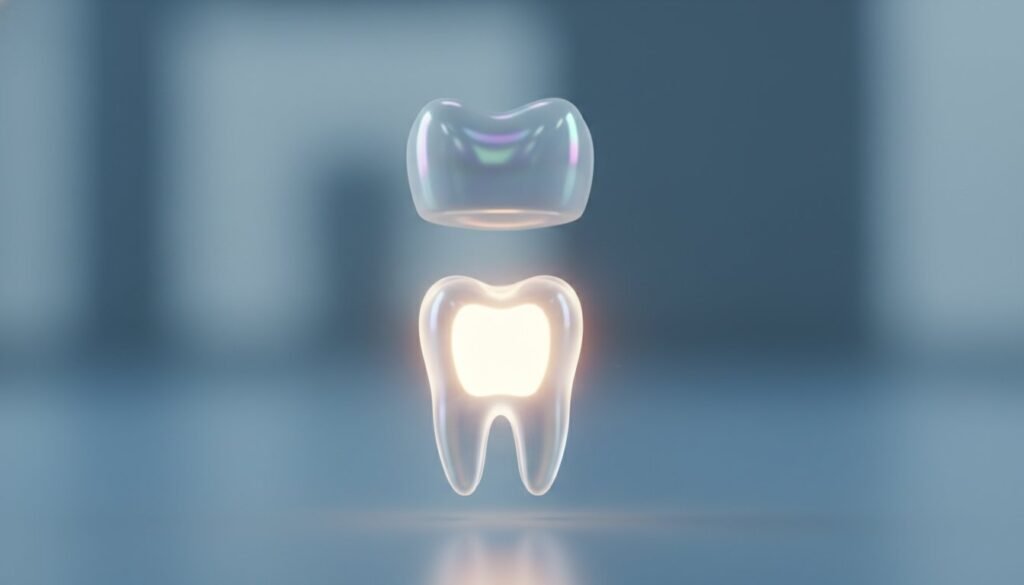
Hearing you need treatment can be daunting, especially when the conversation involves both dental crowns and root canals. It’s natural to feel confused and anxious. You might be asking, “Is a crown always necessary after a root canal?” or perhaps you’re experiencing pain in a tooth that already has a crown and are worried about what comes next. These questions, along with concerns about the cost of two procedures and the treatment journey, are completely understandable. We want you to feel calm and in control, and that begins with clear, compassionate information.
This complete guide is here to provide that clarity and reassurance. We will walk you through the vital relationship between these two treatments, explaining why a crown is often the crucial final step to protect and restore your tooth for the long term. We’ll explore what to expect, discuss whether an existing crown can be saved, and offer transparent insight into the costs involved. Our goal is to empower you with the knowledge you need to feel confident in your treatment plan, save your natural tooth, and finally find lasting relief from pain.
The Essential Partnership: Why a Root Canal Often Needs a Crown
Many patients feel a sense of relief after their root canal is complete, believing their dental journey is over. While the treatment successfully removes the infection and ends the pain, it’s often the first of two essential steps. Think of your tooth after a root canal like a strong oak tree that has been hollowed out; it’s still standing, but its internal structure is compromised and it’s vulnerable to fracture. This is where the crucial partnership between dental crowns and root canals comes in, providing the long-term protection your tooth needs to function for years to come.
A dental crown is a custom-made cap that fits over the entire treated tooth, acting like a protective helmet. It restores the tooth’s strength, seals it from bacteria, and ensures it looks and feels completely natural. Let’s explore the key reasons why a crown is so often recommended for your complete peace of mind.
Restoring Strength and Preventing Fracture
A successful Root canal treatment saves your natural tooth by removing the infected inner pulp. However, this process also removes the tooth’s source of hydration, causing it to become more brittle over time. Your back teeth, the molars and premolars, endure immense pressure from chewing. A crown encases the weakened tooth, binding it together and distributing these forces evenly, which is your best defence against a painful and costly fracture.
Sealing the Tooth from Future Infection
After your root canal, the tooth is filled and sealed. However, this filling can degrade over time, creating microscopic gaps where bacteria could re-enter the delicate canal system. A high-quality, precisely fitted dental crown provides a durable, comprehensive seal over the entire tooth. This barrier is vital for preventing reinfection and ensuring the long-term success of your root canal treatment, giving you lasting comfort and security.
Restoring Natural Appearance and Function
Sometimes, a tooth that has had a root canal can darken or discolour. A modern dental crown solves this cosmetic concern beautifully. Each crown is expertly crafted from high-quality porcelain to match the exact shade, shape, and size of your surrounding teeth, blending in seamlessly. This restoration allows you to smile, speak, and eat all your favourite foods with complete confidence, knowing your tooth is both strong and beautiful.
So, is a crown always necessary? For molars and premolars that handle heavy chewing, the answer is almost always yes. For front teeth, the need is assessed on a case-by-case basis, but it remains the gold standard for ensuring strength and longevity. Your endodontist will provide a caring, professional recommendation based on your specific needs.
The Reverse Scenario: Root Canal Through an Existing Crown
If you’re feeling pain in a tooth that already has a crown, your first thought might be one of worry. Do you need to replace the entire restoration? The good news is that, in many cases, a skilled endodontist can perform a root canal directly through the existing crown, saving you time and money. Understanding the connection between dental crowns and root canals in this situation can provide significant peace of mind.
Why Would a Crowned Tooth Need a Root Canal?
A dental crown is designed to protect a tooth, but the nerve inside can still become compromised. This can happen for several reasons, even years after your crown was placed:
- New Decay: Bacteria can sometimes penetrate the small space where the edge of the crown meets your gum line, leading to a new cavity that infects the tooth’s pulp.
- Previous Dental Work: If a very deep filling was placed before the crown, the nerve may have been under stress. Over time, this can lead to irreversible inflammation or infection.
- Unexpected Trauma: A sudden knock or injury to your mouth can damage the delicate nerve tissue inside a crowned tooth, causing it to die and require treatment.
The Specialised Procedure: Preserving Your Crown
Performing a root canal on a crowned tooth is a highly precise procedure. As Experts, we carefully create a tiny access hole in the chewing surface of the crown, just large enough to treat the infection within. This requires skill and advanced instruments to avoid damaging the porcelain or metal structure. Once the root canal therapy is complete-a process you can learn about in this comprehensive Root Canal Explained guide from the American Association of Endodontists-we seal the small opening with a durable composite filling. This caring approach preserves your investment and restores your tooth to comfort without the need for a replacement crown.
When a Crown Replacement is Unavoidable
While our goal is always to preserve your existing restoration, there are times when removing the crown is the best option for your long-term health. We may recommend a replacement if the original crown is old, ill-fitting, or damaged, or if extensive decay is present underneath it. A thorough assessment is the first step in any treatment involving dental crowns and root canals. We will always provide clear, honest advice based on the specific condition of your tooth, ensuring you receive the most effective and lasting care.
Worried about a crowned tooth? Book a consultation with our expert.
The Treatment Journey: What to Expect from Your Procedures
We understand that the thought of dental treatment can feel overwhelming, especially when you are in pain. Our primary goal is your comfort and peace of mind. Using state-of-the-art technology and a gentle approach, we have designed the journey for dental crowns and root canals to be as smooth and stress-free as possible. Your treatment path will depend on your unique situation, but here are the two most common scenarios we manage with calm, expert care.
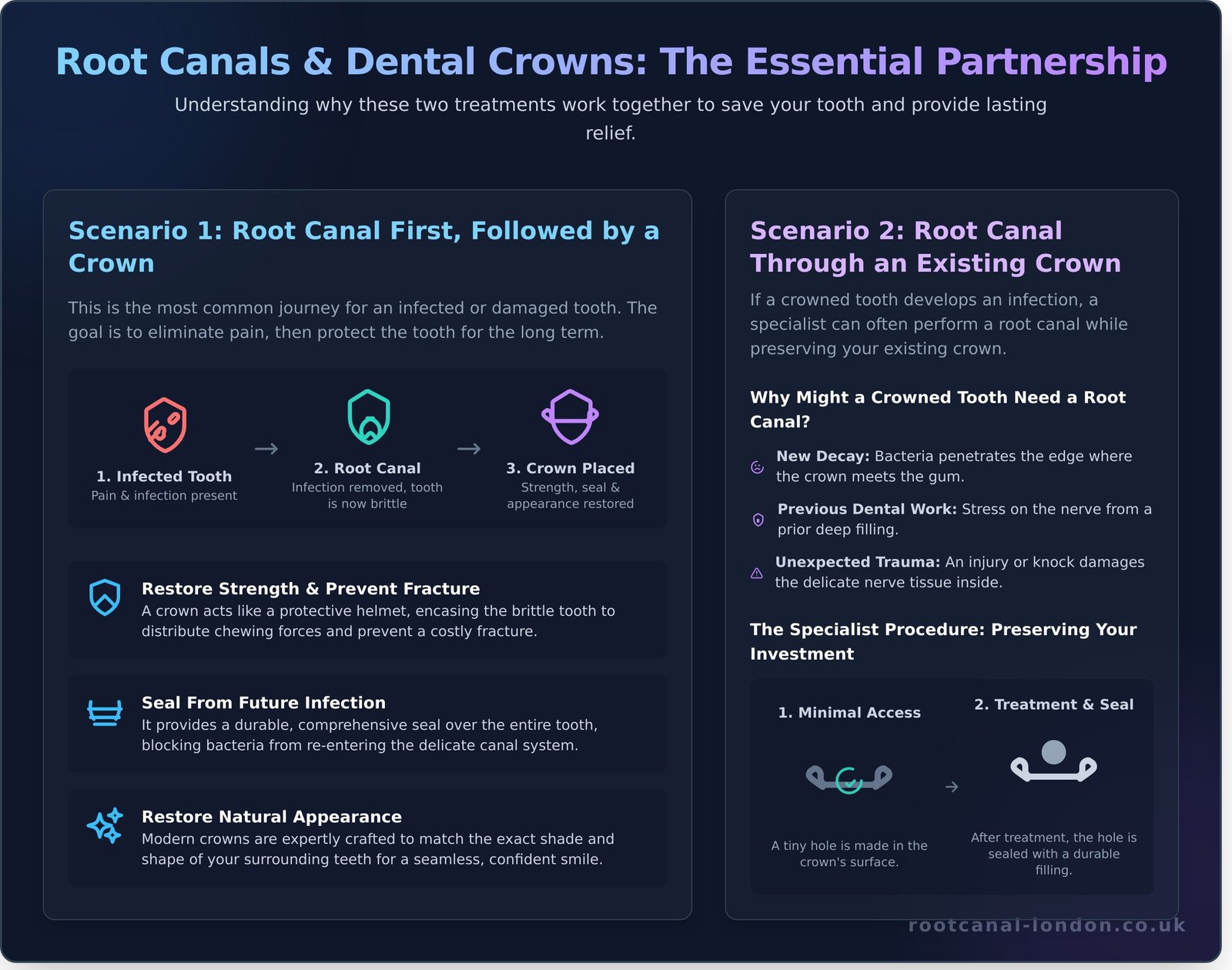
Scenario 1: Root Canal First, Followed by a Crown
This is the most frequent path for a tooth that is infected or badly damaged but does not yet have a crown. The focus is on first eliminating pain and infection, then protecting the tooth for the long term.
- Step 1: Relief and Cleaning. We begin with the root canal procedure itself. After ensuring you are completely numb and comfortable, we gently clean the infected inner pulp of the tooth, providing immediate relief from pain.
- Step 2: Temporary Protection. A temporary filling is placed to seal and protect the tooth while it heals and settles.
- Step 3: Crown Preparation. After a short healing period, you will return for your crown preparation. We carefully shape the tooth to create the perfect foundation for your new, permanent restoration.
- Step 4: Final Restoration. Your final, custom-made crown is expertly fitted and bonded into place, restoring the tooth’s strength, function, and natural appearance.
Scenario 2: Root Canal on a Crowned Tooth
Sometimes, a tooth that already has a crown can develop an infection underneath. Our priority here is to treat the infection with minimal disruption to your existing restoration.
- Step 1: Precise Diagnosis. A detailed examination, often including an advanced CBCT scan, allows us to plan the treatment with pinpoint accuracy.
- Step 2: Creating Access. We make a tiny, conservative opening through the top of the existing crown to access the root canal system below.
- Step 3: Resolving the Infection. The root canal treatment is performed through this small opening, thoroughly cleaning and disinfecting the tooth’s interior.
- Step 4: Sealing the Tooth. In many cases, we can seal the access opening with a durable, tooth-coloured filling. If the crown is compromised, we will discuss the benefits of creating a new one to ensure lasting protection.
Whichever path your treatment takes, our team is here to ensure you feel cared for and informed every step of the way. For a compassionate consultation, please visit rootcanal-london.co.uk.
Understanding the Combined Cost of Root Canals and Crowns
We understand that when you are in pain, the potential cost of treatment is a significant concern. It is helpful to see a root canal and a dental crown as two separate, yet essential, procedures that work together to save your natural tooth. This combined treatment is not just a cost, but a crucial investment in your long-term oral health, comfort, and peace of mind.
Factors Influencing Root Canal Costs
The fee for your root canal treatment is tailored to the unique needs of your tooth. Because every case is different, the final cost can be influenced by several key factors:
- Tooth Complexity: Back teeth (molars) have multiple root canals and a more complex anatomy, requiring more time and precision than front teeth, which typically have a single canal.
- Previous Treatment: If a tooth has a previous, failing root canal, re-treatment is a more intricate procedure that requires specialised techniques to achieve a successful, pain-free outcome.
- Specialised Care: As a specialised Endodontic practice, we use advanced technology like CBCT scanners and microscopes to ensure the highest possible success rate, giving your tooth the best chance of survival.
Factors Influencing Dental Crown Costs
After your root canal is complete, a custom-made crown is vital for protecting the treated tooth from fracture. The cost of your crown is determined by:
- Crown Material: We use only the highest-quality materials, such as durable zirconia or natural-looking E-max porcelain. The best material is chosen based on your tooth’s location and functional needs.
- Advanced Technology: We use precise digital scanning to create a perfect model of your tooth, ensuring your final crown fits comfortably and restores your natural bite.
The Value of Saving Your Tooth
While the combined investment in dental crowns and root canals may seem significant upfront, it is the most conservative and cost-effective solution when compared to the alternative. Removing a tooth can trigger other dental issues, including the shifting of adjacent teeth, bone loss in the jaw, and changes to your bite and appearance.
Replacing a missing tooth with a dental implant or bridge is a more invasive and lengthy process that is often considerably more expensive in the long run. By choosing to save your tooth, you are preserving your natural smile and preventing the need for more complex treatment later on. For a clear breakdown of our fees, please view our transparent pricing guide.
Your Path to Lasting Relief and a Healthy Smile
Navigating the world of dental crowns and root canals can feel daunting, but the key takeaway is simple: these treatments work together as a powerful team to save your natural tooth. A root canal addresses the inner infection to relieve your pain, while a custom-made crown provides the vital strength and protection needed for long-term health. Understanding this partnership is the first step towards making a confident decision about your care.
When you’re facing this journey, you deserve care that is not only technically excellent but also deeply compassionate. At Root Canal London, Dr. Millie provides Expert Endodontist care for even the most complex cases. We use advanced technology to ensure your treatment is precise and comfortable, and our patients consistently praise the calm and reassuring experience we provide.
Don’t let uncertainty or dental pain hold you back. If you’re in pain or unsure about your treatment, book a consultation with Dr. Millie today. We are here to answer your questions and guide you on the path back to a healthy, pain-free smile.
Frequently Asked Questions About Dental Crowns and Root Canals
How long after a root canal should I wait to get a crown?
Typically, we advise waiting one to two weeks after your root canal treatment before placing the permanent crown. This short healing period allows any inflammation to settle and ensures the tooth is stable. In the meantime, a temporary filling protects the tooth from bacteria and damage. We will schedule your crown fitting at the ideal time to ensure a comfortable, lasting result and restore your tooth’s full strength and function.
Is the procedure more painful if I already have a crown on the tooth?
This is a common concern, but we want to put your mind at ease. The procedure is performed under effective local anaesthetic, so you shouldn’t feel any pain, regardless of an existing crown. Our expert will make a small, precise opening through the crown to access and treat the root canals. Your comfort is our absolute priority, and we ensure the area is completely numb before we begin any work, making the experience stress-free.
How long will my root canal and crown last?
With expert treatment and diligent home care, your root canal and crown can last for many years, often a lifetime. The success of your restoration depends heavily on your oral hygiene routine, including regular brushing, flossing, and attending routine dental check-ups. Avoiding chewing on very hard items like ice or hard sweets will also help protect your restored tooth and ensure its longevity, allowing you to smile with confidence.
Can a tooth with a crown and root canal still get an abscess?
While a successful root canal and crown significantly reduce the risk of infection, it is still possible for a tooth to develop an abscess later on. This can happen if new decay allows bacteria to enter, if the tooth develops a crack, or if there were complex, previously undetected canals. If you experience pain or swelling around a treated tooth, it’s crucial to see your dentist immediately for an assessment to protect your oral health.
What are the alternatives to getting a root canal and crown?
The only alternative to a root canal and crown is to have the tooth extracted. While this removes the source of infection, it can lead to other issues like shifting teeth, difficulty chewing, and bone loss in the jaw. A missing tooth typically requires replacement with a dental implant or bridge to restore function. We always aim to save your natural tooth whenever possible, as it is the best option for your long-term oral health.
Will my insurance cover both a root canal and a dental crown?
Coverage for dental crowns and root canals varies significantly between insurance providers. Most private UK dental plans provide some level of cover for these medically necessary procedures, but the percentage can differ. On the NHS, these treatments typically fall under a set fee band (e.g., Band 3 in England). We strongly advise you to check the specifics of your policy with your provider before beginning treatment so you are fully informed.