

Discovering a painful, swollen lump on your gum is a frightening experience. Your mind likely races with questions and worry: Is it serious? Will the pain get worse? Do I need to see a dentist immediately? We understand. That sudden, tender swelling is often a sign of a gum abscess – a localised infection that requires prompt, professional attention to prevent it from spreading. But please, take a deep breath. You’ve come to the right place for calm, clear answers.
This reassuring guide is here to help you take control. We will walk you through the clear symptoms and causes, offer safe, temporary steps for pain relief at home, and explain why urgent dental care is so important. Our goal is to replace your anxiety with confidence, giving you the crucial information you need to protect your tooth, find lasting relief, and safeguard your overall health. Let’s get you on the path to feeling better.
Key Takeaways
- A painful, pimple-like swelling on your gum is the most common sign of a gum abscess, a localised bacterial infection requiring urgent attention.
- Understand why prompt dental care is essential to drain the infection, relieve your pain, and prevent the problem from worsening.
- Discover the caring, effective steps a specialist will take to treat the source of the infection, with the primary goals of easing your pain and saving your tooth.
- While some at-home measures can provide temporary comfort, they cannot cure the infection; professional treatment is the only safe and effective solution.
What is a Gum Abscess? Identifying the Source of Your Pain
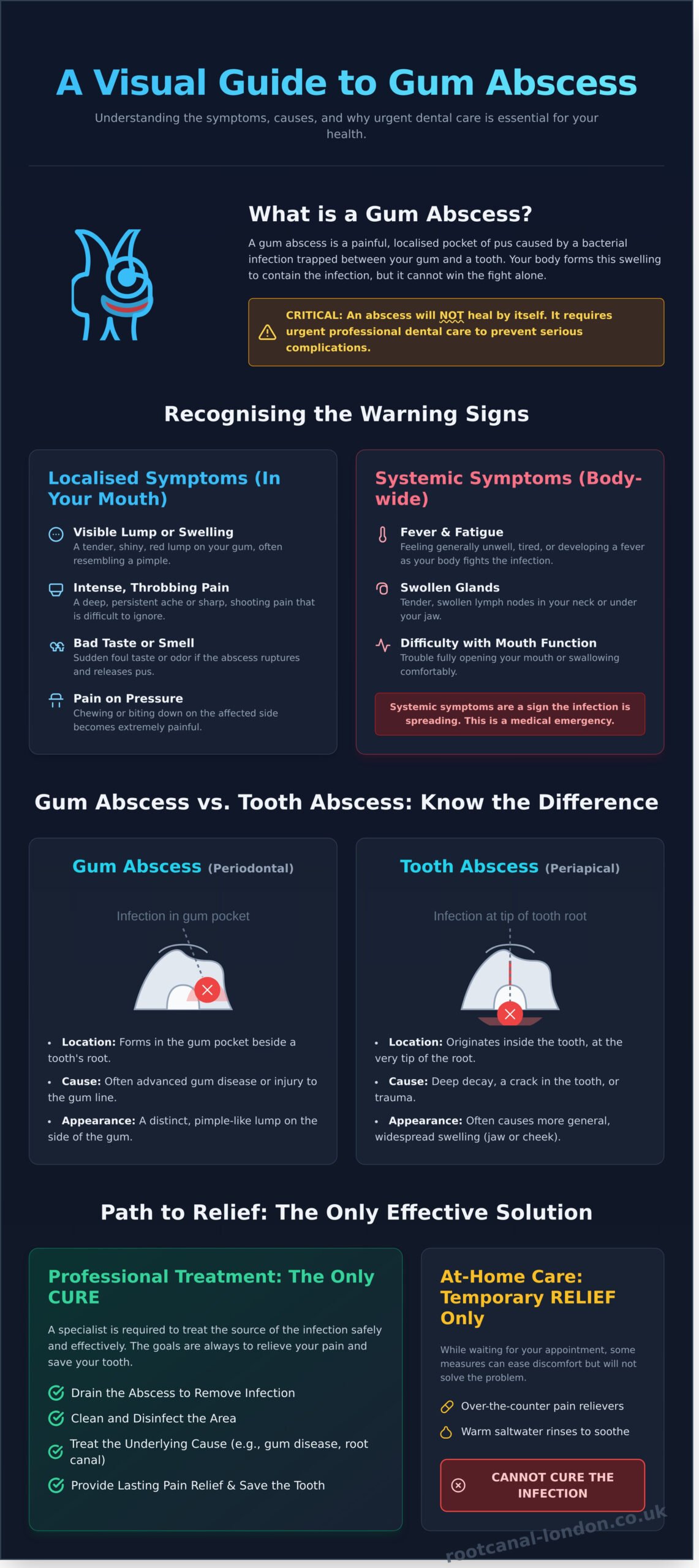
If you’re experiencing a sharp, throbbing pain in your gum, accompanied by a tender swelling, you may be dealing with a gum abscess. In simple terms, this is a painful, localised pocket of pus that forms when a bacterial infection becomes trapped between your gum and a tooth. This swelling is your body’s natural response, an attempt to contain the infection, but it is a battle it cannot win on its own.
It is crucial to understand that a gum abscess will not heal by itself. It requires urgent, professional dental care to drain the infection, relieve the pain, and prevent it from spreading and causing more serious health complications. Understanding the precise nature of your dental emergency is the first step towards getting the caring, effective treatment you need.
Gum Abscess vs. Tooth Abscess: What’s the Difference?
While both are considered dental emergencies, knowing the difference can help clarify your situation. The two main types of dental abscess are:
- Gum Abscess (Periodontal): This infection forms in the space, or “pocket,” in the gum tissue right beside a tooth’s root. A Periodontal abscess is often a painful complication of advanced gum disease (periodontitis) or an injury to the gum line where bacteria can become trapped.
- Tooth Abscess (Periapical): This infection originates inside the tooth itself. It develops at the very tip of the tooth’s root when the tooth’s inner pulp (nerve) has become infected due to deep decay, a crack, or trauma.
Visual Clues: Where is the Swelling Located?
The location of the swelling is often a key indicator of the type of abscess. A gum abscess typically appears as a distinct, shiny, and reddish lump on the side of your gum, which can look like a small pimple. You can often pinpoint the exact, tender spot. In contrast, a tooth abscess may cause more general, widespread swelling in the surrounding area, which could extend to your jaw, cheek, or even the glands in your neck. Identifying the source allows our specialists to provide swift, precise treatment to bring you lasting relief.
Recognising the Warning Signs: Key Symptoms of a Gum Abscess
Understanding the signs of a dental infection is the first step toward getting the relief you need. A gum abscess is a localised collection of pus caused by a bacterial infection, and while there are several potential causes of gum abscesses, the symptoms they produce are often the body’s first urgent signal that something is wrong. These symptoms can range from a mild, nagging discomfort to severe, debilitating pain. It’s crucial to listen to these warnings, as ignoring them can lead to more serious complications. Even if the pain seems to subside on its own, the underlying infection remains and requires professional care.
Localised Symptoms in Your Mouth
The most immediate and obvious signs of a gum abscess will appear directly in your mouth, often centred around the affected area. We understand this can be distressing, so knowing what to look for can help you take action quickly. Pay close attention to:
- A visible lump: You may see or feel a tender, shiny, red, and swollen lump on your gum, resembling a small pimple. This is the abscess itself.
- Intense pain: The pain is often described as a deep, throbbing ache or a sharp, shooting pain that can be severe and persistent.
- A bad taste or smell: The abscess can sometimes rupture and release pus, causing a sudden foul taste or smell in your mouth.
- Pain upon pressure: Chewing or biting down on the affected side of your mouth can become extremely painful.
Systemic Symptoms Affecting Your Body
When the infection from a gum abscess begins to spread, you may start to feel unwell in general. These systemic symptoms are a clear indication that your body is fighting a significant infection that is no longer contained. It is a serious development that requires immediate attention.
- Fever and fatigue: Developing a fever or feeling generally unwell, tired, and run-down are common signs the infection is spreading.
- Swollen glands: You may notice tender, swollen lymph nodes in your neck or under your jaw as your immune system responds.
- Difficulty with mouth function: In severe cases, you might find it difficult to fully open your mouth or to swallow comfortably.
These signs are your body’s alarm bell, signalling the need for immediate emergency dental care. A spreading infection can pose a risk to your overall health, and prompt, professional treatment is essential to resolve the issue safely and bring you lasting relief.
What Causes a Gum Abscess? Understanding the Root of the Problem
At its core, a gum abscess is a pocket of pus caused by a bacterial infection in the space between your tooth and gum. When harmful bacteria get trapped and multiply, your body’s immune system sends white blood cells to fight the infection. This battle results in a build-up of pus, creating the painful, swollen lump you feel. While anyone can develop an abscess, a compromised immune system can make it more difficult for your body to fight off the initial infection. Managing wider health factors is crucial, and for those seeking a medical weight loss programme, foundry provides clinical support in the UK.
Understanding what allows this infection to take hold is the first step toward prevention and effective treatment. Several common issues can lead to the formation of a painful gum abscess.
Advanced Gum Disease (Periodontitis)
This is the most frequent cause of a gum abscess. Advanced gum disease, or periodontitis, occurs when plaque and tartar build-up causes the gums to pull away from the teeth, forming deep pockets. These pockets are difficult to clean and become a perfect breeding ground for bacteria. As detailed in this comprehensive guide to periodontal abscesses from the National Institutes of Health, this trapped bacteria can quickly lead to an acute infection. This condition is often linked with more widespread tooth pain and infection, requiring urgent professional care.
Trapped Food or Foreign Objects
Sometimes, the cause is much simpler. A sharp piece of food, like a popcorn kernel husk, or even a toothbrush bristle can get lodged firmly in the gumline. This foreign object can irritate the delicate gum tissue, creating a small wound that allows bacteria to enter and cause an infection. While it may be tempting to try and remove the object yourself with a toothpick, this can sometimes push it deeper or cause further damage. It’s always safer to seek professional help.
Pre-existing Dental Issues
Other dental problems can provide an entry point for infection. These can include:
- A cracked or broken tooth: A fracture can create a pathway for bacteria to travel down to the gum tissue.
- Poorly fitting dental work: A crown or bridge that doesn’t fit perfectly can create a ledge where plaque accumulates, leading to gum irritation and infection.
- An underlying tooth infection: Sometimes, an abscess that starts deep in the root of a tooth (a periapical abscess) can tunnel through the bone and drain out through the side of the gum, appearing as a gum boil.
Why You Must Not Ignore a Gum Abscess: Potential Complications
The good news is that with prompt, professional treatment, serious complications from a gum abscess are rare. However, we want you to understand the importance of seeking urgent care because an abscess is a pocket of infection that will not resolve on its own. While home remedies may temporarily soothe the pain, they cannot drain the pus or eliminate the deep-seated bacteria causing the problem. Ignoring the issue allows the infection to spread, which can lead to more complex health concerns.
Spread of Infection to Jaw and Bone
The bacteria from an abscess can seep into the surrounding tissues, attacking the bone that holds your tooth securely in place. As this bone is damaged, the tooth can become loose. If left untreated, the bone loss may become so significant that the tooth cannot be saved and will require extraction. This process can also weaken the support for neighbouring teeth, putting them at risk over time.
Sinus Infection
If the infected tooth is in your upper jaw, its roots are often located very close to your sinus cavities. An untreated abscess can perforate the thin bone separating the tooth root from the sinus, allowing the infection to spread. This can trigger a painful case of maxillary sinusitis. Symptoms often include facial pressure, congestion, and headaches, compounding the initial tooth pain. Effectively treating this requires both dental care to address the abscess and potentially medical care from your GP.
Sepsis: A Medical Emergency
Though very rare, the most severe risk of any untreated infection is sepsis. This is a life-threatening condition that occurs when bacteria from the abscess enter the bloodstream, triggering a chain reaction throughout the body. Sepsis is a medical emergency that requires immediate hospital treatment.
Please go to your nearest A&E immediately if you have symptoms of an abscess alongside any of the following signs of sepsis:
- A high fever, or feeling very cold with shivers
- A rapid heartbeat
- Confusion or disorientation
- Shortness of breath or difficulty breathing
- Clammy or pale skin
How a Specialist Dentist Treats a Gum Abscess
Walking into a dental appointment with severe pain can be daunting, but please be reassured that at Bespoke Dental Fulham, our primary goals are to relieve your discomfort quickly and, wherever possible, save your natural tooth. The entire procedure is performed under local anaesthetic, ensuring you remain comfortable and pain-free throughout. Our approach is gentle, precise, and focused on your well-being.
When you have a complex or severe infection, seeing a specialist is crucial. At Bespoke Dental Fulham, our team includes highly experienced endodontists, or root canal specialists in London, who use advanced diagnostic tools and techniques to accurately identify the source of the infection and provide the most effective treatment. Here are the typical steps you can expect during your emergency appointment.
Step 1: Draining the Abscess
The first and most important step is to provide immediate relief. Your dentist will make a small, careful incision in the gum to allow the pus trapped inside the abscess to drain away. This instantly eases the painful pressure you’ve been feeling. The area is then thoroughly and gently cleaned with a sterile saline solution to remove any remaining bacteria.
Step 2: Deep Cleaning (Scaling and Root Planing)
If the gum abscess was caused by advanced gum disease (periodontitis), the next step is to treat the underlying problem. This involves a deep cleaning procedure known as scaling and root planing. Your dentist will carefully clean below the gumline, removing the build-up of plaque and tartar from the tooth roots. This helps the gums to heal and reattach securely to the tooth surface.
Step 3: Addressing the Source with Root Canal Treatment
Sometimes, the infection originates not in the gums but from the pulp inside the tooth itself. If this is the case, a root canal treatment is necessary to save the tooth and prevent the abscess from returning. This procedure involves removing the infected pulp, cleaning the internal canals, and sealing the tooth to protect it from future infection. It is a highly effective way to resolve pain and preserve your natural smile.
If you are experiencing the symptoms of an abscess, it is vital to seek professional care without delay. Contact the caring team at Bespoke Dental Fulham to get the urgent relief you need. Our specialist services are also detailed at rootcanal-london.co.uk.
At-Home Care vs. Professional Treatment: What You Can (and Cannot) Do
When you’re dealing with the intense pain of a dental abscess, it’s natural to seek immediate relief. However, it is crucial to understand that while at-home care can help manage your symptoms, it cannot cure the underlying infection. A gum abscess is a serious condition that requires urgent professional treatment from a dentist or endodontist to resolve the infection and prevent it from spreading.
The goal of any at-home measure is simply to provide temporary comfort and keep the area clean until you can be seen by a professional. Think of it as first aid, not a cure.
Safe Temporary Relief Measures
While you wait for your emergency dental appointment, these gentle steps can help manage your discomfort safely:
- Warm Salt Water Rinse: Gently swilling a solution of half a teaspoon of salt in a glass of warm water can help soothe the area and encourage the abscess to drain naturally, providing some relief from the pressure. Do this 2-3 times a day.
- Over-the-Counter Pain Relief: Anti-inflammatory painkillers like ibuprofen can be effective at reducing both the pain and swelling. Always follow the dosage instructions on the packet and ensure you have no medical conditions that prevent you from taking them.
- Gentle Oral Hygiene: Continue to brush your teeth, but use a soft-bristled brush and be extremely gentle around the affected tooth and gum. Avoid flossing directly around the painful area until you have been seen by your dentist.
What NOT to Do: Common Mistakes to Avoid
In an attempt to find relief, some people turn to dangerous ‘remedies’ that can make the situation much worse. Please avoid the following at all costs:
- Do NOT try to pop the abscess: Never attempt to drain the abscess yourself with a pin or any other sharp object. This can easily push the bacteria deeper into your jaw tissue or even into your bloodstream, leading to a more severe, widespread infection.
- Avoid hot compresses on your face: While a warm rinse inside the mouth is helpful, applying a hot compress to the outside of your cheek can draw the infection towards the skin, potentially causing a serious external fistula.
- Never place aspirin on the gum: This is a common myth that is very dangerous. Placing an aspirin tablet directly on your gum will not relieve pain and will cause a painful chemical burn to the soft tissue.
- Do not stop taking prescribed antibiotics: If your dentist prescribes a course of antibiotics, you must complete the full course, even if your symptoms start to improve. Stopping early can allow the infection to return with more resistant bacteria.
The concern over resistant bacteria is valid, especially with the rise of infections like MRSA (methicillin-resistant Staphylococcus aureus). For those in the UK concerned about potential exposure or needing to screen for this specific bacteria, at-home testing is now an option through services like mrsatest.co.uk.
These measures are only for temporary relief. For safe, effective, and compassionate treatment, it is essential to see a specialist. If you are in pain, please contact our caring team for an urgent appointment.
Your Next Step Towards Pain-Free Relief
A gum abscess is a clear signal from your body that something is wrong. As this guide has shown, it’s a serious dental emergency that requires professional treatment to avoid significant health complications. While at-home care might provide momentary comfort, only a specialist can address the root of the infection and ensure it is fully resolved for your long-term health.
We understand that facing dental pain can be stressful. That is why our clinic provides a calm and reassuring environment, especially for anxious patients. With emergency appointments available, our specialist Endodontist, Dr. Millie, is ready to provide the compassionate, expert care you need. You don’t have to endure this pain alone.
In pain from a gum abscess? Don’t wait. Call our caring team for an emergency appointment today.
Frequently Asked Questions About Gum Abscesses
Can a gum abscess go away on its own?
No, a gum abscess will not go away on its own. While the pain may temporarily lessen if the abscess drains, the underlying bacterial infection will remain. Without professional dental treatment, the infection can worsen, spread to other parts of your body, and lead to more serious health complications. Seeking prompt, compassionate care is the only safe and effective way to resolve the issue and protect your overall health.
How quickly do I need to see a dentist for a gum abscess?
You should see a dentist immediately. A gum abscess is considered a dental emergency because the infection can spread quickly to your jawbone, surrounding teeth, and even into your bloodstream. We understand the urgency and pain you are feeling. Prompt treatment is crucial to relieve discomfort, stop the infection from spreading, and ultimately save your tooth. We offer same-day emergency appointments to provide the relief you need.
Will I need antibiotics for a gum abscess?
In many cases, yes. Antibiotics are often prescribed to help control the bacterial infection and prevent it from spreading further. However, they are not a complete cure on their own. The source of the infection must be treated by a dentist. This typically involves a procedure to drain the abscess and clean the area, which may include a deep cleaning or a root canal treatment to provide lasting relief.
What’s the difference between a gum abscess and a canker sore?
A gum abscess is a painful, swollen lump on the gum caused by a bacterial infection, often at the root of a tooth. It feels like a pimple and is filled with pus. A canker sore, on the other hand, is a small, shallow ulcer that appears inside the mouth. It typically has a white or yellow centre with a red border and is not caused by an infection. While canker sores heal on their own, an abscess requires urgent dental care.
Can stress cause a gum abscess?
Stress does not directly cause an abscess, but it can be a significant contributing factor. High levels of stress can weaken your immune system, making it harder for your body to fight off the bacteria that lead to gum infections. Stress can also lead to teeth grinding or neglecting your oral hygiene routine, both of which increase your risk. Managing stress is an important part of maintaining your overall and oral health.
How can I prevent gum abscesses from happening in the future?
Prevention is centred on excellent oral hygiene and regular dental care. Be sure to brush your teeth for two minutes, twice a day, and floss daily to remove plaque. Attend regular check-ups and hygiene appointments so we can identify and address any potential issues, like deep cavities or early-stage gum disease, before they become serious problems. Promptly treating any cracked or broken teeth is also key to preventing infection.