

That sudden, intense, throbbing pain in your gum is unmistakable. When you discover a tender, swollen lump, it’s natural to feel a surge of anxiety and confusion. Is it a dental emergency? Could you lose your tooth? We understand how distressing this is. What you are likely experiencing is a gum abscess, a serious infection that requires urgent, compassionate care. Feeling worried is completely normal, but clear answers and fast relief are within reach.
This guide is designed to replace your anxiety with calm, clear understanding. We will walk you through the common causes and symptoms, helping you recognise if your situation requires immediate emergency treatment. Most importantly, we will outline the crucial steps towards finding fast, effective relief, easing your pain, and creating a trustworthy path to save your tooth and restore your oral health. Your comfort and well-being are our first priority.
What Is a Gum Abscess? A Dental Emergency Explained
If you’re experiencing a throbbing pain in your gum, accompanied by swelling, you may be dealing with a gum abscess. We understand how distressing this can be, and the first thing to know is that help is available. A gum abscess is a painful collection of pus that forms between the teeth and gums, caused by a bacterial infection. It is a clear sign that your body is fighting an infection, and it is a dental emergency that will not go away on its own.
Ignoring an abscess can lead to serious health complications, as the infection can spread to your jawbone and other parts of your body. The immediate goal of emergency dental care is to provide relief by carefully draining the abscess. This relieves the painful pressure and begins the process of clearing the infection. Please do not try to drain it yourself; seeking professional care is the safest and most effective step you can take towards comfort and healing.
The Three Main Types of Dental Abscess
While often grouped together, abscesses can start in different areas. Understanding the type helps your dentist provide the most precise and caring treatment:
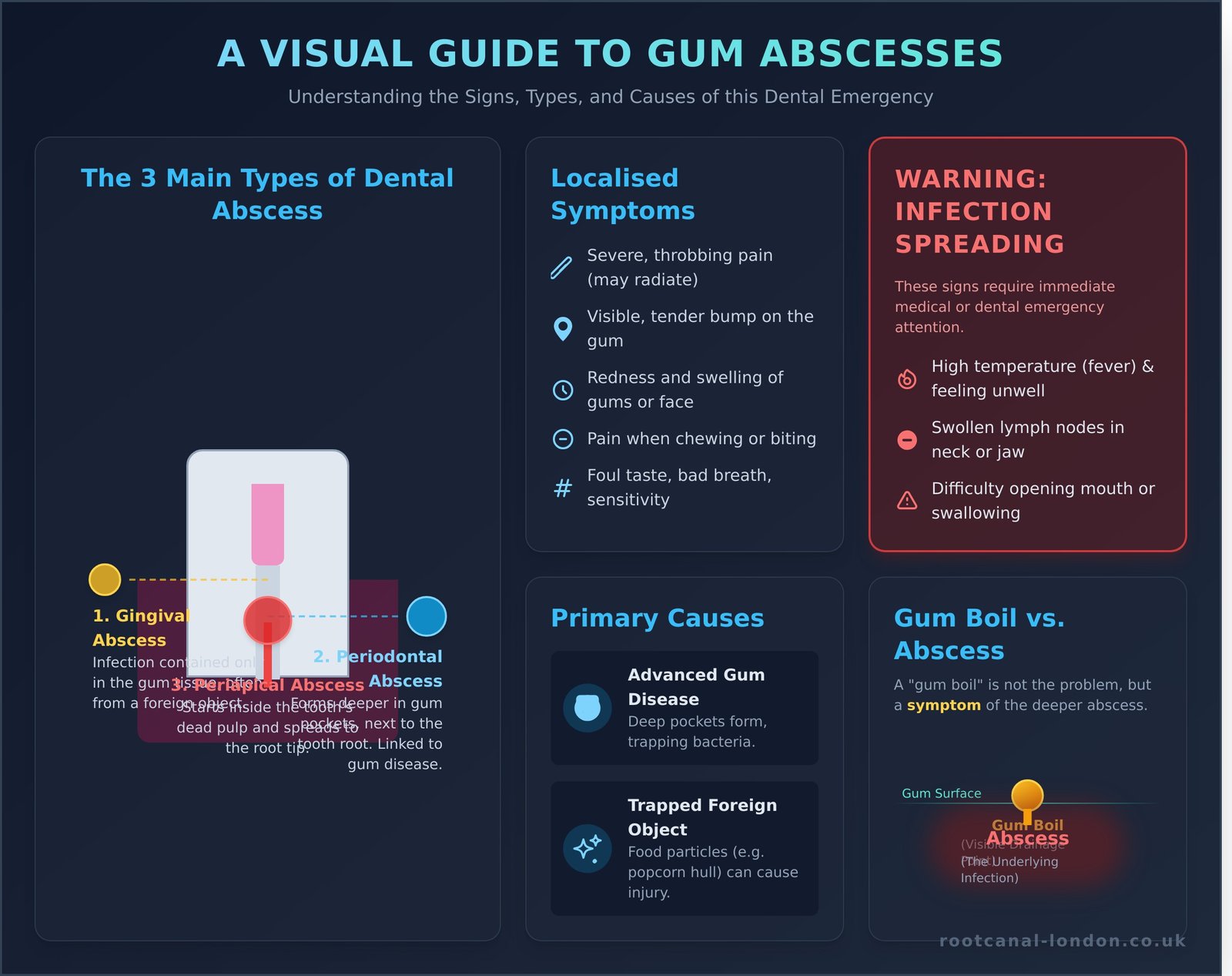
- Gingival Abscess: This is an infection that is contained within the gum tissue itself. It often happens when a piece of food or a foreign object gets lodged in the gums, causing an injury and subsequent infection.
- Periodontal Abscess: This type of abscess forms deeper within the gum pockets, next to the root of a tooth. It is typically a complication of advanced gum disease (periodontitis). A periodontal abscess occurs when bacteria get trapped in the space between the tooth and gum.
- Periapical Abscess: This infection originates inside the tooth, in the soft dental pulp. It occurs when the tooth’s nerve has died due to decay or trauma. The infection then exits the tip of the tooth’s root and forms a pocket of pus in the surrounding bone.
Gum Boil vs. Abscess: What’s the Difference?
You may notice a small, pimple-like swelling on your gum, often called a gum boil or parulis. It’s important to understand that a gum boil is not a separate issue-it is a symptom of a deeper abscess. This boil is the external drainage point, a channel created by the infection as it seeks a way to release pressure. While it might rupture and provide temporary pain relief, the underlying infection remains active. Seeing a gum boil is a clear signal that you need to see a dental professional promptly to treat the source of the problem and prevent it from returning.
Key Symptoms: How to Recognise a Gum Abscess
Understanding the signs of a gum abscess is the first step toward finding relief. The pain and discomfort can be distressing, but knowing what to look for empowers you to seek the caring, professional help you need without delay. The symptoms can range from localised discomfort in your mouth to more widespread signs that the infection requires immediate attention.
Localised Symptoms in Your Mouth
Most of the initial warnings will appear directly around the affected tooth and gum. It’s crucial to listen to your body and not ignore these signals. These classic tooth abscess symptoms are your body’s way of signalling a serious problem that needs expert care. Look out for:
- Severe, throbbing pain: This is the most common sign. It’s a persistent, intense ache that can feel like a deep, pulsing throb. The pain often radiates to your jaw, neck, or ear and typically feels worse when you lie down.
- A visible bump on the gum: You may see or feel a soft, swollen lump that looks like a pimple near the painful tooth. This area will be very tender to the touch.
- Redness and swelling: The gums around the tooth will look red, shiny, and swollen. In some cases, your cheek or face may also swell on the affected side.
- Pain when chewing: The pressure of biting down or chewing can cause a sharp increase in pain, making it difficult to eat.
- Other sensory signs: You might also experience a sudden foul taste in your mouth, persistent bad breath, and sensitivity to hot or cold temperatures.
It is important to note that if the abscess ruptures, you might experience a sudden rush of foul-tasting fluid and a significant decrease in pain. While this may feel like a relief, it does not mean the infection is gone. The source of the infection still needs to be treated by a dental professional to prevent it from returning.
Signs the Infection May Be Spreading
In some cases, the infection from a gum abscess can spread. If you notice any of the following symptoms, it is a sign of a serious condition that requires immediate medical or dental emergency attention:
- A high temperature (fever) and feeling generally unwell or fatigued.
- Swollen and tender lymph nodes under your jaw or in your neck.
- Difficulty fully opening your mouth or trouble swallowing.
These symptoms are a medical emergency. It is vital to seek urgent care to prevent the infection from spreading further throughout your body.
What Causes a Gum Abscess? From Trapped Food to Hidden Infection
Finding a painful, swollen lump on your gum can be a distressing experience, but please be reassured that its causes are very clear and treatable. At its core, a gum abscess is always the result of a bacterial infection. When harmful bacteria become trapped in a small space, they multiply rapidly. Your body’s immune system rushes to fight the infection, creating a collection of pus-a thick, whitish-yellow fluid-which forms the abscess. While inconsistent oral hygiene can increase the risk, a number of specific situations can lead to this painful condition.
Advanced Gum Disease (Periodontitis)
This is the most common reason for a periodontal abscess to develop. Advanced gum disease, or periodontitis, causes the gums to pull away from the teeth, creating deep pockets. These pockets are difficult to clean and become the perfect breeding ground for bacteria. As plaque and tartar build up deep below the gumline, the infection can become sealed within a pocket, leading to the formation of an abscess.
A Trapped Foreign Object
Sometimes, the cause is much simpler. A small, sharp piece of food or a foreign object can become lodged under your gumline, introducing bacteria and triggering a swift, localised infection. Common culprits include:
- A piece of a popcorn hull
- A stray fruit seed
- A bristle from a hard toothbrush
This irritation can quickly lead to a more superficial type of abscess known as a gingival abscess, which is often easier to treat.
An Infected Tooth Root (Periapical Abscess)
Occasionally, what appears to be a problem with the gum actually originates from deep inside the tooth itself. If a deep cavity is left untreated, bacteria can infect the tooth’s soft inner pulp. This infection can then travel down the root canal system and exit at the tip of the root, forming an abscess in the jawbone. As the Mayo Clinic explains in its overview of the symptoms and causes of a tooth abscess, this pressure can create a visible swelling or “pimple” on the gum. This infection requires expert endodontic treatment, such as a root canal, to clean the source of the infection and save your tooth.
Urgent Treatment for a Gum Abscess: What a Expert Will Do
If you are suffering from a gum abscess, we understand you are in significant pain and need immediate, compassionate care. Our primary goals are simple: to drain the abscess to provide instant relief, eliminate the underlying infection, and do everything possible to save your natural tooth. The entire process is performed with your comfort as our top priority, using a local anaesthetic to ensure a calm, pain-free experience.
Here is a step-by-step overview of what you can expect during your emergency appointment.
Step 1: Diagnosis and Examination
First, our expert will conduct a gentle but thorough examination of the affected area. This involves carefully assessing the swelling and may include gently probing the gums to identify the source of the infection. To see what’s happening below the gum line, we will take a dental X-ray. This helps us determine if the infection has reached the tooth root or surrounding bone. For more complex cases, an advanced 3D CBCT scan may be used for a precise diagnosis.
Step 2: Draining the Abscess
Once the area is completely numb, we will make a very small, precise incision in the abscess to allow the trapped pus to drain. Patients often report feeling immediate relief as the painful pressure is released. After draining is complete, we will thoroughly clean the area with a sterile saline solution to wash away bacteria and promote a clean healing environment.
Step 3: Addressing the Source of Infection
Draining the abscess provides relief, but it doesn’t solve the underlying problem. The next step depends on the cause of your gum abscess:
- For a periodontal abscess (caused by gum disease), a deep cleaning procedure known as scaling and root planing is often required to remove plaque and tartar from below the gum line.
- For a periapical abscess (caused by an infection inside the tooth), a root canal treatment is usually the best course of action to remove the infected pulp and save the tooth.
- In severe cases where the tooth is too damaged to be saved, extraction may be the only option to prevent the infection from spreading.
Our skilled team will always discuss the best path forward with you, ensuring you receive the most effective and caring treatment. In pain? Request an emergency appointment for fast relief.
Home Care vs. Professional Care: What You Can (and Cannot) Do
We understand that when you’re in severe pain from a dental abscess, your first instinct is to find immediate relief. While waiting for your emergency appointment, there are safe steps you can take at home to manage your discomfort. However, it is crucial to know that these are only temporary measures. A gum abscess is a serious infection that will not go away on its own and requires professional care from a skilled endodontist.
Finding a trusted local clinic is the most important step; for instance, readers in Australia can check out Star Dental Care as an example of a practice that handles these urgent issues.
Think of this as a caring guide to help you stay as comfortable and safe as possible until we can see you.
Safe Ways to Manage Pain Temporarily
While you await professional treatment, these steps can help provide temporary relief and prevent the area from becoming more irritated:
- Gentle Salt Water Rinse: Mix half a teaspoon of salt in a glass of warm (not hot) water and rinse your mouth gently. This can help soothe the area and encourage the abscess to drain naturally.
- Over-the-Counter Painkillers: Medications like ibuprofen or paracetamol can be effective in reducing pain and inflammation. Always follow the dosage instructions on the packet.
- Avoid Triggers: Steer clear of very hot, cold, or hard foods. Chewing on the opposite side of your mouth will also help reduce pressure on the sensitive area.
- Use a Cold Compress: Applying a cold pack to the outside of your cheek for 15-20 minutes at a time can help numb the pain and reduce external swelling.
What You Must NOT Do
Attempting to treat a gum abscess yourself can be incredibly dangerous and lead to severe complications. Your safety is our priority, so please avoid the following at all costs:
- Do NOT try to pop or drain the abscess: Puncturing the abscess can push the bacteria deeper into your jaw tissue or even into your bloodstream, causing a more widespread and serious infection.
- Do NOT place aspirin on the gum: This is a dangerous myth. Placing an aspirin tablet directly on your gum or tooth will not relieve pain and can cause a painful chemical burn on the delicate tissue.
- Do NOT ignore the problem: If the abscess ruptures and the pain suddenly subsides, do not assume the problem is solved. The source of the infection is still there and requires immediate dental treatment to prevent it from returning.
These temporary measures are designed only to bridge the gap until you can receive expert care. If you are in pain and suspect you have an abscess, please contact our caring team immediately for an emergency appointment.
Find Relief from Your Gum Abscess Today
A gum abscess is a serious dental emergency that requires immediate professional attention. Recognising the key symptoms-from severe, throbbing pain to swelling-is your first signal to seek help. While home care can provide minor, temporary comfort, it can never resolve the deep-seated infection causing the issue. The most important takeaway is that you do not have to endure this pain alone; swift, expert treatment is essential for your health and well-being.
At Root Canal London, our team is dedicated to providing immediate and compassionate care. Led by expert endodontist Dr. Millie, we focus on making your experience as calm and comfortable as possible. We understand the urgency and keep appointments available every day for dental emergencies. In pain from a gum abscess? Call us for a same-day emergency appointment.
Don’t wait for the pain to worsen. Taking action now is the most important step you can take towards healing and finding lasting relief.
Gum Abscess: Your Questions Answered
Can a gum abscess go away on its own?
While the pain from a gum abscess may temporarily subside if it drains, the underlying infection will not go away on its own. The source of the bacteria remains deep within the gum or tooth and requires professional treatment. Ignoring it can lead to the infection spreading to other parts of your body, causing more serious health complications. Seeking prompt, caring dental treatment is essential for true relief and to protect your overall health.
Is it safe to pop a gum abscess with a needle?
No, you should never attempt to pop a gum abscess yourself. Doing so is extremely dangerous as it can push the infection deeper into your jawbone or bloodstream. You also risk causing severe pain and permanent scarring. A dentist will drain the abscess in a sterile, controlled environment to provide safe and immediate relief. Please leave this procedure to a skilled professional to ensure your safety and comfort throughout the process.
How quickly do I need to see a dentist for a gum abscess?
A gum abscess is a serious dental emergency that requires immediate attention. You should contact a dentist as soon as you notice symptoms. If you develop a fever, facial swelling, or have difficulty swallowing or breathing, this is a sign the infection may be spreading. In this situation, you should seek urgent care immediately, as it can be life-threatening. We are here to provide swift, compassionate care when you need it most.
Will antibiotics alone cure a gum abscess?
Antibiotics are often prescribed to help control the spread of infection and reduce swelling, but they cannot cure the abscess on their own. The medication does not remove the source of the infection. The pus must be professionally drained, and the underlying cause-such as a deep gum pocket or an infected tooth root-must be treated by a dentist to prevent the abscess from returning and ensure a complete, lasting recovery.
What is the connection between a gum abscess and a root canal?
Sometimes, what appears to be a gum abscess is actually a sign of a deep tooth infection. An infection inside the tooth’s pulp can travel down the root and drain out through the gum, forming a pus-filled bump. In these cases, a root canal treatment is the most effective solution. This procedure cleans out the infected pulp, seals the tooth, and eliminates the source of the infection, allowing the gum tissue to heal completely.
How can I prevent a gum abscess from coming back?
The best prevention is a combination of excellent oral hygiene and regular dental check-ups. Brushing twice daily, flossing every day, and attending routine cleanings helps remove the plaque that causes decay and gum disease. If your abscess was caused by a specific issue like a cracked tooth or deep gum pocket, completing the recommended dental treatment is crucial to resolving the underlying problem and preventing a painful recurrence.
What is the typical cost of treating a gum abscess in London?
The initial emergency treatment in London, which typically includes a consultation, X-rays, and draining the abscess to relieve pain, can range from £150 to £300. The final cost will depend on the definitive treatment required. For example, a deep cleaning, a root canal treatment, or an extraction will have a separate fee. We provide a clear, transparent breakdown of all costs after your initial diagnosis to ensure you are fully informed.