

Noticing a little blood when you brush or feeling that your gums are tender and swollen can be worrying. It’s easy to feel anxious about what these signs might mean for your smile, from concerns about persistent bad breath to the deep-seated fear of losing your teeth. We want you to know that you are not alone in these worries, and there is a clear, calm path forward. Effective gum disease treatment is not about intimidating procedures; it’s about gentle, compassionate care designed to restore your oral health and give you back your confidence.
In this reassuring guide, we will walk you through everything you need to know. We’ll help you understand the signs and stages of gum disease, from early gingivitis to more advanced periodontitis. You’ll learn about the modern, comfortable treatments we use to stop bleeding, soothe soreness, and save your natural teeth. Our goal is to empower you with clear information so you can feel confident in your decisions and find the caring, expert support you deserve.
Understanding Gum Disease: From Early Gingivitis to Advanced Periodontitis
Hearing you might have gum disease can be worrying, but we want to assure you it’s a very common and, most importantly, treatable condition. Gum disease, known clinically as periodontal disease, refers to a range of inflammatory conditions affecting the tissues that support your teeth. Think of your gums as the foundation for a house; if the foundation isn’t healthy and strong, the entire structure is at risk. The good news is that with the right care and early intervention, we can protect that foundation. Understanding the two main stages, gingivitis and periodontitis, is the first step toward effective gum disease treatment and restoring your oral health.
Stage 1: Gingivitis – The Reversible Early Warning Sign
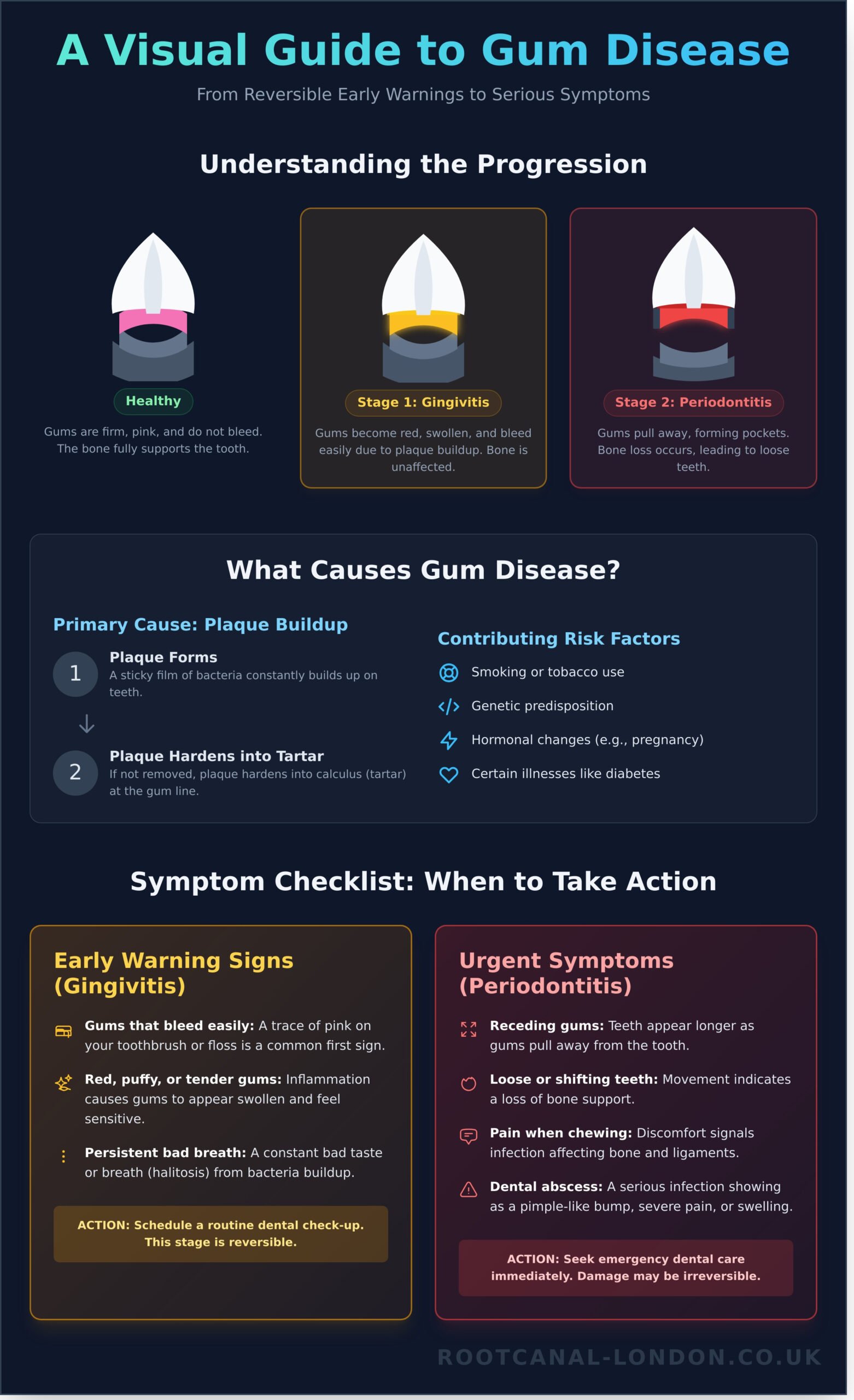
Gingivitis is the earliest and mildest form of gum disease, and it is completely reversible. At this stage, the infection is limited to the gum tissue, and no permanent damage has been done to the bone supporting your teeth. It’s a crucial warning sign from your body. Key symptoms include:
- Gums that appear red, swollen, or feel tender.
- Bleeding when you brush or floss your teeth.
With a professional dental cleaning and a dedicated home care routine, we can often reverse gingivitis and bring your gums back to a state of calm, comfortable health.
Stage 2: Periodontitis – When Gum Disease Becomes Serious
If gingivitis is left untreated, it can progress to periodontitis. This is a more serious condition where the infection spreads beneath the gum line, causing the gums and bone to pull away from the teeth. This process forms ‘pockets’ that trap harmful bacteria. Symptoms of periodontitis include:
- Persistent bad breath or a bad taste in your mouth.
- Receding gums that make your teeth look longer.
- Loose or shifting teeth.
At this stage, the damage to the bone and supportive tissues is permanent. While it cannot be reversed, professional management is essential to halt its progression and prevent further damage or tooth loss.
What Causes Gum Disease?
The primary cause of gum disease is the build-up of plaque-a sticky, colourless film of bacteria that constantly forms on teeth. If not removed daily through brushing and flossing, this plaque hardens into tartar (or calculus), a stubborn deposit that can only be removed by a dental professional. While poor oral hygiene is the main culprit, other factors can increase your risk and impact the success of your gum disease treatment, including:
- Smoking or using tobacco products.
- Genetic predisposition.
- Hormonal changes, such as during pregnancy.
- Certain illnesses, like diabetes.
Recognising the Symptoms: A Checklist for Your Gum Health
Noticing changes in your gums can be concerning, but understanding what to look for is the first step towards protecting your long-term oral health. We’ve created this simple checklist to help you calmly assess your gum health at home, empowering you to take proactive steps. While this guide is helpful, please remember that nothing replaces a professional evaluation. Only a dental expert can provide an accurate diagnosis and recommend the right course of action. They will determine if you need simple hygiene guidance or one of the many effective professional gum disease treatments available to restore your gums to health. Your peace of mind and comfort are always our priority.
Early Warning Signs You Shouldn’t Ignore
The earliest stage of gum disease, known as gingivitis, is often completely reversible with prompt care. It typically presents with subtle signs that are easy to overlook but crucial to recognise. Catching these symptoms early is key to a simple and effective gum disease treatment plan, often involving just an improved oral hygiene routine and a professional cleaning. If you notice any of the following, see it as a gentle prompt to schedule a routine dental check-up.
- Gums that bleed easily: Seeing a trace of pink on your toothbrush or floss, even with gentle cleaning, is a common first sign that your gums are inflamed.
- Red, puffy, or tender gums: Healthy gums are firm, resilient, and pale pink. Inflammation can cause them to appear red, swollen, or feel tender to the touch.
- Persistent bad taste or bad breath: A constant unpleasant taste or breath (halitosis) that doesn’t resolve with brushing could be linked to bacteria building up along the gum line.
Urgent Symptoms Requiring Immediate Attention
When left unaddressed, gingivitis can progress to a more serious condition called periodontitis. This advanced stage can cause irreversible damage to the tissue and bone supporting your teeth. The following symptoms are more serious and require prompt professional evaluation to prevent tooth loss and other complications.
- Noticeably receding gums: This can make your teeth appear longer than usual as the gum tissue pulls away, exposing more of the tooth root.
- Loose or shifting teeth: Do you feel movement in one or more teeth, or have new gaps appeared between them? This indicates a loss of bone support.
- Pain when chewing: Discomfort or a dull ache when you bite down can signal that the infection is affecting the ligaments and bone around your teeth.
- Signs of a dental abscess: This is a serious infection and a dental emergency. Look for severe, throbbing pain, significant swelling in your gum or face, or a small, pimple-like bump on your gum that may ooze pus.
If you are experiencing any of these severe symptoms, especially the signs of an abscess, it is vital to seek emergency dental care immediately. Swift action is crucial to relieve pain, address the infection, and save your tooth.
Professional Gum Disease Treatments: Your Path Back to Health
If you’ve been diagnosed with gum disease, please don’t feel alarmed. The primary goal of professional intervention is to control the infection, halt its progression, and restore your oral health. Your dentist has access to the latest non-surgical and surgical treatment options to create a personalised plan for you. We understand that the thought of dental work can be stressful, but modern techniques and a focus on patient comfort ensure these procedures are as gentle and pain-free as possible.
The right gum disease treatment for you will depend on the stage and severity of your condition. Your dentist will conduct a thorough examination before recommending the most caring and effective path forward.
Non-Surgical Treatments for Early to Moderate Gum Disease
For gingivitis or early-stage periodontitis, less invasive methods are often highly effective. Your dentist or hygienist may recommend one or more of the following:
- Professional Dental Cleaning: More thorough than your at-home routine, this removes the build-up of plaque and tartar from above the gum line, often reversing gingivitis entirely.
- Scaling and Root Planing: Often called a “deep clean,” this is the cornerstone of treating early periodontitis. The procedure involves carefully removing tartar from below the gum line (scaling) and then gently smoothing the tooth roots (planing). This helps the gums reattach to the teeth and eliminates areas where bacteria thrive.
- Antibiotics: In some cases, your dentist may prescribe oral antibiotics or apply a topical antibiotic gel directly into the gum pockets to help control the bacterial infection.
Surgical Treatments for Advanced Periodontitis
When the gum disease is more advanced and the pockets between the teeth and gums have become too deep to be cleaned with non-surgical methods, a Expert may be needed. These procedures are designed to provide deep, effective cleaning and regenerate lost tissue. Your dentist may refer you to a periodontist, a expert in gum health, for treatments such as:
- Flap Surgery (Pocket Reduction): The periodontist makes tiny incisions in your gum so that a section of gum tissue can be lifted back. This provides direct access to remove tartar from deep below the gum line and smooth any damaged bone before securing the gum tissue back in place.
- Bone and Soft Tissue Grafts: If gum disease has destroyed bone or gum tissue, a graft may be recommended. This procedure uses natural or synthetic material to help regenerate lost bone or tissue, providing a stronger foundation for your teeth and improving your overall gum health.
The Critical Link: When Gum Disease Leads to a Root Canal
While many people think of gum disease and tooth decay as separate issues, they can become dangerously intertwined. In its advanced stages, a severe gum infection can directly lead to the need for a root canal. This happens when the infection travels beyond the gums and attacks the very core of the tooth, creating a complex dental emergency that requires expert care.
Understanding this connection is the first step toward saving your tooth from what can feel like an overwhelming problem. This serious complication requires more than standard gum disease treatment; it demands a precise, internal approach.
How Does Gum Infection Affect the Tooth Root?
Think of your gum line as a protective collar around the base of your tooth. Advanced gum disease (periodontitis) destroys the bone and tissue that hold this collar in place, creating deep pockets. These pockets become a highway for bacteria, allowing them to travel down the side of the tooth’s root and enter through tiny channels at the root tip. Once inside, the bacteria infect the tooth’s inner pulp and nerve, causing a severe infection and often, a painful dental abscess. At this point, a root canal is essential to remove the infected tissue and save your tooth.
Signs You Might Need a Root Canal Due to Gum Disease
When a gum infection spreads to the tooth’s pulp, the symptoms are often intense and unmistakable. It’s crucial to seek help immediately if you experience:
- Severe and persistent throbbing pain that may disturb your sleep.
- A small, recurring pimple-like bump on your gum (a sinus tract) which may release pus.
- Discolouration or darkening of the affected tooth.
- Extreme sensitivity to hot or cold temperatures that lingers after the source is removed.
- Swelling in your gums, face, or jaw, indicating a spreading infection.
Why a expert Endodontist is Crucial
When gum disease and a root infection combine, the situation is complex. An Endodontist is a Specialised dentist with years of advanced training dedicated solely to saving teeth through root canal treatment. Using state-of-the-art equipment like surgical microscopes, we can precisely navigate and clean the intricate root canal system, even in the most challenging cases. Our focused expertise provides the highest standard of care, ensuring the infection is thoroughly removed to give your tooth the best chance of survival. If you have severe tooth pain with gum problems, a expert consultation is vital for an accurate diagnosis and compassionate, effective care.
Prevention: How to Keep Your Gums Healthy for Life
After exploring the challenges of gum disease, the most empowering step you can take is prevention. The good news is that protecting your oral health doesn’t require complex routines. A few simple, consistent habits can make a profound difference, ensuring your smile remains healthy and comfortable for years to come. Our commitment is to your long-term wellbeing, and that begins with helping you avoid problems before they start.
Your Daily At-Home Care Routine
The foundation of healthy gums is built on your daily commitment. A consistent and thorough at-home routine is your first line of defence against the bacteria that cause plaque build-up and inflammation. We recommend these simple, non-negotiable steps:
- Brush twice daily: Use a soft-bristled brush and fluoride toothpaste for two minutes each time, paying careful attention to the gumline where plaque often accumulates.
- Clean between your teeth daily: Floss or interdental brushes are essential for removing plaque and food particles from areas your toothbrush cannot reach. This single step is crucial for preventing gum inflammation.
- Consider an antiseptic mouthwash: While not a substitute for brushing and flossing, using a therapeutic mouthwash can help reduce bacteria and provide an extra layer of protection.
The Role of Your Dentist and Hygienist
While your daily efforts are vital, they work best in partnership with professional care. Even the most diligent brushing cannot remove plaque once it has hardened into tartar (calculus). This is where your dental hygienist plays a vital role. Regular professional cleanings are the cornerstone of preventing the need for more complex gum disease treatment. During these appointments, we can gently remove stubborn tartar, assess your gum health, and offer personalised, reassuring advice. For most patients, a visit every 6 to 12 months provides the perfect level of support.
Taking these proactive steps puts you in control of your oral health, helping you avoid discomfort and the need for future gum disease treatment. It’s a simple partnership: your excellent care at home, supported by our professional expertise. If you ever have questions or concerns about your gum health, please know that our caring and compassionate team is always here to provide guidance and support.
Your Path to Healthy Gums Starts Here
Understanding the journey from early gingivitis to advanced periodontitis is the first step towards taking control. Remember, recognising the signs early and seeking professional help can halt the progression of gum disease, protecting not just your smile but your overall health. With consistent prevention and the right support, you can maintain healthy gums for life.
If you’re worried about your gum health or experiencing tooth pain, please don’t wait. Our approach to gum disease treatment is built on providing calm, compassionate, and pain-free care. Led by our expert Endodontist, Dr. Millie, our team is dedicated to your comfort and well-being, with emergency appointments available for urgent needs.
Let us help you find relief and restore your confidence. If you’re worried about your gums or experiencing tooth pain, don’t wait. Book a consultation with our caring team today. Taking this simple step is the beginning of restoring your comfort and peace of mind.
Frequently Asked Questions About Gum Disease
Is gum disease treatment painful?
We understand that the thought of any dental procedure can be worrying. However, our primary goal is to ensure your complete comfort. Modern gum disease treatments are performed with effective local anaesthetic to numb the area, making the procedure a pain-free experience. You may feel some mild tenderness or sensitivity afterwards, but this is temporary and easily managed. Our compassionate team is here to provide a calm and reassuring experience from start to finish.
Can gum disease be completely cured or reversed?
The answer depends on the stage of the disease. In its earliest form, known as gingivitis, gum disease is often completely reversible with professional cleaning and a diligent home care routine. However, once it progresses to periodontitis, the damage to the supporting bone is not reversible. The great news is that periodontitis can be successfully managed to halt its progression, prevent further damage, and save your teeth with ongoing professional care and excellent oral hygiene.
How much does gum disease treatment typically cost in the UK?
The cost of gum disease treatment varies depending on the severity of your condition. A routine hygiene appointment for early-stage issues may range from £75 to £150 privately. For more advanced periodontitis requiring a deep cleaning (root scaling and planing), costs can range from £400 to over £1,500. This is because it is a more intensive treatment, often completed over several appointments. We will always provide a clear, transparent treatment plan and cost breakdown after your initial consultation.
What happens if I ignore the symptoms of gum disease?
Ignoring symptoms like bleeding gums or bad breath allows the condition to progress from mild gingivitis to severe periodontitis. This can lead to serious consequences, including receding gums, damage to the bone that supports your teeth, and ultimately, tooth loss. Untreated gum disease is also linked to broader health issues, such as heart disease and diabetes. Seeking early advice is the best way to protect both your oral and your overall health.
Can I treat gum disease myself at home without a dentist?
Excellent home care is essential for prevention, but it cannot treat established gum disease alone. While brushing and flossing remove daily plaque, they cannot remove the hardened tartar (calculus) that builds up under the gum line and causes the infection. This requires specialised instruments and professional expertise. Relying only on home care allows the underlying infection to worsen, leading to more complex and costly problems later on. Professional treatment is vital for a successful outcome.
How long does it take to recover from a deep cleaning procedure?
Recovery following a deep cleaning procedure, also known as scaling and root planing, is usually very quick. It is normal to experience some gum tenderness and tooth sensitivity for a few days, but this typically subsides within a week. Most patients can return to their normal activities immediately. We provide comprehensive aftercare advice to manage any discomfort and ensure your gums heal properly, helping you get back to feeling your best as soon as possible.