
You underwent a root canal expecting to find lasting relief, but instead, you’re left with a persistent, distracting throb. The very treatment that was meant to end your pain seems to have introduced a new one, leaving you unable to focus or sleep. If you’re anxiously wondering how to stop throbbing pain after root canal and worrying if something has gone wrong, please be reassured-you are in the right place for clear, professional guidance.
We understand how distressing this uncertainty can be, and your comfort is our priority. In this expert guide, our endodontist will provide you with immediate, caring advice to manage your discomfort effectively at home. We will give you a clear framework for your recovery, helping you distinguish between normal post-procedure sensitivity and the red flags that signal it’s time to call a specialist. Our goal is to put you back in control, ease your concerns, and help you on your way to a truly pain-free recovery.
Understanding Post-Root Canal Pain: Why Is My Tooth Throbbing?
First, let us reassure you: experiencing some discomfort, including a throbbing or pulsating sensation, after a root canal is very common. It’s understandable to be concerned, especially when you had the treatment to get out of pain. However, this feeling is typically a sign that your body’s natural healing process has begun. A key part of understanding dental pain is recognising the difference between normal post-operative sensitivity and a complication.
The goal of a root canal is to remove the infected or inflamed pulp from within your tooth, relieving the source of your initial agony. But the procedure itself involves deep cleaning and shaping within the root canals, which can irritate the surrounding nerves and tissues. Knowing why this happens is the first step in learning how to stop throbbing pain after root canal and find comfort during your recovery.
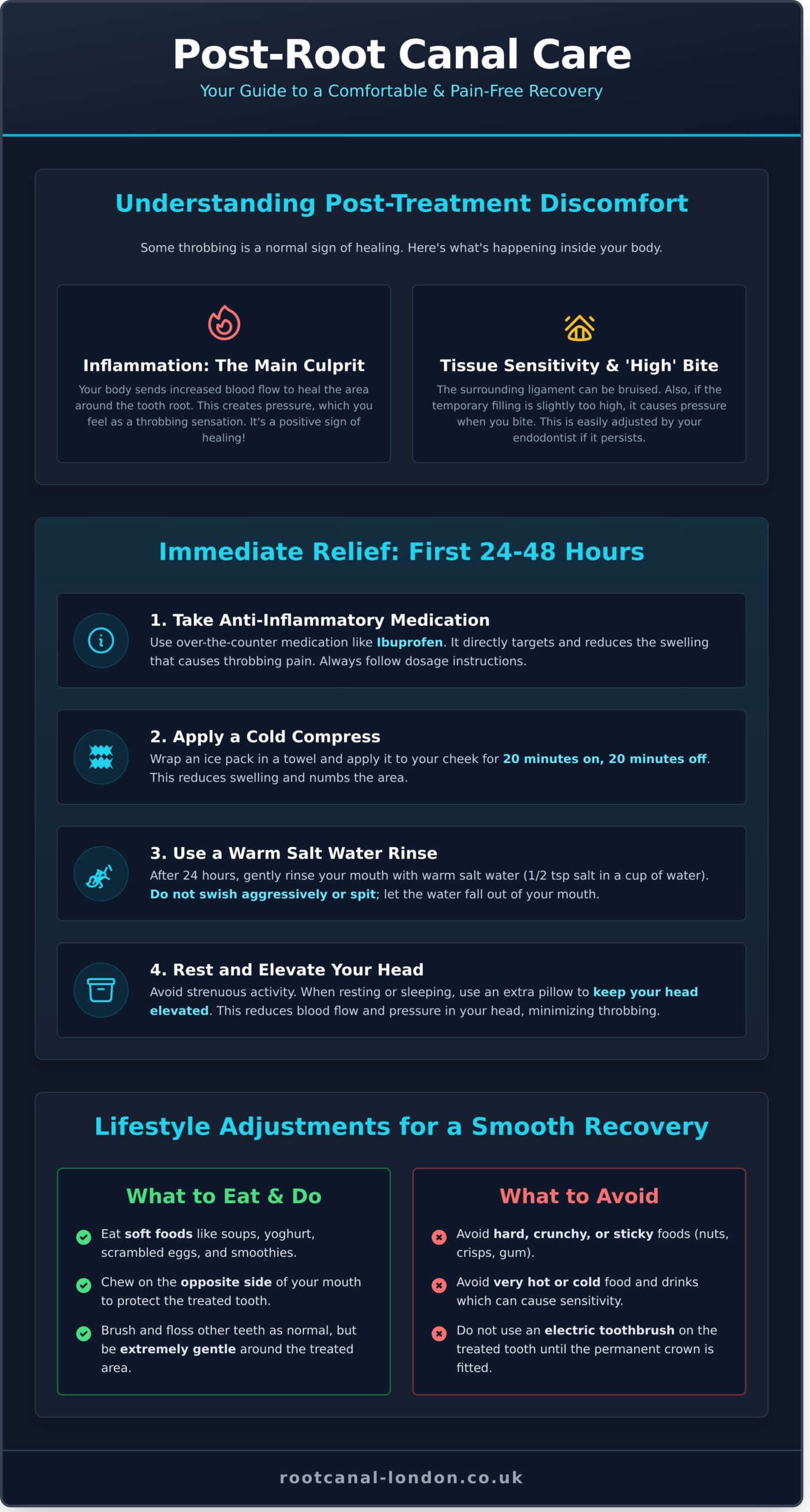
Inflammation: The Main Culprit
The primary reason for a throbbing feeling is inflammation. After the procedure, your immune system gets to work healing the delicate tissues around the tooth’s root. It sends an increased flow of blood to the area, delivering the necessary cells and nutrients for repair. This surge in blood flow increases the pressure in the surrounding tissue, which your nerves register as a dull, throbbing, or pulsating ache. This is a positive sign that your body is healing correctly.
Tissue Sensitivity and a ‘High’ Bite
Your tooth is held in its socket by a tiny structure called the periodontal ligament, which can become bruised and tender during treatment. Furthermore, a temporary filling or crown is placed to protect your tooth. If this restoration is even a fraction of a millimetre too high, it can hit its opposite tooth first when you bite, placing constant pressure on the sensitive ligament. This often resolves as the initial inflammation subsides, but if it persists, a simple and quick adjustment by your endodontist will provide immediate relief.
Immediate Relief: 7 Actionable Steps to Stop Throbbing Now
We understand that a throbbing sensation after your treatment can be distressing, but please be reassured that this is often a normal part of the healing process. The discomfort you feel is typically caused by inflammation of the tissues surrounding the treated tooth. Your body is working to heal, and our goal is to help you stay comfortable while it does. The following steps are designed to provide immediate relief in the first 24 to 48 hours.
Medication and Cold Therapy
Your first line of defence against throbbing is to manage inflammation directly. We recommend taking an over-the-counter anti-inflammatory painkiller like ibuprofen (such as Nurofen). Unlike paracetamol, which primarily blocks pain signals, ibuprofen actively reduces the swelling that causes the throbbing sensation. Taking the correct medication is a cornerstone of effective root canal pain management and helps control the inflammation at its source. Always follow the dosage instructions on the packet unless your endodontist has given you a specific schedule.
Combine this with cold therapy. Apply a cold compress or an ice pack wrapped in a tea towel to the outside of your cheek, near the treated area. Use a cycle of 20 minutes on, followed by 20 minutes off. This simple action constricts the blood vessels, which significantly reduces swelling and provides a welcome numbing effect.
Gentle Home Care and Rinses
Keeping the area clean without causing irritation is crucial for calm and comfortable healing. Starting 24 hours after your procedure, you can begin gentle rinses. Dissolve half a teaspoon of salt in a cup of warm (not hot) water. Take a sip and gently tilt your head from side to side, allowing the solution to wash over the area. Let the water fall out of your mouth into the sink; avoid aggressive swishing or spitting, which can disturb the site.
Positioning and Rest
One of the most effective and overlooked tips for how to stop throbbing pain after root canal treatment, especially at night, is to keep your head elevated. When you lie flat, more blood can rush to your head, increasing pressure and making the throbbing feel more intense. Simply using an extra pillow to prop your head up can make a remarkable difference. Paired with proper rest and avoiding any strenuous activity for a day or two, this allows your body to dedicate its energy to healing, bringing you relief much faster.
Your First Few Days: Lifestyle Adjustments to Aid Recovery
Once your root canal treatment is complete, the focus shifts from immediate pain relief to creating the ideal environment for healing. The first 48 hours are particularly important. While medication manages discomfort, your daily habits play a vital role in a smooth and speedy recovery. A key part of knowing how to stop throbbing pain after root canal is understanding how simple lifestyle adjustments can protect the treated area and prevent irritation.
What to Eat (and What to Avoid)
Your jaw and the surrounding tissues will be sensitive, so it’s essential to be mindful of your diet. Sticking to soft, easy-to-eat foods will prevent unnecessary pressure on your temporary filling and the treated tooth. We recommend:
- Soft Foods: Enjoy comforting options like soups, yoghurt, smoothies, scrambled eggs, and mashed potatoes.
- Chewing Technique: Try to chew on the opposite side of your mouth to avoid disturbing the area.
- Foods to Avoid: Steer clear of anything hard (nuts, ice), crunchy (crisps, popcorn), or sticky (toffee, chewing gum) that could dislodge the filling or cause pain. Also, avoid very hot or cold foods and drinks, as your tooth may be sensitive to extreme temperatures.
Oral Hygiene Best Practices
Keeping your mouth clean is crucial for preventing infection, but it must be done with gentle care. You can and should continue your oral hygiene routine, with a few modifications. Following these simple steps is a key part of your overall root canal recovery and helps avoid complications. Be sure to brush and floss your other teeth as normal, but be extremely gentle around the treated tooth. Avoid brushing or flossing directly against the temporary filling. We also advise against using an electric toothbrush on the sensitive tooth until you have your permanent crown fitted.
Activities to Postpone
Your body needs energy to heal, so giving yourself time to rest is one of the most effective ways to support recovery. For the first 24-48 hours, we advise you to:
- Avoid Strenuous Exercise: An elevated heart rate can increase blood flow to the area, which may contribute to throbbing or bleeding. Light walking is fine, but postpone gym sessions or intense physical activity.
- Refrain from Smoking: Smoking can significantly slow down the healing process and increase the risk of infection.
- Avoid Alcohol: Alcohol can interfere with your body’s ability to heal and may have negative interactions with any pain medication you are taking.
By taking these careful steps, you give your body the best chance to heal properly, which is the ultimate solution for how to stop throbbing pain after root canal for good. If you have any concerns about your recovery, our caring team at rootcanal-london.co.uk is always here to help.
When to Call Your Dentist: Red Flags vs. Normal Healing
After a root canal, it can be difficult to know what’s a normal part of the healing process and what might be a sign of a complication. We want you to feel confident and calm during your recovery. This guide is designed to help you distinguish between expected discomfort and symptoms that require immediate attention. Your peace of mind is our priority, so please remember: if you are ever worried, calling us is always the right choice.
Normal, Expected Symptoms (Usually Subside in a Few Days)
Your body needs time to heal, and some initial discomfort is a natural part of this process. These symptoms are generally not a cause for alarm and should improve daily:
- Mild to moderate throbbing pain: This is the most common symptom. It should be manageable with over-the-counter painkillers like paracetamol or ibuprofen and will lessen over the first few days.
- A dull ache or sensitivity: The area around the treated tooth may feel sensitive, especially to pressure or temperature changes.
- Slight tenderness: The tooth and the surrounding gum tissue might feel a little tender to the touch.
Red Flag Symptoms: Contact a Specialist Immediately
While the goal is a smooth recovery, understanding how to stop throbbing pain after a root canal also means recognising when that pain is a warning sign. Please contact your endodontist straight away if you experience any of the following:
- Severe, persistent pain: Pain that is not relieved by standard painkillers or is getting worse instead of better.
- Visible swelling: Noticeable swelling inside your mouth (on the gums) or outside (on your cheek or jaw) that is worsening.
- A fever or feeling unwell: Developing a high temperature or flu-like symptoms could indicate an infection.
- The temporary filling has come out: If your temporary filling or crown dislodges or breaks, the tooth is left vulnerable and needs to be protected.
Why You Shouldn’t Wait
Ignoring these red flag symptoms can lead to more serious complications, such as a spreading infection or the failure of the root canal treatment. Prompt, expert attention is the key to resolving the issue quickly and preventing a bigger problem from developing. Your health and comfort are paramount.
If you’re experiencing any of these concerning signs, please do not hesitate to contact our emergency team for advice. We are here to provide the care and reassurance you need.
Your Path to a Calm and Pain-Free Recovery
Navigating your recovery after a root canal is a crucial final step. Remember that some initial tenderness is normal, and managing it with over-the-counter pain relief and gentle care is key. Understanding how to stop throbbing pain after root canal is about knowing these immediate relief steps while also recognising the difference between normal healing and a sign that you need professional support.
Your comfort and peace of mind are paramount. If the throbbing is severe, persistent, or you simply feel worried, please do not hesitate to seek help. As a specialist Endodontist-led practice, we are dedicated to providing calm and reassuring care, especially for anxious patients. With emergency and same-day appointments available, expert help is always close at hand.
If your pain is severe or you’re worried about your recovery, contact our specialist endodontist Dr. Millie for an urgent assessment. You are not alone in this, and a comfortable, pain-free recovery is our ultimate goal for you.
Frequently Asked Questions About Root Canal Pain
How long does throbbing pain normally last after a root canal?
It’s normal to experience some sensitivity and mild throbbing pain after a root canal for the first few days. This discomfort comes from the inflammation of the surrounding tissues, not the tooth itself. The pain should gradually decrease each day. If your pain worsens or continues for more than a week, please don’t hesitate to contact our practice for advice. We are here to ensure your recovery is smooth and comfortable.
Is it better to take ibuprofen or paracetamol for root canal pain?
For post-root canal pain, ibuprofen is often recommended because it is an anti-inflammatory drug that specifically targets the inflammation causing the discomfort. Paracetamol can help with pain but does not reduce inflammation. Sometimes, alternating between the two can be effective. However, it is essential to follow the aftercare advice given by your endodontist and consult them or a pharmacist before taking any medication, especially if you have other health conditions.
Why does the throbbing get worse when I lie down at night?
This is a very common experience. When you lie flat, more blood flows to your head, which can increase the pressure in the blood vessels around the treated area. This change in pressure can amplify the sensation of throbbing and make the discomfort feel more intense. We recommend propping your head up with an extra pillow or two at night to help reduce this pressure and provide you with a more restful sleep.
My tooth feels ‘high’ when I bite down. Is this normal?
Yes, feeling like your tooth is ‘high’ or the first to touch when you bite is a common sensation after treatment. It’s typically caused by inflammation in the ligament that holds your tooth in its socket, which can push the tooth up ever so slightly. This feeling should resolve on its own within a few days as the swelling subsides. If it persists or is very noticeable, your temporary filling might need a simple adjustment.
Can I get an infection after a root canal even though the nerve is gone?
While the nerve is removed, an infection can still occur, although it is uncommon. This can happen if bacteria remain hidden in tiny, complex side canals or if the final crown is not placed promptly, allowing new bacteria to leak in. Following your aftercare instructions carefully and getting your permanent restoration on time are crucial for preventing this. If you notice new swelling or persistent pain, please contact us immediately.
What should I do if my pain medication isn’t working?
If your prescribed or over-the-counter pain medication isn’t providing adequate relief, it is important not to ignore it. This may indicate that the level of inflammation requires a different management approach. Please contact our practice without delay. Your comfort is our priority, and we can assess the situation and advise on a more effective pain relief strategy or determine if a follow-up appointment is needed to ensure everything is healing correctly.