

You’ve successfully navigated your root canal treatment, a crucial step towards saving your tooth and finding lasting relief. So, it can be both confusing and worrying to experience pain after root canal therapy is complete. If you are asking yourself whether what you’re feeling is a normal part of the healing process or a sign that something is wrong, please be reassured that this is one of the most common questions we hear. You are not alone in your concern.
In this guide, our goal is to provide you with calm and clarity. We will walk you through the typical recovery timeline, explaining the difference between normal healing discomfort and the warning signs that require professional attention. You’ll find expert advice for managing your symptoms comfortably at home and, most importantly, you will know precisely when it is time to contact your endodontist. Let’s ensure your recovery is as smooth and stress-free as possible.
Key Takeaways
- Understand why some mild discomfort is a normal part of the healing process, even after the tooth’s nerve has been removed.
- Discover a general recovery timeline to help you gauge whether your healing is progressing as it should.
- Find effective home care strategies to manage pain after root canal and support a smooth, comfortable recovery.
- Learn to confidently distinguish between normal healing sensations and specific warning signs that require a prompt call to your endodontist.
Why You Might Feel Pain After a Root Canal
It can feel confusing to experience discomfort after a procedure designed to end it. It’s important to remember that the primary goal of root canal treatment is to relieve the severe pain caused by an infected or inflamed tooth nerve, not to cause more. The treatment itself is a significant step towards healing, and a certain level of sensitivity afterwards is a normal, expected part of that process.
Think of it this way: the intense, sharp pain you felt before was from the damaged nerve inside your tooth. We carefully remove that source of pain. The mild to moderate soreness you might feel now is from the tissues around the tooth, which have been through a lot and now need time to heal. Understanding the source of pain after a root canal is the first step towards feeling calm and in control of your recovery. While the nerve inside the tooth is gone, the surrounding bone and ligaments are very much alive and need a gentle recovery period.
The True Causes of Post-Treatment Discomfort
The gentle ache or sensitivity you feel is not a sign that the treatment has failed. Instead, it’s typically your body’s natural healing response. The most common reasons for this temporary discomfort include:
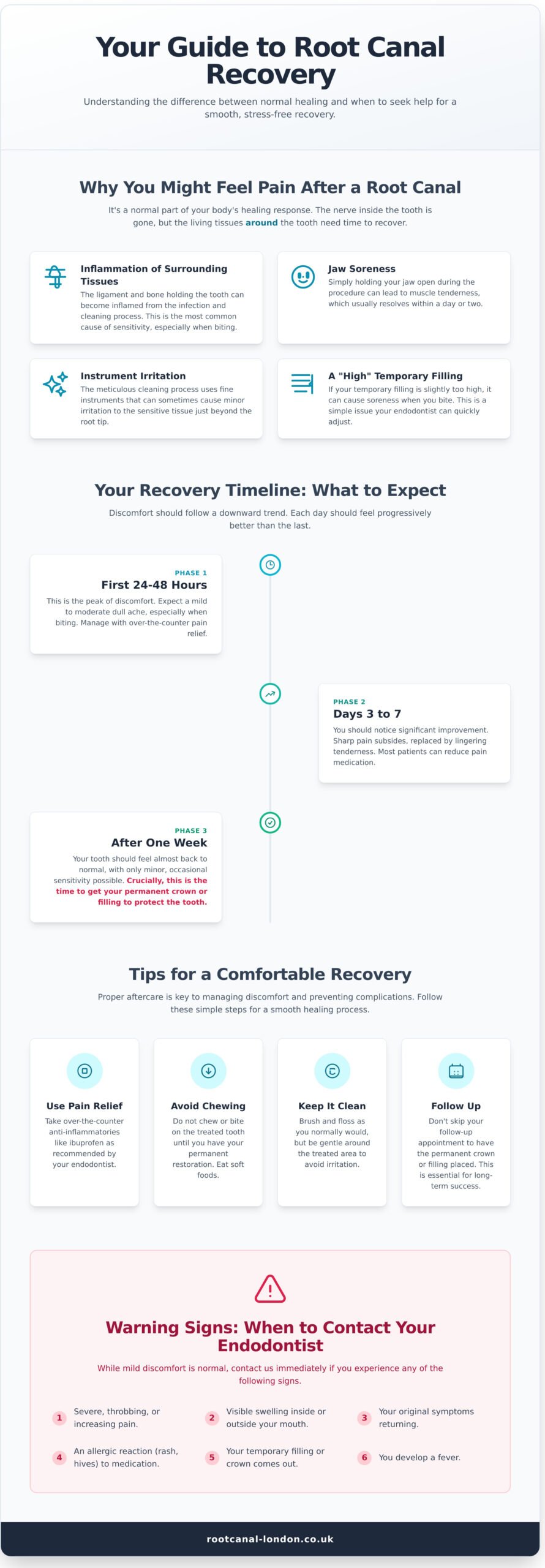
- Inflammation of Surrounding Tissues: The ligament and bone holding your tooth in place can become inflamed from the infection and the cleaning process. This is the most common cause of post-treatment sensitivity, especially when biting.
- Jaw Soreness: Simply holding your jaw open during the procedure can lead to some muscle tenderness, which usually resolves within a day or two.
- Instrument Irritation: To ensure your tooth is perfectly clean, we use fine, specialised instruments. This meticulous process can sometimes cause minor irritation to the sensitive tissue just beyond the root tip.
- A “High” Temporary Filling: If the temporary filling placed on your tooth is slightly too high, it can cause soreness when you bite down. This is a simple issue that can be quickly and easily adjusted by your endodontist.
Is It Normal for the Pain to Come and Go?
Yes, it is very common for discomfort to fluctuate in the first few days following your treatment. You might notice the tooth feels more sensitive when you’re eating, or the ache may seem more apparent in the evening when you are resting. This is a normal part of the healing journey. The most important indicator of a successful recovery is that the overall intensity of the pain after your root canal follows a downward trend. Each day should feel progressively better than the last, bringing you closer to complete comfort and relief.
A Timeline for Normal Root Canal Recovery
After your procedure, it’s natural to wonder what to expect. While every patient’s healing journey is unique, a typical recovery pattern can give you peace of mind and help you gauge if everything is on track. The goal of a modern root canal treatment is to save your natural tooth and relieve the initial infection’s pain. The discomfort you feel afterwards is part of your body’s natural healing response. This timeline helps you understand what’s normal as the sensation transitions from a noticeable ache to mild, manageable sensitivity.
The First 24-48 Hours: The Peak of Discomfort
This is typically when you’ll feel the most discomfort. As the local anaesthetic wears off, you can expect a mild to moderate, dull ache around the treated tooth. The area will feel tender, particularly when you bite or apply pressure. This is completely normal. The initial pain after root canal treatment is usually well-managed with over-the-counter anti-inflammatory medications like ibuprofen, which we will discuss with you. We advise you to rest and avoid chewing on that side of your mouth to give the area time to settle.
Days 3 to 7: Significant Improvement
You should notice a significant and welcome improvement during this period. The discomfort should lessen with each passing day. Any sharp pain should have subsided, replaced by a lingering tenderness or a slight awareness of the tooth, especially when biting. You might still experience some sensitivity, but it will be much less intense than in the first couple of days. Many of our patients find they can reduce or stop taking pain relief medication altogether by this point.
After One Week: Returning to Normal
By the end of the first week, your tooth should feel substantially better and almost back to normal. It’s not uncommon to have minor, occasional sensitivity that can last for a few more weeks, especially if the initial infection was severe. This is simply the surrounding bone and ligaments finishing their healing process. It is absolutely crucial during this time to follow up with your dentist to have your permanent crown or filling placed. This final step protects your treated tooth from future damage and ensures its long-term health and function.
How to Manage Discomfort and Speed Up Healing at Home
Once your root canal treatment is complete, your focus shifts to a calm and comfortable healing period. Proper aftercare is the key to a smooth recovery, helping to manage any mild pain after root canal and prevent complications. The steps you take at home are just as important as the procedure itself.
By following a few simple guidelines, you can significantly reduce discomfort, protect your treated tooth, and get back to feeling like yourself as quickly as possible. Remember to listen to your body and be gentle with the area as it heals.
Effective Pain Relief Strategies
For the first few days, it’s normal to experience some tenderness as the surrounding tissues heal. To manage this effectively and ensure your comfort, we recommend these caring steps:
- Use Anti-Inflammatories: Over-the-counter medications like ibuprofen can be very effective at reducing inflammation and discomfort. Please verify with your doctor or pharmacist that this is a safe option for you.
- Stay Ahead of the Pain: For the first 24-48 hours, it can be helpful to take your chosen pain reliever on a regular schedule, as advised, rather than waiting for discomfort to build.
- Apply a Cold Compress: Gently place a cold pack or a cloth-wrapped bag of ice on the outside of your cheek for 15-minute intervals. This is a simple, effective way to reduce swelling and soothe the area.
- Avoid Stronger Painkillers: Unless specifically prescribed by your endodontist for your unique situation, stick to over-the-counter options.
Essential Aftercare Tips
Protecting the treated tooth is crucial until your permanent crown or filling is placed, as it is more vulnerable during this healing phase. A little extra care goes a long way.
- Avoid Chewing on the Tooth: Try to chew on the opposite side of your mouth to prevent putting unnecessary pressure on the treated area.
- Stick to Soft Foods: For a few days, enjoy gentle foods like soups, yoghurt, smoothies, and pasta. Avoid anything hard, crunchy, or very chewy that could damage the temporary filling.
- Maintain Gentle Oral Hygiene: Continue to brush and floss as normal, but be extra gentle around the treated tooth. Following these simple aftercare steps is a vital part of a successful root canal recovery and protects your investment in your oral health.
- Rinse with Warm Salt Water: Rinsing your mouth 2-3 times a day with a solution of half a teaspoon of salt in a glass of warm water can soothe the tissues and promote healing.
Above all, listen to your body. While mild discomfort is expected, significant or worsening pain is not. If your symptoms are causing you concern or not improving, please don’t hesitate to contact our caring team for guidance.
Warning Signs: When to Contact Your Endodontist
Your comfort and complete recovery are our highest priorities. While the mild discomfort discussed earlier is a normal part of the healing process, it’s crucial to know which symptoms are not. Trust your instincts-if something feels wrong, it is always best to seek professional advice. Acting quickly can prevent a small issue from becoming a more significant problem and ensure your recovery stays on track.
Red Flag Symptoms You Shouldn’t Ignore
Some symptoms require immediate attention as they may indicate an infection or other serious issue. If you experience any of the following, please contact us without delay:
- Severe, throbbing pain: Discomfort that is not managed by over-the-counter or prescribed pain relief and feels intense or relentless.
- Worsening pain: Any significant pain after root canal treatment should gradually improve after the first 48-72 hours. If your pain gets worse instead of better, this is a warning sign.
- Visible swelling: Noticeable swelling inside your mouth, on your gums, or extending to your face, cheek, or neck.
- Signs of an allergic reaction: This can include a rash, hives, or severe itching after taking any prescribed medication.
Signs of a Possible Complication
Other symptoms might not be an emergency but still signal that your healing isn’t progressing as expected. We need to know about these so we can make adjustments and ensure the long-term success of your treatment. Please call us if you notice:
- The temporary filling has come out: If the temporary seal on your tooth feels loose or falls out, the canal is exposed to bacteria and needs to be resealed promptly.
- Your bite feels ‘high’ or uneven: If it feels like the treated tooth is hitting first when you bite down, it may require a simple adjustment to prevent further irritation.
- Fever or feeling unwell: A fever, chills, or a general feeling of malaise could be a sign of your body fighting an infection.
- Return of original symptoms: If the symptoms that led to your root canal, such as a gum boil or a specific type of ache, begin to return.
Our Promise to You
At Bespoke Dental Fulham, our care for you doesn’t end when you leave our clinic. We are here to support you throughout your entire recovery. Please never hesitate to reach out with any questions or concerns, no matter how small they may seem. Your peace of mind is paramount.
If you’re experiencing any of the severe symptoms listed above, please call our clinic immediately for advice. We are here to provide the calm, reassuring, and expert care you deserve.
Your Path to a Calm and Comfortable Recovery
Navigating your recovery is the final, crucial step of your treatment. It’s essential to remember that some mild sensitivity is a normal part of the healing process. The key is to distinguish between this expected discomfort and the warning signs that require an expert’s attention. By understanding the typical healing timeline and using effective home care, you can manage most of the mild pain after root canal and ensure a smooth recovery.
Your peace of mind, however, is paramount. You should never feel you have to navigate significant pain or anxiety alone. At Root Canal London, we are dedicated to providing a calm and reassuring experience. Our Specialist Endodontist, Dr. Millie, is renowned for her compassionate, precise care, a fact celebrated in hundreds of 5-star reviews from our relieved patients. For those in urgent need, we offer same-day emergency appointments to provide swift relief and expert guidance.
If you are in severe pain or feel worried about your recovery, please contact our caring team for specialist advice. We are here to support you on your journey back to a healthy, pain-free smile.
Frequently Asked Questions About Pain After a Root Canal
How long should pain last after a root canal?
Mild to moderate pain after a root canal is a normal part of the healing process. This discomfort typically stems from inflammation in the surrounding tissues, not the tooth itself. You can expect it to last for a few days, gradually improving each day. The pain should be easily managed with over-the-counter painkillers. If your pain is severe or worsens after three days, please don’t hesitate to contact our clinic for advice and reassurance.
Is it normal to have sharp pain when I bite down after a root canal?
It is common to feel some tenderness when biting down for a few days following your treatment. This is due to inflammation in the ligament that holds your tooth in place. However, a sharp pain could indicate that the temporary filling is slightly too high and is hitting its opposite tooth first. This is a simple issue to resolve. If you experience this sharp pain, please call us so we can schedule a quick, comfortable adjustment for you.
What does throbbing pain mean after a root canal treatment?
A gentle, subsiding throbbing can be a normal sensation as your body heals. However, persistent or severe throbbing pain that isn’t relieved by standard painkillers may require attention. It can be a sign of significant inflammation or a complication that needs to be assessed by your endodontist. We always want you to be safe and comfortable, so please contact us if you are concerned about any throbbing or intense pain. Your peace of mind is our priority.
Can I take ibuprofen and paracetamol together for tooth pain?
Yes, for most adults, taking ibuprofen and paracetamol together is a safe and effective way to manage dental pain. They work in different ways to provide more comprehensive relief. You can stagger the doses-for example, taking ibuprofen, then taking paracetamol two hours later. Always read and follow the dosage instructions on the packaging and consult your pharmacist or GP if you have pre-existing health conditions or are taking other medications. It is crucial not to exceed the daily dose.
What are the signs of a failed root canal months or years later?
While root canals have a very high success rate, on rare occasions, a tooth may not heal correctly. Signs of a problem months or years later can include the return of pain, a persistent pimple-like swelling on the gum near the tooth root, or new discolouration. You might also notice tenderness when chewing. If you experience any of these symptoms, an assessment and x-ray are needed to determine if re-treatment can save your tooth.
Why does my tooth still feel ‘different’ weeks after the procedure?
After a root canal, the nerve inside the tooth is removed, but the nerves in the surrounding ligament that sense pressure remain. This is why the tooth can feel ‘different’-it no longer feels hot or cold, but you can still feel the pressure of biting. This new sensation is perfectly normal as your body adjusts. For most patients, this feeling becomes unnoticeable over time as the area fully heals and you become accustomed to it.