

The throbbing pain, the swollen and tender gums around your back tooth-it’s a uniquely distressing experience that can disrupt your entire life. If this sounds familiar, you may be dealing with pericoronitis, a common and painful infection affecting the gum tissue around a partially erupted wisdom tooth. The uncertainty and intense discomfort can be overwhelming, leaving you worried about what to do next and whether you’re facing a dental emergency.
We want to reassure you that you are not alone, and effective relief is within reach. This guide is designed to give you the calm, clear answers you need. We will explain the exact causes of your symptoms, provide safe steps for immediate pain management at home, and help you understand the crucial signs that mean it’s time to seek professional, caring treatment. Let’s take the first step towards easing your pain and anxiety together.
Key Takeaways
- Understand that the sharp pain and swelling around your wisdom tooth is often caused by a common condition called pericoronitis, an inflammation of the gum tissue.
- Learn to identify the key symptoms, from a dull ache to facial swelling, so you know when it’s time to seek immediate, professional care.
- Discover safe at-home steps to ease pain temporarily and learn about the definitive dental treatments required for long-term relief.
- Find out specific cleaning techniques for hard-to-reach areas that can help prevent painful flare-ups and protect your oral health.
What is Pericoronitis? Understanding the Source of Your Pain
If you are experiencing a persistent, throbbing pain at the very back of your mouth, you may be dealing with pericoronitis. In simple terms, it is the inflammation and infection of the gum tissue that surrounds a partially erupted tooth. While it can technically affect any tooth that is struggling to emerge, it is overwhelmingly associated with the wisdom teeth (third molars). We understand how distressing this pain can be, but please be reassured: this is an incredibly common dental issue, and effective, calming relief is available.
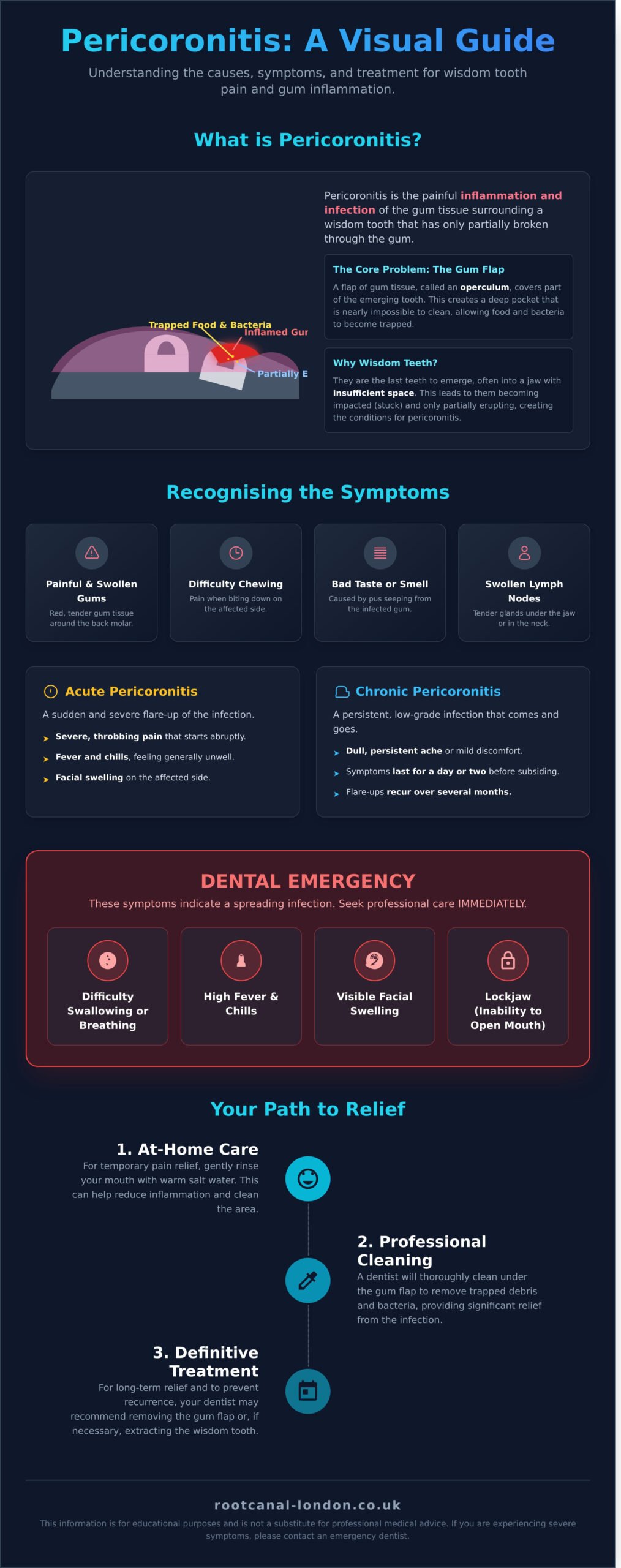
A helpful way to visualise the problem is to imagine a small hood of gum tissue partially covering the crown of the emerging tooth. For a more detailed clinical overview, you can read about what pericoronitis is and its causes. This “hood” creates a hidden pocket, which unfortunately becomes the primary source of the pain and infection.
Why Wisdom Teeth Are the Usual Culprit
Your wisdom teeth are the last to arrive, typically emerging in your late teens or early twenties. By this point, there is often not enough space left in the jaw for them to come through cleanly. This can cause a tooth to become ‘impacted’-meaning it is stuck, blocked, or growing at an awkward angle. This struggle to erupt is why pericoronitis most commonly affects the lower wisdom teeth, where space is often tightest.
The Problem with the Gum Flap (Operculum)
The main source of the infection is the small flap of gum, known professionally as an operculum, that sits over the partially visible tooth. This flap creates a deep, warm, and moist pocket that is almost impossible to keep clean with daily brushing. Food debris and plaque inevitably get trapped beneath it, creating the perfect breeding ground for bacteria. This bacterial growth leads directly to the infection, swelling, and intense pain that you may be feeling.
Recognising the Symptoms: From Mild Discomfort to a Dental Emergency
Understanding the signs of pericoronitis is the first step toward finding relief. The symptoms can vary significantly, ranging from a mild, nagging ache to severe pain that requires immediate attention. It’s crucial to recognise these signs early, as the condition can escalate quickly if left untreated.
Common Signs of Pericoronitis
If you’re experiencing discomfort around a partially erupted wisdom tooth, you may have pericoronitis. We understand this can be worrying, so here are the most common symptoms to look out for:
- Painful Gums: The gum tissue around your back molar becomes red, swollen, and tender to the touch.
- Difficulty Chewing: Biting down can be painful, making eating uncomfortable.
- Bad Taste or Smell: A foul taste in your mouth or bad breath (halitosis) is often caused by pus seeping from the infected gum flap.
- Swollen Lymph Nodes: You might feel tender, swollen glands under your jaw or in your neck as your body fights the infection.
Acute vs. Chronic Pericoronitis
Pericoronitis can present in two ways, and it’s helpful to know the difference. Your experience will depend on whether the infection is acute or chronic.
- Acute Pericoronitis: This involves a sudden onset of severe, throbbing pain. You may also experience fever, facial swelling on the affected side, and a general feeling of being unwell.
- Chronic Pericoronitis: This is characterised by a persistent, dull ache or mild discomfort that can last for a day or two before subsiding, often recurring over several months.
It’s important to know that a chronic case can flare up into a severe acute episode without warning. While diligent home care is essential for managing symptoms and preventing pericoronitis from worsening, any persistent symptoms should be evaluated by a professional.
When to Seek Urgent Dental Care Immediately
While most cases can be managed with a standard dental appointment, some symptoms indicate a serious infection that requires immediate emergency care. Your health and safety are our priority, so please seek help straight away if you experience any of the following:
- Severe difficulty swallowing or breathing.
- A high fever, chills, and feeling generally unwell.
- Swelling that is visible on your face, cheek, or jaw.
- Inability to fully open your mouth (a condition known as trismus or lockjaw).
These are signs that the infection may be spreading. Do not wait for the symptoms to worsen. If you have severe symptoms, call our emergency line now.
Effective Pericoronitis Treatment: Your Path to Relief
We understand that the pain from an inflamed wisdom tooth can be distressing. Our approach to treating pericoronitis is always focused on your comfort and has two clear goals: first, to manage the immediate pain and infection, and second, to address the underlying cause to prevent it from ever coming back. Your well-being is our priority every step of the way.
Immediate At-Home Care (For Temporary Relief)
While you are waiting for your dental appointment, there are a few simple things you can do to ease your discomfort. It’s crucial to remember that these are not a cure, but a way to manage symptoms until you can receive professional care.
- Warm Salt Water Rinses: Gently swish a solution of half a teaspoon of salt in a cup of warm water several times a day. This can help soothe the gum and reduce inflammation.
- Gentle Oral Hygiene: Keep the area as clean as you can with a soft-bristled toothbrush, but be extremely gentle to avoid causing more pain or irritation.
- Over-the-Counter Pain Relief: Painkillers such as paracetamol or ibuprofen can provide effective, temporary relief. Please be sure to follow the dosage instructions on the packaging.
Professional Treatment at Our Clinic
When you visit us, our first priority is to get you out of pain. A core part of professional Pericoronitis diagnosis and treatment involves a thorough but gentle cleaning beneath the gum flap. We will carefully flush out any trapped food particles and infection, then irrigate the area with an antibacterial solution to calm the inflammation. If the infection is severe or showing signs of spreading, we may prescribe a short course of antibiotics to help your body fight it off effectively.
Next Steps: Preventing Recurrence
Once the acute flare-up is under control, we will discuss a permanent solution to stop the pericoronitis from returning. After assessing your tooth’s position, often with a simple X-ray, we can decide on the best path forward. The most common and effective long-term treatments are:
- Operculectomy: A minor surgical procedure to remove the troublesome gum flap, which eliminates the space where bacteria and debris collect.
- Wisdom Tooth Extraction: In many cases, removing the partially erupted wisdom tooth is the most predictable way to ensure the problem is solved for good.
We will clearly explain the best option for your specific situation, ensuring you feel confident and comfortable with the plan for your lasting relief.
Can Pericoronitis Be Prevented? Proactive Oral Hygiene
While you can’t control the angle or position your wisdom teeth erupt in, you absolutely have control over your oral hygiene. Taking proactive steps is your most powerful tool in managing the risk of developing a painful bout of pericoronitis. By focusing on keeping the area meticulously clean, you can significantly reduce the chances of bacteria causing an infection under the gum flap, bringing you comfort and peace of mind.
Oral Hygiene for Partially Erupted Teeth
A partially erupted wisdom tooth creates a challenging environment to clean. The gum flap, or operculum, can easily trap food particles and plaque, creating the perfect breeding ground for bacteria. A dedicated cleaning routine is therefore essential for prevention.
- Use a small-headed toothbrush: A child’s toothbrush or a special single-tufted brush can reach the very back of your mouth more effectively than a standard adult brush, allowing you to clean the tooth’s surface and the surrounding gum.
- Angle your brush carefully: Try to angle the bristles downwards and sideways behind your last molar to gently clean underneath the gum line and around the hard-to-reach back of the emerging tooth.
- Consider a water flosser: An oral irrigator is an excellent tool for this situation. It uses a gentle jet of water to flush out debris from under the gum flap where bristles and traditional floss simply cannot reach.
The Role of Your Dentist in Prevention
Your home care routine is vital, but it’s only one part of the solution. Partnering with your dentist for regular check-ups provides a crucial layer of professional oversight and care. During these appointments, we can monitor the eruption of your wisdom teeth, spot the early signs of potential issues, and perform professional cleanings to remove any hardened plaque (tartar) you may have missed.
If your wisdom teeth are positioned in a way that makes future problems likely, we can offer calm, clear advice on whether a preventative extraction is the best course of action for your long-term health. This isn’t always necessary, but a professional assessment gives you the expert information you need to make a confident decision. If you are concerned about your wisdom teeth, please don’t wait for pain to develop. Booking a consultation allows us to provide a reassuring assessment and a personalised plan.
Why See an Emergency Dentist in London for Pericoronitis?
When you’re dealing with the intense, throbbing pain of pericoronitis, it can be tempting to hope it will simply go away on its own. However, this gum infection around a wisdom tooth is not just a dental problem-it’s a serious health risk that requires immediate professional attention. Acting quickly is the key to preventing complications and finding fast, effective relief.
The Dangers of an Untreated Infection
A localised infection in your gum can quickly escalate if left unchecked. The bacteria can spread from the wisdom tooth site to surrounding soft tissues, leading to more severe conditions. The primary risks include:
- Spreading Infection (Cellulitis): The infection can move into your cheek, jaw, or neck, causing significant swelling, redness, and pain.
- Ludwig’s Angina: In rare but life-threatening cases, the infection can spread to the floor of the mouth and throat, causing severe swelling that can block your airway.
Seeking urgent care is not just about managing pain; it’s about protecting your overall health and wellbeing. Prompt treatment stops the infection in its tracks and prevents these dangerous complications.
Your Urgent Care Visit: What to Expect
We understand that visiting a dentist, especially when you’re in severe pain and feeling anxious, can be a daunting experience. At our calm and welcoming Fulham clinic, your comfort is our absolute priority. From the moment you arrive, our focus is on you.
Our compassionate team specialises in helping nervous patients find relief. We will listen carefully to your concerns, provide a swift and accurate diagnosis, and clearly explain your treatment options. Using gentle, expert techniques, we will work efficiently to relieve your pain and treat the underlying cause of the infection, ensuring you leave our clinic feeling significantly better and with total peace of mind.
Don’t endure the pain. Book your emergency appointment today.
Take Control of Your Oral Health and Find Relief
Navigating the pain of an impacted wisdom tooth can be distressing, but understanding the condition is the first step towards recovery. Remember, pericoronitis is a common but serious issue that requires prompt attention. While excellent oral hygiene is your first line of defence, recognising the symptoms-from mild gum tenderness to severe facial swelling-is crucial for knowing when to seek professional help. Ignoring the signs can lead to more significant complications, but the good news is that effective, lasting relief is available.
You do not have to endure severe dental pain. Our specialised-led team in London provides compassionate care for dental emergencies in a calm and reassuring environment. We offer same-day appointments specifically to provide fast and effective pain relief, ensuring your comfort is our absolute top priority, especially for anxious patients.
In severe pain? Book an emergency appointment with our specialised London team. Taking this decisive step is the most important one you can make towards lasting comfort and protecting your overall oral health.
Frequently Asked Questions About Pericoronitis
Can pericoronitis go away on its own?
While a very mild case might seem to improve with diligent home care like warm saltwater rinses, it is unlikely to resolve completely on its own. Pericoronitis is a bacterial infection, and without professional cleaning under the gum flap, the underlying cause remains. We always recommend a professional assessment to ensure the infection is properly managed and to provide you with lasting relief and prevent the condition from worsening.
How long does it take for pericoronitis to heal after treatment?
After receiving professional treatment, such as a deep cleaning of the area, you should notice a significant reduction in pain and swelling within 24 to 72 hours. Complete healing of the gum tissue typically takes about one to two weeks. Following your dentist’s aftercare instructions, including any prescribed antibiotics or medicated mouthwash, is essential for a swift and comfortable recovery, ensuring the inflammation fully subsides.
Is pericoronitis contagious?
No, you can be reassured that pericoronitis is not contagious. It is a localised gum infection caused by bacteria that are already present in your own mouth getting trapped beneath a gum flap. It cannot be spread to another person through kissing, sharing drinks, or any other type of contact. The condition is a personal inflammatory response to trapped food debris and bacteria, not a transmissible illness.
Will I definitely need my wisdom tooth removed if I have pericoronitis?
Not necessarily, but it is a very common solution for recurring problems. For a single, mild episode, a professional cleaning and improved oral hygiene routine may be enough to resolve it. However, if the pericoronitis becomes a recurring issue or the tooth is impacted in a way that makes cleaning impossible, extraction is often the most reliable way to permanently prevent future pain and infection. We will always discuss all your options in a calm, caring manner.
What is the difference between pericoronitis and a gum abscess?
While both involve painful infections, their location and origin are different. Pericoronitis is specifically the inflammation and infection of the gum tissue covering a partially erupted tooth, usually a wisdom tooth. A gum abscess (or periodontal abscess) is a pocket of pus that forms deeper in the gum line, alongside the root of a tooth, often caused by advanced gum disease. An abscess may look like a small pimple, whereas pericoronitis is more generalised swelling around the tooth’s crown.
Can stress cause a pericoronitis flare-up?
Yes, stress can absolutely be a contributing factor in a pericoronitis flare-up. High levels of stress can compromise your immune system’s ability to fight off infection, allowing the bacteria around your wisdom tooth to multiply and cause inflammation. Many people find that their symptoms first appear or worsen during stressful periods, such as exams, work deadlines, or major life events. Managing stress can be a helpful part of preventing recurrences.