

The relief of having your tooth pain addressed is immense, but it’s often followed by a new set of questions. Understanding your root canal recovery time is the key to feeling calm and in control of your healing process. You might be wondering if the tenderness you feel is normal, when you can enjoy your favourite meal again, or how soon you can return to work. These uncertainties are completely natural after any dental procedure, and we’re here to provide the clear, reassuring answers you deserve.
Consider this your personal, week-by-week guide to a smooth and comfortable recovery. We will walk you through exactly what to expect from the first 24 hours to the end of the first week, offering our specialist advice on managing discomfort effectively at home. You’ll learn what you can safely eat and drink, how to care for the treated tooth, and the important signs that tell you everything is healing perfectly. Our goal is to replace your worries with confidence, ensuring you have a stress-free experience from treatment to a swift return to your normal life.
Key Takeaways
- Understand what to expect in the first 24 hours and day-by-day through the first week for a calm and predictable recovery.
- Follow our simple, expert aftercare advice to minimise discomfort, prevent complications, and encourage faster healing.
- Gain peace of mind by learning to distinguish normal healing sensations from the specific symptoms that mean you should call us, ensuring your root canal recovery time is on track.
- Discover the final steps of your recovery journey and how to best protect your treated tooth for lasting health and comfort.
The Immediate Aftermath: The First 24 Hours Post-Treatment
Congratulations, your procedure is over. You’ve taken the most important step in saving your natural tooth and ending the pain you were experiencing. Now that the complex work inside your tooth is complete (for a detailed overview of the procedure, this guide explains What is a root canal?), your focus can shift entirely to rest. This initial 24-hour window is crucial for setting the stage for a smooth and comfortable healing process, and it marks the beginning of your root canal recovery time.
While You’re Still Numb (First 2-4 Hours)
The local anaesthetic used to ensure your comfort during treatment will last for a few hours. While your lip, cheek, and tongue are numb, it’s vital to be careful. This is the ideal time to take your first dose of pain relief, as recommended by your endodontist, to get ahead of any potential discomfort. During this period, please remember to:
- Avoid chewing to prevent accidentally biting your soft tissues.
- Stick to soft foods or liquids that don’t require chewing.
- Avoid hot drinks or foods until the feeling has fully returned.
As the Anaesthetic Wears Off
As the numbness subsides, it is completely normal to feel some mild to moderate tenderness or sensitivity in the area. This is not a sign of a problem; it’s your body’s natural inflammatory response as it begins the healing process. You may also notice your jaw feels a little sore from being open. Following the pain management plan we discussed will effectively manage these temporary symptoms and keep you comfortable.
Your First Night’s Rest
Rest is your most powerful tool for recovery tonight. Avoid any strenuous activity for the remainder of the day to allow your body to heal. When you go to sleep, try propping your head up with an extra pillow. This slight elevation helps to minimise swelling and can significantly ease any throbbing or discomfort. If you feel you need it, taking your prescribed pain medication before bed can help ensure a peaceful night’s sleep.
Navigating the First Week: A Day-by-Day Healing Timeline
Following your root canal treatment, the first week is when your body does its most active healing. The tissues around your tooth are repairing, and it’s completely normal to feel some tenderness as the inflammation subsides. The key is to look for gradual improvement each day. This timeline offers a caring and practical guide to your root canal recovery time, but please remember that everyone’s healing journey is slightly different. Our goal is to ensure you feel informed and comfortable every step of the way.
Days 2-3: Peak Tenderness and Management
It might seem counterintuitive, but your discomfort may peak during this period before it begins to improve. This is a positive sign that your body’s natural healing process is working effectively. To manage this phase with ease and comfort:
- Continue Pain Relief: Keep taking over-the-counter anti-inflammatory medication, such as ibuprofen, as advised by your endodontist to manage inflammation and discomfort.
- Stick to Soft Foods: Protect the treated tooth by eating soft foods that require little to no chewing. Think smoothies, soups, yoghurt, and mashed potatoes.
- Begin Gentle Rinsing: You can now start gently rinsing your mouth with a warm salt water solution (half a teaspoon of salt in a glass of warm water) after meals to keep the area clean and promote healing.
Days 4-7: Turning the Corner
By this stage, you should notice a significant reduction in pain and sensitivity. While the acute discomfort fades, it’s normal for the treated tooth to feel a bit ‘different’ from your others. This sensation is a common part of the root canal procedure and recovery process as the surrounding ligaments heal. You can now begin to slowly reintroduce more solid foods into your diet, but we recommend chewing on the opposite side of your mouth to avoid placing pressure on the area. By the end of this first week, the vast majority of your initial discomfort should have resolved, leaving you well on the path to a full and pain-free recovery.
Expert Aftercare Tips for a Smooth and Fast Recovery
The root canal procedure itself is complete, and now the focus shifts to ensuring a smooth and comfortable healing process. Following proper aftercare instructions is absolutely vital for a successful outcome and can significantly shorten your overall root canal recovery time. Think of this as protecting the important investment you’ve just made in your oral health. Our goal is to make your recovery as quick and pain-free as possible, and these simple steps are designed to do just that. The American Association of Endodontists provides several expert aftercare tips that reinforce the importance of this crucial healing phase.
Effective Pain and Swelling Management
It’s normal to experience some mild tenderness or sensitivity for a few days as your body heals. To manage this effectively:
- Take over-the-counter anti-inflammatory medications like ibuprofen, always following the directions on the package.
- Gently apply a cold compress or ice pack to the outside of your cheek for 15-minute intervals during the first 24 hours to reduce swelling.
- Avoid strenuous activities or heavy lifting, as this can increase blood flow to the head and prolong discomfort.
Your comfort is our top priority. If the pain is severe, persistent, or not improving after a few days, please don’t hesitate to call us.
Dietary Guidance: What to Eat and What to Avoid
Your tooth has a temporary filling that needs protection until your final crown is placed. Stick to a soft diet to avoid damaging it. We recommend:
- Eating soft, non-chewy foods such as soups, yogurt, scrambled eggs, smoothies, and mashed potatoes.
- Avoiding hard, crunchy, or sticky foods like nuts, hard sweets, and chewing gum, which can dislodge the temporary filling.
- Steering clear of very hot or cold foods and drinks if you experience sensitivity.
- Chewing on the opposite side of your mouth until your tooth is permanently restored.
Oral Hygiene for the Treated Tooth
Keeping your mouth clean is essential for preventing infection and promoting healing. You should:
- Continue to brush and floss your other teeth as you normally would.
- Brush the treated tooth, but do so very gently with a soft-bristled toothbrush.
- Avoid flossing directly around the temporary filling unless specifically advised by your endodontist.
- Rinse your mouth with warm salt water (half a teaspoon of salt in a glass of warm water) two to three times a day to soothe the area and keep it clean.
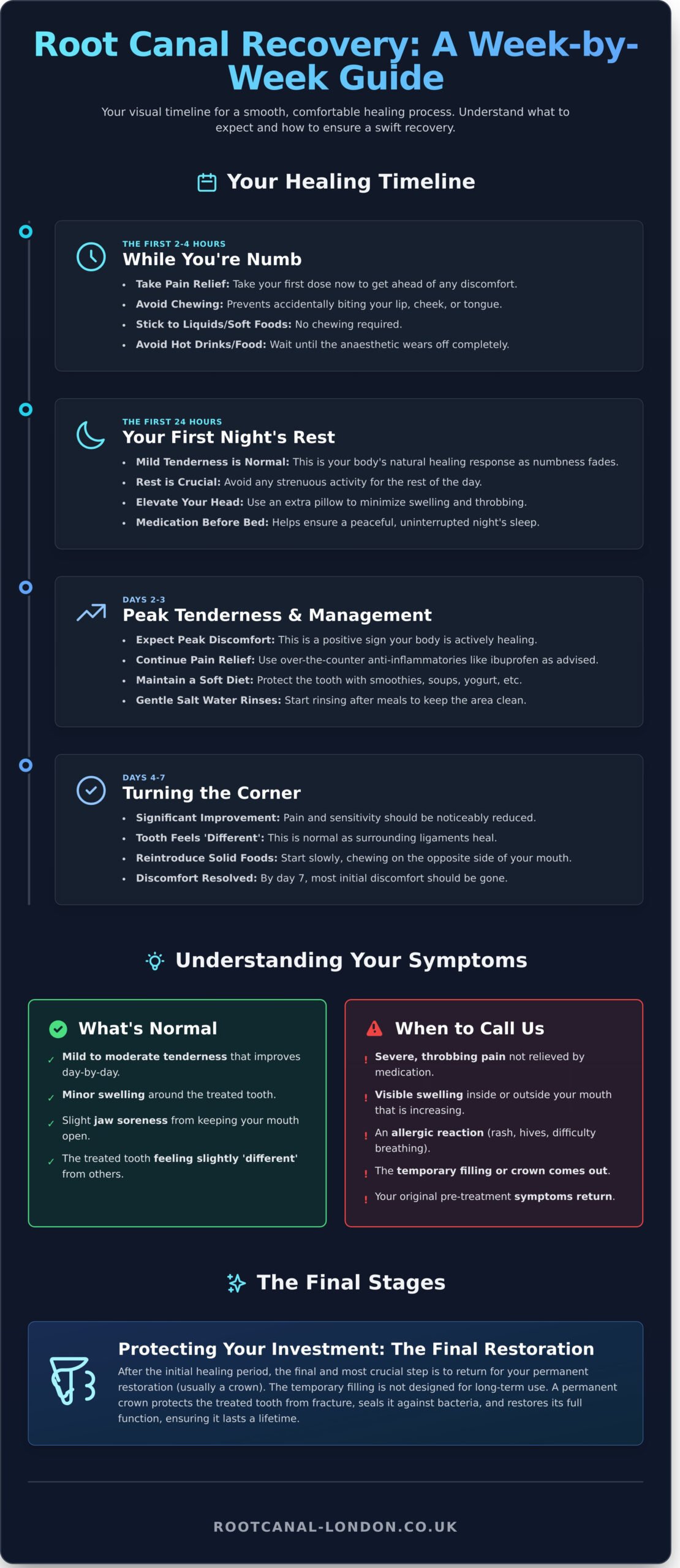
Understanding Symptoms: What’s Normal vs. When to Call Us
After any dental procedure, it’s completely natural to be highly aware of every new sensation. You might wonder, “Is this normal?” This guide is designed to give you peace of mind by helping you distinguish between the expected signs of healing and symptoms that might need our attention. Understanding this difference is a key part of a smooth root canal recovery time. Please remember, our priority is always your comfort and ensuring a successful, stress-free outcome.
Normal, Expected Sensations After a Root Canal
Your body begins its natural healing process immediately after treatment. For the first few days, it is very common to experience the following mild and temporary symptoms as the inflammation subsides:
- Mild to moderate tenderness: A dull, persistent ache or general tenderness in the area is normal. This should be easily managed with over-the-counter pain relief like paracetamol or ibuprofen.
- Sensitivity to pressure: The tooth and surrounding gums may feel sensitive when you bite down, even lightly. Stick to soft foods to avoid aggravating the area.
- A ‘different’ feeling: It’s common for the treated tooth to feel slightly raised or simply different from your other teeth. This sensation typically fades within the first week.
- Minor gum swelling: You may notice slight swelling or even faint bruising on the gum tissue nearby. This is a normal part of the inflammatory response.
Signs That Warrant a Phone Call to Your Endodontist
While the vast majority of recoveries are straightforward, your well-being is our top concern. We want you to call us immediately if you notice any of the following signs, as they may indicate a complication that needs prompt attention:
- Severe or throbbing pain: Pain that is intense, worsening, and not relieved by your prescribed or over-the-counter pain medication.
- Worsening swelling: Significant swelling inside your mouth or visible swelling on your face or neck that increases after the first three days.
- Temporary filling issues: If your temporary filling or crown feels loose, falls out, or feels ‘high’ when you bite down, it needs to be addressed to protect the tooth.
- Signs of an allergic reaction: Any symptoms like a rash, hives, or difficulty breathing after taking medication.
Trust your instincts. A successful root canal recovery time is a partnership between our expert care and your attentive aftercare. If you are ever in doubt or feel concerned about your symptoms, please do not hesitate to contact our caring team. We are here to support you every step of the way.
Beyond the First Week: The Final Stages of Healing
Congratulations on making it through the first week of your recovery. By now, any significant discomfort should have subsided, and you are likely feeling much more like yourself. The most sensitive part of your root canal recovery time is behind you. Our focus now shifts from immediate healing to ensuring the long-term health and strength of your treated tooth.
It is essential to understand that your root canal treatment is not fully complete until a final, permanent restoration is placed. This final step is not optional; it is crucial for protecting your tooth from future damage and restoring its full strength and function, allowing you to eat and smile with confidence once more.
Preparing for Your Permanent Crown
Your endodontist placed a temporary filling to protect your tooth while it healed. We will schedule a follow-up appointment to place your permanent restoration. For most teeth, especially molars that endure strong chewing forces, we strongly recommend a durable dental crown. A crown acts like a protective helmet, reinforcing the tooth structure and shielding it from the risk of fracturing. Until your permanent crown is securely fitted, please continue to be gentle with the tooth and avoid chewing hard or sticky foods on that side.
Long-Term Care for Your Treated Tooth
With its final restoration in place, your treated tooth is a fully functional part of your smile that can last a lifetime with the right care. The wonderful news is that it requires no complex maintenance-you can simply care for it as you would your other natural teeth. This simple, ongoing commitment is the key to a successful, long-lasting result.
To ensure your tooth remains healthy for years to come:
- Maintain excellent oral hygiene: Brush thoroughly twice a day with fluoride toothpaste and be sure to floss daily to keep the tooth and surrounding gums in pristine condition.
- Attend regular dental check-ups: Routine visits and cleanings allow your dentist to monitor the treated tooth and the surrounding tissues, ensuring everything remains healthy.
- Protect your smile: If you have a habit of grinding your teeth (bruxism), ask your dentist about a custom-made nightguard to protect your crown and natural teeth from excessive force.
Your journey to saving your tooth is almost complete. If you have any questions about your final restoration or your ongoing care, please do not hesitate to contact our caring team. We are always here to provide support and reassurance.
Your Calm and Confident Path to Full Recovery
Navigating your healing journey is a clear, manageable process. The key takeaways are simple: most discomfort subsides within the first week, following your aftercare instructions is vital for success, and knowing which symptoms are normal provides essential peace of mind. Ultimately, a smooth root canal recovery time is built on the foundation of expert treatment and your own diligent care at home.
At Bespoke Dental Fulham, we prioritise your comfort long after you leave our chair. Every treatment is performed by our specialist Endodontist, Dr. Millie, in our state-of-the-art facilities in the heart of Fulham. We are dedicated to providing a calm, reassuring, and completely pain-free patient experience, from your initial consultation through to your final check-up.
Should you have any questions or feel uncertain about any part of your healing, please do not hesitate. If you have any concerns about your recovery, contact our caring team today.
You have made an excellent choice for your dental health. Now, you can look forward to a future free from tooth pain.
Frequently Asked Questions
How soon can I return to work or school after a root canal?
Most of our patients feel comfortable enough to return to their normal daily activities, including work or school, the very next day. We recommend you listen to your body; if you experience any significant discomfort, resting for a day is a sensible precaution. Our priority is your calm and comfortable recovery, so we take every step to ensure the procedure is as gentle as possible to minimise your downtime.
Is it normal for the tooth to feel slightly different months after the procedure?
Yes, it’s quite common for the treated tooth to feel different. Because the nerve has been removed, you will no longer feel sensitivity to hot or cold in that tooth. It might also have a slightly different sensation when you bite. This is normal and not a cause for concern. However, you should not feel pain. If you experience any persistent pain or pressure, please contact our clinic for a reassuring check-up.
When can I eat normally on the side of the root canal?
We advise chewing on the opposite side of your mouth for the first few days, sticking to softer foods. You can gradually reintroduce harder foods as the initial tenderness subsides. You will be able to eat normally and with full confidence once your tooth has been fitted with its permanent restoration, such as a crown. This final step is crucial for protecting the tooth and restoring its full strength for everyday use.
Why is a dental crown necessary after a root canal?
A dental crown is vital for protecting your tooth long-term. After a root canal, the tooth can become more brittle and is at a higher risk of fracturing. A crown acts as a protective helmet, covering the entire tooth to restore its original strength and shape. This allows it to withstand the normal forces of chewing and ensures the lasting success of your root canal treatment, giving you peace of mind for years to come.
How long will the temporary filling last if I delay my follow-up?
A temporary filling is only a short-term seal, designed to last for a few weeks at most. It’s crucial to attend your follow-up appointment for the permanent crown promptly. Delaying this can cause the temporary filling to leak or break down, exposing the treated canal to bacteria and risking re-infection. A timely follow-up is an essential part of a successful root canal recovery time and prevents the need for further treatment.
Can I exercise after my root canal treatment?
We recommend taking it easy for the first 24 to 48 hours following your treatment. Strenuous exercise can increase blood flow and pressure in your head, which may lead to throbbing or discomfort in the treated area. Gentle activity like walking is perfectly fine. After a couple of days, you can slowly return to your normal fitness routine, as long as you feel comfortable and pain-free.
A Clean Home for a Comfortable Recovery
Focusing on your well-being includes creating a restful environment. While you’re taking time to heal, you might consider letting professionals handle demanding household chores. For example, if you want to restore the look of your floors without the effort, you can explore Natural Stone Floor Cleaning and see what a specialized service can offer.