

The very words ‘root canal’ can bring a sense of unease, often linked to outdated stories of discomfort. If you are living with persistent tooth pain, the thought of treatment can feel just as daunting as the ache itself. But what if the reality was entirely different? What if a modern root canal procedure was designed not to cause pain, but to be the very thing that ends it for good?
We understand your concerns-the anxiety about the unknown, the worry about what you’ll feel. That is precisely why we’ve created this gentle, step-by-step guide. Here, we will calmly walk you through the entire journey, from your initial consultation to the final, strong restoration of your tooth. You will gain a clear picture of each stage, see how our specialist approach ensures a caring and pain-free experience, and feel empowered knowing you are taking the best step to save your natural tooth and find lasting relief.
Key Takeaways
- Your journey to relief begins with a calm consultation where all your questions are answered, ensuring you feel comfortable and informed from the very start.
- Modern techniques and a powerful local anaesthetic make the experience genuinely pain-free, focusing entirely on your comfort during treatment.
- Understand the goal of the modern root canal procedure: to gently and precisely remove the inner source of pain, not to cause it.
- The final steps are all about protecting and strengthening your tooth with a permanent restoration, ensuring it remains healthy for years to come.
Before Your Visit: Consultation and Pain-Free Preparation
We understand that the thought of dental treatment can be stressful, especially when you are already in pain. That is why the first step in your journey to relief is always a calm, thorough consultation. This initial meeting is our opportunity to listen to your concerns, understand your symptoms, and answer every question you have about the root canal procedure. Our primary goal is to put you completely at ease and build a foundation of trust before any treatment begins.
Diagnosing the Need for Treatment
To provide outstanding care, we first need a precise diagnosis. We identify the classic signs of an infected or inflamed tooth pulp, such as lingering sensitivity to hot or cold, severe pain when chewing, or a discoloured tooth. Using gentle diagnostic tests, we can confirm exactly which tooth is the source of the problem. We then use advanced digital X-rays to get a clear, high-resolution image of the root canals, allowing us to show you the issue and explain your diagnosis in simple, understandable terms.
Planning for a Comfortable Experience
Your comfort is our highest priority. We will discuss the entire treatment plan with you before we begin, ensuring you feel informed and in control. For those who wish to learn more independently, Wikipedia provides a comprehensive overview of the root canal procedure, but we will personally walk you through every step. We have extensive experience in compassionately addressing dental anxiety, and we use modern, effective local anaesthetics to ensure the process is genuinely pain-free. We will also work with you to schedule your appointments at a time that suits your schedule.
To help your visit go as smoothly as possible, we recommend a few simple steps:
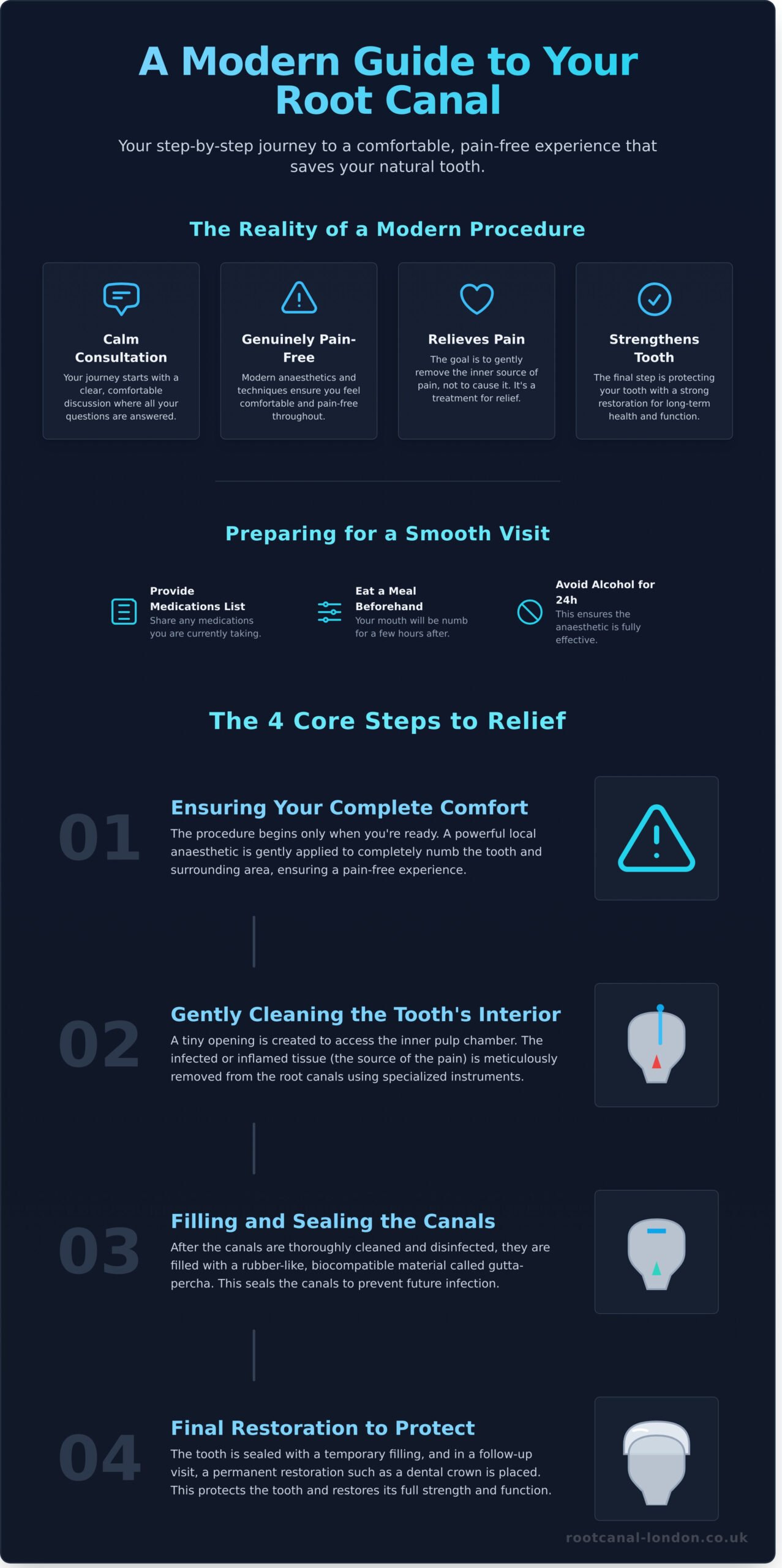
- Please provide us with a list of any medications you are currently taking.
- Enjoy a meal a few hours before your appointment, as your mouth will be numb afterwards.
- Avoid consuming alcohol for at least 24 hours prior to your treatment.
- Arrive a few minutes early to relax and complete any necessary paperwork without feeling rushed.
Step 1: Ensuring Your Complete Comfort
Before we begin any treatment, our absolute first priority is you. We understand that the thought of a root canal can cause anxiety, which is why the most important part of the entire root canal procedure is ensuring you are completely comfortable and feel no pain. This first step is dedicated entirely to creating a calm, controlled, and pain-free environment. We use two key tools to achieve this: a powerful local anaesthetic and a protective dental dam. This allows you to relax while we focus on relieving your pain and saving your tooth.
The Power of Modern Anaesthesia
The outdated fear of a painful root canal comes from a time before modern dentistry. Today, we have incredibly effective local anaesthetics that make the entire experience comfortable. We gently administer a powerful anaesthetic that works by blocking the pain signals from the nerves in your tooth. We are patient and will always wait, checking in with you until you confirm the area is completely numb. This commitment to your comfort is central to a modern root canal procedure and helps dispel many of the common myths about root canals, transforming the treatment into a pain-relieving one, not a pain-causing one.
Why We Use a Dental Dam
Once you are fully numb, we place a small, flexible sheet of latex-free rubber, called a dental dam, over your mouth. This simple but essential tool isolates the tooth we are working on. It might seem unusual, but its benefits are crucial for a successful and safe outcome. The dental dam provides:
- A Sterile Environment: It acts as a protective barrier, preventing bacteria from your saliva from entering the tooth during treatment. This is vital for preventing re-infection.
- Your Safety and Comfort: The dam protects your airway, ensuring you don’t swallow or inhale any of the small instruments or cleaning solutions we use. It also means you won’t have to taste any of the dental materials.
- A Clear, Dry Working Area: By keeping the tooth dry and isolated, we can see clearly and work more precisely, significantly increasing the long-term success of your treatment.
Step 2: Gently Cleaning the Inside of Your Tooth
This stage is the very heart of the entire root canal procedure. It’s where we address the problem at its source, meticulously removing the infected tissue that is causing your pain and discomfort. Our specialist endodontist, Dr. Millie, performs this delicate work with microscope-level precision, ensuring your treatment is not only effective but also comfortable and calm.
Creating the Access Opening
To begin, Dr. Millie creates a tiny, precise opening in the top of your tooth. This small window allows access to the soft tissue, or pulp, inside. This is done so smoothly and efficiently that you will feel no pain, thanks to the effective local anaesthetic from Step 1. Our priority is always to preserve as much of your healthy, natural tooth structure as possible.
Removing the Damaged Pulp
Using a set of very fine, specialised instruments, the infected or inflamed pulp is carefully removed from within the pulp chamber and root canals. This is the step that removes the bacteria and nerve tissue responsible for that persistent ache. Think of it as a deep, internal cleaning for your tooth. The goal of any successful root canal treatment is to be exceptionally thorough, which is why we use advanced specialist microscopes to see and gently clean every tiny, intricate space inside your tooth.
Disinfecting and Shaping the Canals
Once the damaged pulp is removed, we flush the inner canals with a gentle, disinfecting solution to wash away any remaining bacteria and debris. The canals are then carefully shaped to prepare them for the final filling. This crucial step ensures the biocompatible filling material can seal the entire root canal system perfectly, preventing any chance of future infection. Worried about the procedure? Speak to our caring team today.
Step 3: Filling and Sealing the Root Canals
Once the inside of your tooth has been meticulously cleaned and disinfected, the next crucial step is to protect it from the inside out. Leaving the canals empty would unfortunately invite bacteria to return, leading to further infection. To prevent this and ensure lasting relief, we must completely fill and seal the internal space, providing a stable and secure foundation for the final restoration of your tooth.
This part of the root canal procedure is focused on creating a durable, internal barrier. We fill the now-clean canals with a biocompatible, rubber-like material and use a strong, adhesive dental cement to ensure a perfect, watertight seal. This combination effectively blocks off the canal system, safeguarding your tooth against any future bacterial invasion and allowing it to heal properly.
The Role of Gutta-Percha
The primary filling material we use is called gutta-percha. It is a natural, thermoplastic material derived from a tree, which has been trusted in dentistry for over a century due to its outstanding safety and effectiveness. We gently warm the gutta-percha to make it pliable, allowing us to carefully and precisely compact it into the full length of your root canals. This ensures there are no empty spaces, stabilising the tooth structure and providing internal support.
Creating a Watertight Seal
Achieving a complete, hermetic seal is arguably the most critical factor for the long-term success of your treatment. This seal acts as a permanent barrier, preventing bacteria and fluids from re-entering and causing a new infection. Our skilled endodontists take great care in this stage, as we understand that a perfect seal is your best guarantee for a pain-free future.
To ensure this has been achieved, we take a final X-ray to confirm that the canals are perfectly filled to the very tip of the root. This meticulous, evidence-based approach is central to every root canal procedure we perform, giving you the comfort and reassurance of outstanding care.
Step 4: The Final Restoration to Protect Your Tooth
Once the infection inside your tooth has been expertly cleaned and sealed, the main part of your treatment is complete. However, the journey to saving your tooth isn’t quite over. The final, crucial stage involves strengthening and protecting the tooth so you can use it confidently for many years to come. This step ensures the long-term success of your root canal procedure and restores your tooth to its full strength and function.
Think of it as the finishing touch that guarantees your comfort and the tooth’s durability for the future.
The Temporary Filling
At the end of your root canal appointment, we place a durable temporary filling in the small opening we created. This acts as a protective seal, keeping bacteria out while the tooth and surrounding tissues settle. We will provide you with simple instructions on how to care for it, which usually involves avoiding very hard or sticky foods on that side. This is just a short-term measure until your permanent restoration is crafted and ready to be placed.
Why a Dental Crown is Essential
A root canal treatment removes the tooth’s nerve and blood supply, which can make it more brittle and susceptible to fracture over time. Think of a dental crown as a custom-made helmet for your tooth. It covers the entire visible portion, providing 360-degree protection and reinforcing its structure. This final step is vital to:
- Prevent fractures: A crown absorbs the heavy forces of chewing, protecting the weakened tooth structure underneath.
- Restore full function: You can eat, speak, and smile with complete confidence, just as you did before.
- Ensure longevity: A well-fitted crown is the key to ensuring your saved tooth lasts a lifetime.
Completing your treatment with a crown is the best way to protect the investment you’ve made in your oral health. If you are experiencing tooth pain and want to understand your options for a calm and caring treatment, we are here to help. Book your consultation to save your tooth and end the pain.
Your Path to Comfort and Lasting Relief
As we’ve explored, the modern root canal procedure is a precise, multi-step process designed not to cause pain, but to relieve it. From ensuring your absolute comfort before we begin to meticulously cleaning and sealing your tooth, each stage is focused on saving your natural smile. The outdated myths of a painful ordeal simply don’t match the reality of today’s gentle, patient-focused care.
At Root Canal London, we are dedicated to providing this calm, compassionate, and pain-free experience. Our Specialist Endodontist, Dr. Millie, combines her expertise with state-of-the-art technology to deliver outstanding results with minimal stress. Your well-being is our highest priority, and we are here to guide you back to health with the gentle care you deserve.
If you are in pain, don’t wait. Book a consultation with our specialist team. Taking the first step is the most important one on your journey to feeling better.
Frequently Asked Questions About the Root Canal Procedure
How long does a root canal procedure usually take?
A single root canal appointment typically lasts between 60 and 90 minutes. The exact time for your root canal procedure depends on the complexity of the tooth, such as how many root canals it has. A front tooth is often quicker to treat than a molar. We always schedule ample time to ensure the treatment is performed with precision and care, prioritising your comfort at every step. We will always let you know what to expect before we begin.
Will I be awake during the root canal procedure?
Yes, you will be awake and comfortable throughout the treatment. We use a powerful local anaesthetic to completely numb the tooth and the surrounding area, ensuring you won’t feel any pain. Our priority is creating a calm and stress-free experience for you. Many of our patients are pleasantly surprised by how comfortable they are and choose to listen to music or a podcast to help them relax during their visit.
What kind of special tools does an endodontist use?
As specialists, we use advanced equipment for precision and effectiveness. The most important tool is the surgical operating microscope, which provides powerful magnification to see inside the tiny root canals. We also use highly flexible nickel-titanium files to carefully clean and shape the canals, along with digital X-rays and 3D CBCT scans for a crystal-clear view of your tooth’s anatomy. This technology ensures your treatment is as thorough and comfortable as possible.
Is there a lot of drilling involved in a root canal?
This is a very common concern, and we’re happy to provide reassurance. The “drilling” is minimal and is only done at the beginning to create a small, neat opening in the tooth to access the infected pulp inside. Unlike a filling or crown, the majority of the work is then carried out using very fine, specialised instruments to clean the delicate root canals. The initial sound is brief, and the rest of the procedure is much quieter and gentler.
Why does a root canal sometimes require two visits?
While many root canals can be completed in a single visit, a second appointment is sometimes necessary, especially if there is a severe infection. On your first visit, we will thoroughly clean the root canal system and place an antibacterial medication inside the tooth. This gives the infection time to fully heal before we permanently seal the tooth on your second visit, ensuring the best long-term success and relief for you.
Can I drive myself home after a root canal procedure?
Yes, in almost all cases, you can safely drive yourself home. The local anaesthetic we use only numbs the specific area in your mouth and does not affect your alertness, coordination, or ability to operate a vehicle. After your treatment is complete, you can return to most of your normal daily activities, though we recommend taking it easy for the rest of the day and avoiding chewing on the treated tooth until it is fully restored.