

That deep, throbbing toothache can be all-consuming, and for many, the words ‘you need a root canal’ bring a fresh wave of anxiety. The myths surrounding this treatment can make it sound like something to fear, but the truth is quite the opposite. A modern root canal is not the cause of your pain, but the definitive solution to it. It is a highly skilled, often completely pain-free, procedure designed to bring you lasting relief and, most importantly, save your natural tooth from extraction.
We understand all of your concerns-the fear of the unknown, worries about discomfort, and questions about recovery and cost. That is why we’ve created this clear, calming guide. We will walk you through exactly what a root canal treatment involves, step-by-step, from your first consultation to your final restoration. You will learn why this is one of the most effective ways to eliminate deep infection, end severe tooth pain for good, and get you back to feeling like yourself again, empowering you to make a calm, confident decision.
Why You Might Need a Root Canal: Understanding the Signs
If you’re reading this, there’s a good chance you are dealing with significant tooth pain, and we understand how distressing and disruptive that can be. The intense ache that points towards needing a root canal is often caused by an infection deep inside your tooth. This happens when the soft tissue at the tooth’s core, called the pulp, becomes inflamed or infected by bacteria.
The primary goal of this procedure is not to cause pain, but to relieve it. By carefully removing the infected pulp, cleaning the inner chamber, and sealing it, we eliminate the source of the infection and save your natural tooth. Understanding what a root canal is and why it’s necessary is the first step toward finding lasting relief and restoring your comfort.
Key Symptoms of an Infected Tooth
While every patient is different, certain signs strongly suggest the tooth’s pulp is in trouble. It is vital to pay attention to these signals from your body, as they are often an indication of a serious underlying infection. The most common symptoms include:
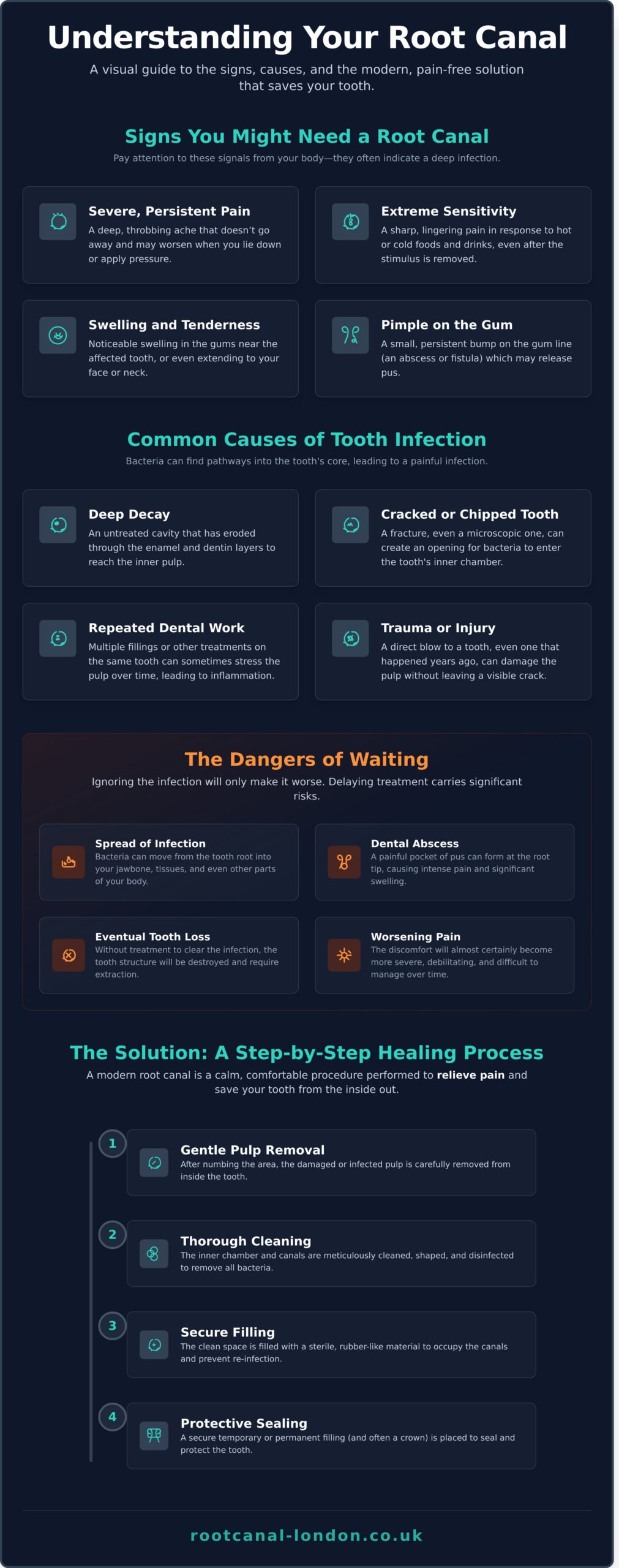
- Severe and persistent toothache: A deep, throbbing ache that doesn’t go away and may get worse when you lie down.
- Extreme sensitivity: A sharp, lingering pain in response to hot or cold foods and drinks, even after the stimulus is gone.
- Swelling and tenderness: Noticeable swelling in the gums near the affected tooth, or even swelling in your face or neck.
- A pimple on the gum: A small, persistent bump on the gum line (known as a fistula or abscess) which may release pus.
What Causes the Pulp to Become Infected?
Bacteria can find its way into the core of your tooth through several pathways. The damage isn’t always visible from the outside, but it can lead to a painful infection that requires treatment. The most frequent causes are:
- Deep decay: An untreated cavity that has eroded through the enamel and dentin layers to reach the pulp.
- A cracked or chipped tooth: A fracture can create an opening for bacteria to enter the tooth’s inner chamber.
- Repeated dental procedures: Multiple fillings or other treatments on the same tooth can sometimes stress the pulp over time.
- Trauma: A direct injury to a tooth, even one that happened years ago, can damage the pulp without leaving a visible crack.
The Risk of Waiting: What Happens if You Ignore It?
Ignoring the signs of a tooth infection will not make it go away; unfortunately, it will only make the situation worse. We urge you not to wait, as delaying treatment can lead to severe complications. Postponing care carries significant risks, including:
- The spread of infection: The bacteria can move from the tooth root into your jawbone, surrounding tissues, and even other parts of your body.
- Formation of a dental abscess: A pocket of pus can form at the root tip, causing intense pain and swelling.
- Eventual tooth loss: Without treatment, the tooth will eventually need to be extracted.
- Worsening pain: The discomfort will almost certainly become more severe and debilitating over time.
What Is a Root Canal, Really? A Simple, Calm Explanation
The idea of a root canal can sound intimidating, but the reality is a calm and straightforward procedure designed to bring you lasting relief. The simplest way to think of it is like carefully cleaning a wound, but on the inside of your tooth. Every tooth has three layers: the hard outer enamel, the softer dentin, and the inner core known as the pulp. This pulp contains nerves and blood vessels, which is why an infection here can cause such intense pain.
Contrary to common fears, this treatment does not remove your tooth. Instead, this delicate procedure, often performed by an endodontist specialist, removes only the infected pulp inside. The ultimate goal is to eliminate the infection and save your natural tooth from extraction, allowing you to get back to a life free from dental pain.
Busting the Biggest Myth: Are Root Canals Painful?
Let’s address the biggest concern head-on: a root canal is performed to relieve pain, not cause it. The severe, throbbing ache you may be feeling right now is from the infection itself, and this treatment is the solution. Thanks to modern techniques and effective local anaesthetics, the process is comfortable. Most of our patients compare the sensation to having a routine filling done. The discomfort of the infection is far worse than the treatment that cures it.
The Goal: Clean, Fill, and Seal
The treatment is a precise, multi-step process focused on healing your tooth from the inside out. Our caring approach ensures you are comfortable and informed at every stage:
- Step 1: Gentle Removal. After ensuring the area is completely numb, we carefully access the inside of your tooth and gently remove the damaged or infected pulp.
- Step 2: Thorough Cleaning. The empty pulp chamber and canals are meticulously cleaned, shaped, and disinfected to eliminate all harmful bacteria.
- Step 3: Secure Filling. The clean space is then filled with a sterile, rubber-like material to occupy the canals and prevent re-infection.
- Step 4: Protective Sealing. Finally, a secure temporary or permanent filling is placed to seal the tooth, protecting it from future damage.
This process effectively treats the infection while preserving your tooth’s structure, allowing it to function naturally for years to come.
The Root Canal Procedure: A Step-by-Step Walkthrough
We understand that the thought of a root canal can cause anxiety, but our primary goal is to provide a calm, comfortable, and pain-free experience. Modern techniques and technology have transformed this treatment into a straightforward procedure designed to save your natural tooth and relieve your pain. Typically completed in one or two appointments, we use advanced operating microscopes for outstanding precision. Understanding what to expect can be incredibly reassuring; the general root canal procedure and recovery process is focused entirely on your well-being at every stage.
Step 1: Diagnosis and Numbing
Your journey to relief begins with a careful diagnosis. We will take detailed X-rays to examine the infection inside your tooth’s root. Before any treatment starts, we gently apply a powerful local anaesthetic to completely numb the area. Your comfort is our priority, and we will not proceed until you are ready. To keep the tooth dry and protected, we place a small, flexible sheet called a ‘dental dam’ around it, ensuring a sterile and safe environment.
Step 2: Cleaning the Root Canal
Once you are completely comfortable, your endodontist will make a tiny opening in the top of your tooth to access the inner chamber. Using highly specialised, delicate instruments, we will carefully remove the infected or inflamed pulp from within the root canals. The inside of the tooth is then meticulously cleaned, shaped, and disinfected to eliminate all traces of bacteria. This is the most critical step for resolving the infection and stopping the pain at its source.
Step 3: Filling and Sealing the Tooth
After the canals have been thoroughly cleaned and dried, they are filled with a rubber-like, biocompatible material called gutta-percha. This seals the inside of the tooth completely. A temporary or permanent filling is then placed over the opening to prevent any new bacteria from entering. In most cases, a tooth that has had a root canal will require a permanent crown to protect it from future damage and restore its full strength and function.
Life After Your Root Canal: Recovery and Long-Term Success
Congratulations on taking a vital step to save your natural tooth. The most difficult part is now behind you, and you can look forward to lasting relief from the pain that brought you to us. With modern techniques and specialist care, the success rate for a root canal treatment is over 95%, offering a reliable and long-term solution to preserve your smile.
Immediate Recovery: What to Expect
Your comfort is our priority, even after you leave our clinic. In the first few days, it’s normal to experience some mild tenderness as the area heals. Here’s a simple guide to what you can expect:
- Numbness: The local anaesthetic will wear off within a few hours. Be careful not to chew on your lip or cheek while it’s numb.
- Sensitivity: The tooth and surrounding gums may feel a little sensitive or tender. This is temporary and a normal part of the healing process.
- Pain Relief: Over-the-counter pain relief, such as paracetamol or ibuprofen, is usually all that’s needed to manage any discomfort.
- Eating: Avoid chewing or biting down on the treated tooth until it has been fully restored with a permanent filling or crown. Stick to softer foods for a day or two.
Why a Dental Crown is Often Necessary
After treatment, the tooth has been saved from infection, but its internal structure has changed. It no longer has a living pulp, which can make it more brittle over time. A dental crown is often recommended to provide essential protection. Think of it as a custom-fitted helmet for your tooth, absorbing the pressures of biting and chewing to prevent fractures. A crown not only restores the tooth’s full strength and function but also ensures it looks completely natural.
Caring for Your Treated Tooth
Your treated tooth can last a lifetime with the right care. Fortunately, this doesn’t require any complex new routines. Simply continue to practice excellent oral hygiene by brushing twice a day, flossing daily, and attending your regular dental check-ups and cleanings. Treat it just like any of your other teeth, and it will serve you well for years to come. If you have any concerns during your recovery, please don’t hesitate to get in touch. Our caring team is here to help.
Why Choose a Specialist Endodontist for Your Treatment?
While many general dentists can perform a root canal, an endodontist is a dentist who has completed several extra years of specialised training focused exclusively on diagnosing and treating tooth pain. They are the experts in saving natural teeth. Think of it as seeing a cardiologist for a heart problem rather than your GP; for complex or challenging cases, a specialist’s focused expertise makes all the difference.
Endodontists dedicate their practice every day to procedures like root canal treatment. This high level of focus and experience means they are exceptionally skilled at handling even the most complex situations, ensuring the highest possible chance of success for your tooth.
The Specialist Advantage
Choosing a specialist provides significant benefits for your comfort and the long-term health of your tooth. At Bespoke Dental Fulham, our expertise means a more precise, comfortable, and successful treatment experience. We offer:
- Expert Pain and Anxiety Management: We understand the stress associated with tooth pain. Our team is highly skilled in providing gentle care and creating a calm, reassuring environment to put you at ease.
- Advanced Technology: We use state-of-the-art equipment, including surgical operating microscopes for enhanced vision and 3D CBCT imaging for precise diagnosis, which is not always available in a general practice.
- Efficient and Effective Treatment: Our specialisation allows us to work efficiently, often completing your entire treatment in a single, comfortable visit.
- Higher Success Rates: Our advanced training and technology lead to outstanding outcomes, especially for difficult-to-treat teeth, complex root structures, or teeth that have had previous treatment.
A Calming and Professional Experience
From the moment you contact us, your comfort is our priority. Our practice is designed to be a peaceful and welcoming space, helping to alleviate any dental anxiety. Dr. Millie is a highly experienced and gentle specialist endodontist who is dedicated to providing pain-free, outstanding care. We believe in clear communication and take the time to listen to your concerns and answer all of your questions, ensuring you feel confident and informed every step of the way.
Don’t let tooth pain control your life. Experience specialist care and find relief from your pain.
Your Path to a Calm and Healthy Smile
We hope this guide has demystified the modern root canal, transforming it from a source of anxiety into what it truly is: a remarkable, pain-relieving procedure designed to save your natural tooth. The most important things to remember are that this treatment ends the pain-it doesn’t cause it-and that choosing a specialist is your best guarantee of a comfortable and successful outcome. You can now move forward with confidence, knowing what to expect during the procedure and recovery.
If you are experiencing tooth pain, please don’t wait for it to worsen. At our clinic, you will receive calm, reassuring, and pain-relieving care from a Specialist Endodontist, Dr. Millie. We use state-of-the-art technology to deliver precise, gentle results. In pain? Don’t wait. Book a consultation with our specialist, Dr. Millie, today.
Taking this step is the first move towards lasting comfort and preserving your healthy, natural smile for years to come.
Frequently Asked Questions About Root Canal Treatment
How long does a root canal procedure take?
A root canal treatment is typically completed in one or two appointments, with each visit lasting between 60 and 90 minutes. The exact duration depends on the complexity of your tooth, such as its location and the number of canals. We always take the time necessary to ensure a thorough, precise, and comfortable procedure. Our priority is to provide a calm and efficient experience, helping you find relief from pain as smoothly as possible.
Will I feel pain during the root canal treatment?
No, you will not feel pain. This is one of the most common concerns, but modern root canal treatment is a comfortable, pain-free procedure. We use a powerful local anaesthetic to completely numb the tooth and surrounding area. The entire purpose of the treatment is to relieve the severe pain caused by infection, not to create more. Our compassionate team will ensure you are at ease and comfortable from start to finish.
What is the success rate of a root canal?
When performed by a skilled specialist, a root canal has an outstanding success rate, typically over 95%. This highly effective treatment is designed to save your natural tooth and eliminate the infection for good. With proper aftercare, including good oral hygiene and a permanent restoration, the treated tooth can last a lifetime. We use advanced technology to ensure the most predictable and successful outcome for every patient we care for.
Do I definitely need a crown after a root canal?
In most cases, yes, a dental crown is highly recommended. After a root canal, the tooth no longer has a blood supply and can become more brittle over time. A crown acts as a protective helmet, strengthening the tooth and preventing it from fracturing under chewing pressure, especially for back teeth. This final step is crucial for ensuring the long-term health, function, and survival of your restored tooth.
Can I go back to work after a root canal?
Yes, the vast majority of our patients feel comfortable returning to work or their normal activities immediately following their appointment. The local anaesthetic will wear off within a few hours, and you may experience some mild tenderness, which is easily managed with over-the-counter pain relief like paracetamol. We simply recommend avoiding strenuous exercise and chewing on the treated side until the anaesthetic has fully worn off.
What are the alternatives to a root canal?
The only alternative for treating an infected tooth is extraction. While removing the tooth will resolve the infection, it can lead to other dental problems, such as shifting teeth, bone loss, and issues with chewing. Saving your natural tooth with a root canal is always the best option. An extraction would ultimately require a more complex and costly replacement, such as a dental implant or bridge, to restore function.